
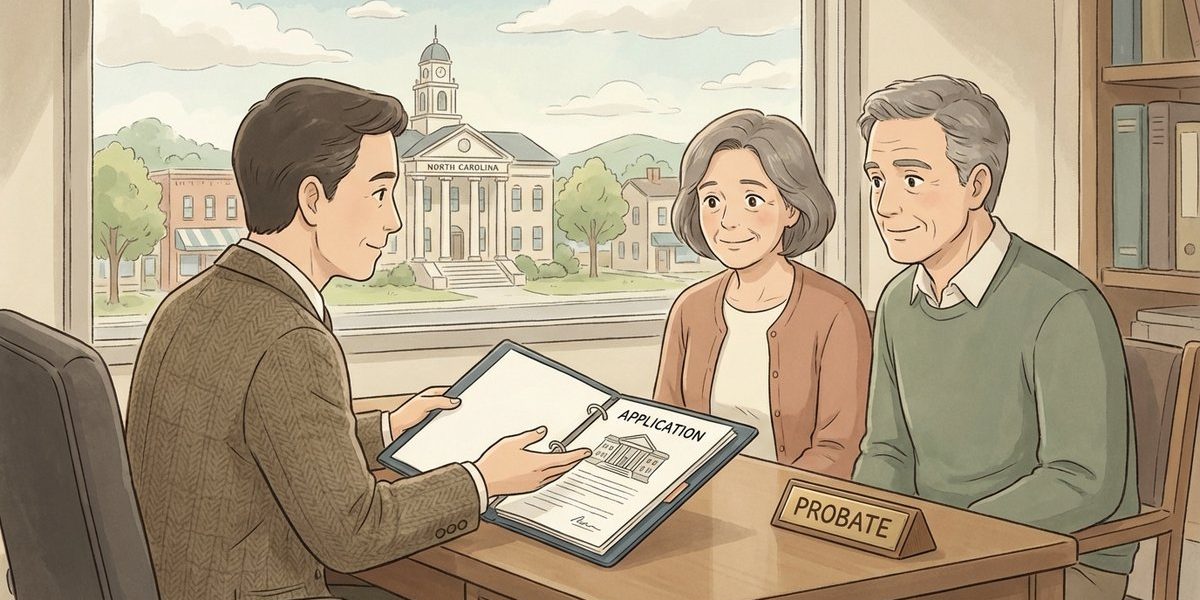
What documents and steps are typically required to file a petition to open probate for a deceased person who lived in the jurisdiction? – North Carolina
Short Answer
In North Carolina, “opening probate” usually means filing the correct application with the Clerk of Superior Court (the probate court) in the county where the person lived at death, qualifying a personal representative, and receiving “letters” (letters testamentary or letters of administration). Typically, the filing includes the original will (if any), an application to probate/qualify, and supporting information about heirs or devisees and the estate’s approximate assets. The Clerk may accept several types of proof of death, and local Clerk practices can affect which forms must be prepared up front.
Understanding the Problem
In North Carolina probate, the key question is what paperwork and procedural steps are needed to start a decedent’s estate case in the county where the decedent lived, so a personal representative can be officially appointed and the court can issue authority to act. The actor is the person seeking to serve as executor (if there is a will) or administrator (if there is no will), and the decision point is whether the filing is for a testate estate (with a will) or an intestate estate (without a will). The trigger is the death of a North Carolina resident and the need for the Clerk of Superior Court to open the estate file and issue the appointment documents.
Apply the Law
North Carolina gives the Clerk of Superior Court exclusive original jurisdiction over probate of wills and administration of decedents’ estates. The opening filing is made with the Estates Division of the Clerk’s office in the proper county, and qualification generally involves (1) an application, (2) an oath, and (3) a bond if required. Once approved, the Clerk issues “letters” that show the appointment and authority of the personal representative.
Key Requirements
- Proper venue (right county): The estate is typically opened in the county where the decedent was domiciled (lived) at death, and the filing goes through the Clerk of Superior Court in that county.
- Correct opening application: A testate estate typically uses an “Application for Probate and Letters,” while an intestate estate typically uses an “Application for Letters of Administration.” The application usually includes identifying information for the decedent, heirs/devisees, and a general description and estimated value of property.
- Qualification of the personal representative: The proposed personal representative must complete the qualification steps required by the Clerk (commonly an oath and, when applicable, a bond). After qualification, the Clerk issues letters testamentary (will) or letters of administration (no will).
What the Statutes Say
- N.C. Gen. Stat. § 7A-241 (Probate jurisdiction) – Gives the Clerk of Superior Court authority to handle probate and estate administration as the probate judge.
Analysis
Apply the Rule to the Facts: The scenario involves an out-of-state law firm needing an exemplified (triple-seal) copy of North Carolina probate proceedings. That request usually presumes an estate file already exists with the Clerk of Superior Court; if it does not, someone with priority to serve (executor named in the will, or an eligible heir if no will) typically must open the estate by filing the appropriate application and qualifying so the Clerk can issue letters. Once the estate is opened, the Clerk’s office can usually provide certified and, when requested, exemplified copies of the probate record for use in another jurisdiction.
Process & Timing
- Who files: The person seeking appointment as executor (if there is a will) or administrator (if there is no will), sometimes through counsel. Where: Estates Division, Office of the Clerk of Superior Court in the North Carolina county where the decedent was domiciled at death. What: Commonly an Application for Probate and Letters (often AOC Form E-201) for a will, or an Application for Letters of Administration (often AOC Form E-202) if there is no will, plus any locally required supporting forms. When: North Carolina law does not treat a death certificate as universally required to start the file; Clerks often rely on sworn statements in the application, but the Clerk can require or accept other evidence of death depending on what is available and local practice.
- Qualification step: The proposed personal representative completes the qualification requirements (commonly an oath and, if applicable, a bond). If multiple people have equal priority to serve (common in intestate estates), the Clerk may require renunciations from others who do not intend to serve, depending on the situation and local practice.
- Issuance of authority: After approval, the Clerk issues letters testamentary or letters of administration. Those letters are the documents third parties (banks, title companies, and out-of-state counsel) typically request to confirm who has authority to act for the estate.
Exceptions & Pitfalls
- County-by-county form expectations: Some Clerks expect attorneys to prepare most of the qualification packet; others prepare many forms in-house after the application is submitted. Checking the local Estates Division process before filing can prevent rejections and repeat trips.
- Proof of death issues: A death certificate is often needed for banks, insurers, and other transactions even if the Clerk can open the file based on sworn statements. If the name or date information is inconsistent across documents, it can slow both probate and third-party transfers.
- Will execution and proof: If the will is not self-proved or witnesses are unavailable, the Clerk may require additional proof steps before admitting the will and issuing letters, which can delay getting the record needed for an exemplified copy.
Conclusion
In North Carolina, opening probate typically means filing the correct opening application with the Clerk of Superior Court in the county where the decedent lived, completing qualification requirements (often an oath and, when applicable, a bond), and obtaining letters testamentary or letters of administration. The usual core documents are the application, the original will (if any), and supporting information about heirs/devisees and the estate’s approximate assets, with proof of death handled based on what the Clerk accepts and local practice. The next step is to file the appropriate application with the Estates Division promptly so the Clerk can issue letters.
Talk to a Probate Attorney
If an estate needs to be opened in North Carolina so another jurisdiction can receive an exemplified (triple-seal) probate record, our firm has experienced attorneys who can help identify the correct county, prepare the qualification packet, and coordinate with the Clerk’s office on certified or exemplified copies. Call us today at [919-341-7055].
Disclaimer: This article provides general information about North Carolina law based on the single question stated above. It is not legal advice for your specific situation and does not create an attorney-client relationship. Laws, procedures, and local practice can change and may vary by county. If you have a deadline, act promptly and speak with a licensed North Carolina attorney.

