
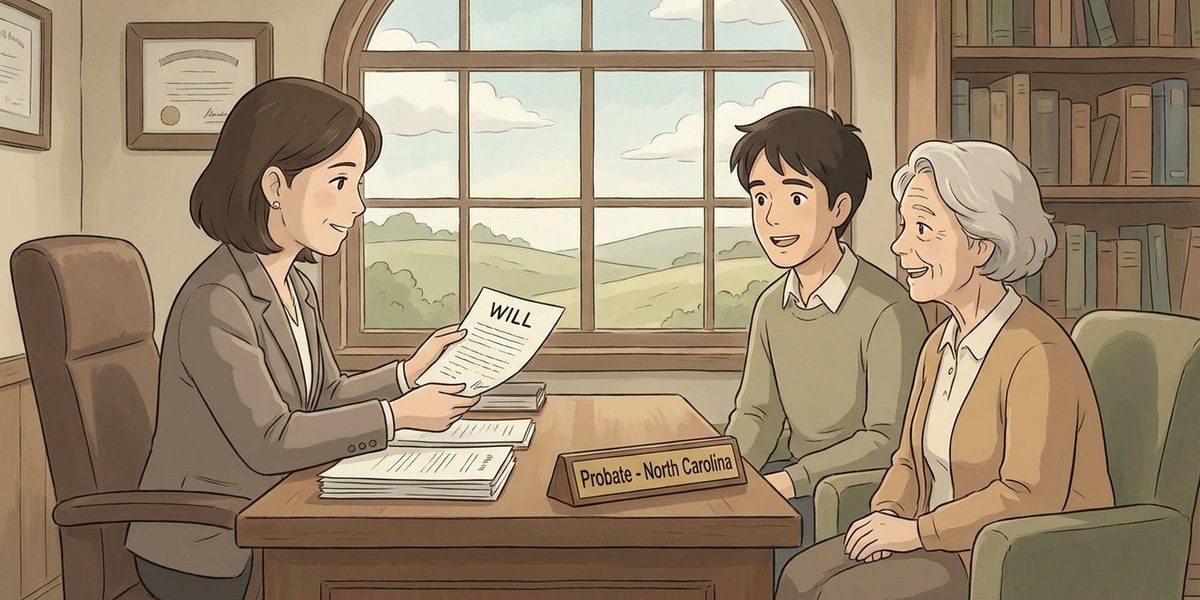
How do I start a simple probate case when there is a will and only one beneficiary? – North Carolina
Short Answer
In North Carolina, a “simple” probate case with a will usually starts by taking the original will (and proof of death) to the Clerk of Superior Court in the county where the person lived, and applying to qualify the executor so the clerk can issue Letters Testamentary. Having only one beneficiary can make distribution easier, but it does not eliminate the need to probate the will and follow the estate administration steps. After qualification, the executor must meet key deadlines, including filing an inventory and handling creditor notice requirements.
Understanding the Problem
In North Carolina probate, the main question is how to open an estate when a will exists and names one beneficiary: can the will be validated and can a personal representative be appointed to collect assets, pay valid debts, and transfer what remains to the beneficiary. The decision point is whether the person named in the will as executor can qualify with the Clerk of Superior Court (or, if that person cannot or will not serve, who can qualify instead). Timing matters because the will generally needs to be offered for probate within the time limits that protect title and estate administration.
Apply the Law
North Carolina gives the Clerk of Superior Court (as judge of probate) the authority to probate wills and oversee estate administration. The usual path is: (1) deliver the will to the clerk, (2) prove the will (often through a self-proving affidavit or witness affidavits), and (3) qualify a personal representative (typically the executor named in the will) so the clerk can issue Letters Testamentary. Even with one beneficiary, the executor still has duties to identify estate property, deal with creditor issues, and complete required filings with the clerk.
Key Requirements
- Proper court and county: The estate is opened with the Clerk of Superior Court (Estates) in the county with probate jurisdiction for the decedent’s estate.
- Will is accepted for probate: The original will is delivered and “proved” in a way the clerk will accept (commonly self-proved, or proved by witness affidavits/other proof if needed).
- Personal representative qualifies: The executor (or another eligible person if the executor renounces or is unavailable) completes the qualification process so the clerk can issue Letters Testamentary, and any bond/process-agent requirements are addressed if applicable.
What the Statutes Say
- N.C. Gen. Stat. § 7A-241 (Probate jurisdiction) – Gives the Clerk of Superior Court authority over probate of wills and administration of estates.
- N.C. Gen. Stat. § 31-39 (Probate needed to pass title; timing limits) – Explains why probating the will matters for passing title and includes key timing protections tied to probate and estate administration.
Analysis
Apply the Rule to the Facts: The facts describe a North Carolina estate where a will exists, needs to be validated, and there is only one beneficiary. That points to a standard “testate” estate opening: the will is delivered to the Clerk of Superior Court, the will is proved, and the executor qualifies so Letters Testamentary can be issued. The single-beneficiary setup can reduce disputes and simplify distribution, but the executor still must complete the required clerk filings and follow the creditor and inventory steps before closing the estate.
Process & Timing
- Who files: Usually the person named as executor in the will (or an attorney on the executor’s behalf). Where: Clerk of Superior Court (Estates) in the North Carolina county with probate jurisdiction for the decedent. What: The original will, proof of death, and the standard application to probate the will and issue letters (commonly filed on North Carolina AOC estate forms such as an application for probate/letters; some counties also require additional local checklists). When: As soon as practical after death, and in any event with close attention to the time limits that can affect title and administration.
- Qualification details: The clerk will confirm the will can be admitted to probate (for example, whether it is self-proved or needs witness affidavits). The executor typically signs an oath, requests certified letters, and addresses bond and process-agent issues if the executor is a nonresident or if the will/county policy requires it.
- After qualification: The executor opens an estate account, gathers and values estate assets, and files required clerk paperwork. A common early deadline is the 90-day inventory due after qualification, and the executor typically must also handle creditor-notice steps and later file accountings (annual and then final) before the clerk will close the estate and discharge the executor.
Exceptions & Pitfalls
- Executor cannot or will not serve: If the named executor renounces or is unavailable, the clerk may appoint a different personal representative under North Carolina’s priority rules, which can change the “simple” timeline.
- Bond and nonresident issues: Bond is often waived for a North Carolina resident executor if the will waives bond, but nonresident personal representatives can trigger added steps (including appointing a North Carolina process agent) and, depending on the will and local clerk practice, may still face bond requirements.
- Will-proof problems: If the will is not self-proved and witnesses cannot be located, extra affidavits or proof may be needed, which can slow qualification.
- Skipping creditor and accounting steps: Even with one beneficiary, the executor generally cannot safely distribute everything immediately without addressing creditor issues and completing required filings with the clerk.
- Real estate in another county: If the estate includes North Carolina real property outside the probate county, additional recording steps may be needed to protect title within the statutory time limits.
Conclusion
To start a simple North Carolina probate case with a will and one beneficiary, the usual first step is to deliver the original will and proof of death to the Clerk of Superior Court (Estates) and apply to qualify the executor so the clerk can issue Letters Testamentary. After qualification, the executor must follow the administration rules, including filing an inventory (commonly due within 90 days) and completing the required creditor and accounting steps before final distribution and closing the estate.
Talk to a Probate Attorney
If a will needs to be probated in North Carolina and the goal is a smooth, straightforward administration for a single beneficiary, our firm has experienced attorneys who can help explain the steps, paperwork, and deadlines. Call us today at [CONTACT NUMBER].
Disclaimer: This article provides general information about North Carolina law based on the single question stated above. It is not legal advice for your specific situation and does not create an attorney-client relationship. Laws, procedures, and local practice can change and may vary by county. If you have a deadline, act promptly and speak with a licensed North Carolina attorney.

