
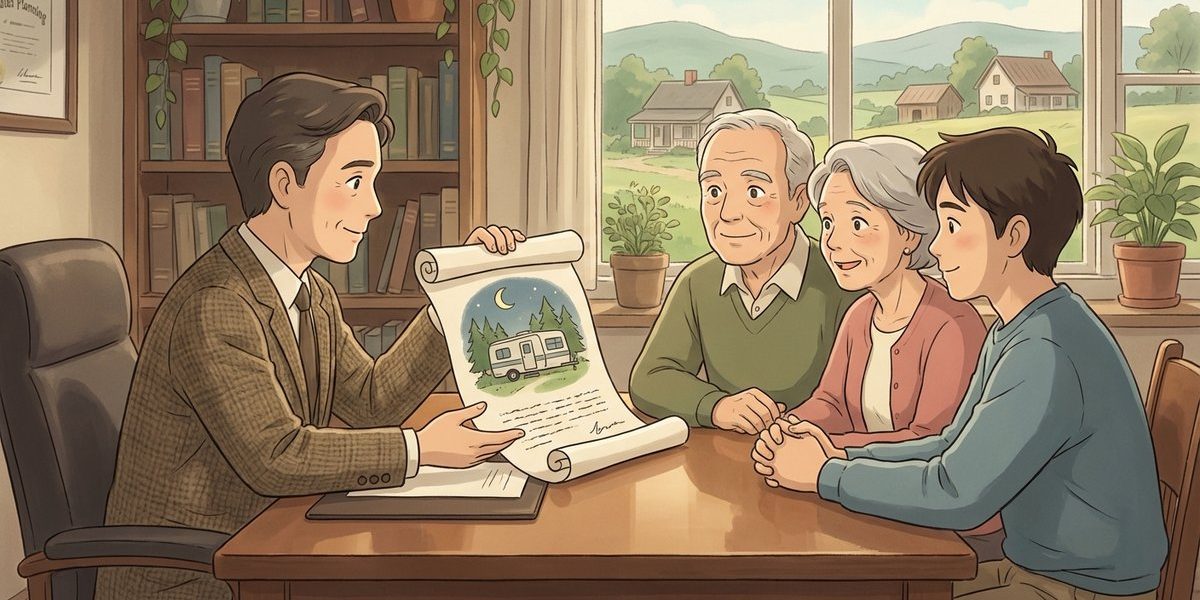
How do I leave my mobile home and everything inside it to my child? – North Carolina
Short Answer
In North Carolina, a mobile home can pass to a child through a properly signed and witnessed will, but the transfer steps depend on whether the home is still titled through the N.C. Division of Motor Vehicles (DMV) or has been converted to real property by surrendering and canceling the title. “Everything inside” is usually handled as personal property and can be covered by a clear gift clause in the will. If the child (or grandchild) is a minor at death, the will should name a trusted adult to manage the property through a testamentary trust or a custodianship so the minor does not receive direct control.
Understanding the Problem
In North Carolina estate planning, the main decision point is how the mobile home is legally classified at death: is it still a DMV-titled manufactured home, or has it been treated as real property attached to land. That classification affects which office handles the transfer and what paperwork is needed. The question also includes how to leave the contents of the home along with the home itself, and how to arrange management if the intended recipient is still a minor at death.
Apply the Law
North Carolina allows a person to leave property by will if the will is executed with the required formalities. For a mobile home, the transfer mechanics often turn on whether the home has a current certificate of title (handled through the DMV) or whether the title was surrendered and canceled so the home is treated as an improvement to real property (handled like real estate records through the county Register of Deeds). If the beneficiary is a minor, the will should direct the gift into a structure that allows an adult to manage it until the minor reaches the stated age.
Key Requirements
- Use a valid North Carolina will: The will must be signed by the testator and attested by at least two competent witnesses following North Carolina’s execution rules.
- Describe the mobile home and the “contents” clearly: The will should identify the manufactured home (and, if possible, key identifying details) and separately address the personal property inside to avoid disputes about what is included.
- Plan for a minor beneficiary: If the child/grandchild may be under 18 at death, the will should route the gift to a trustee (testamentary trust) or a custodian under North Carolina’s transfers-to-minors law, rather than distributing the property outright to the minor.
What the Statutes Say
- N.C. Gen. Stat. § 31-3.3 (Attested written will) – Sets the basic signing and witness requirements for a valid attested will in North Carolina.
- N.C. Gen. Stat. § 31-11.6 (Self-proved wills) – Allows a will to be made “self-proved,” which can streamline probate by reducing the need to locate witnesses later.
- N.C. Gen. Stat. § 20-77 (Transfer by operation of law; inheritance/devise) – Provides a DMV pathway for transferring titled property by inheritance or devise with appropriate documents.
- N.C. Gen. Stat. § 20-109.2 (Surrender of title to manufactured home) – Explains how a titled manufactured home’s title can be surrendered and canceled when it qualifies as real property.
- N.C. Gen. Stat. § 47-20.6 (Affidavit for permanent attachment) – Addresses recording steps after DMV cancels title so the manufactured home is treated as an improvement to real property.
- N.C. Gen. Stat. § 33A-5 (UTMA transfer authorized by will or trust) – Allows a will/trust to authorize a personal representative or trustee to transfer property to a custodian for a minor.
- N.C. Gen. Stat. § 33A-9 (How to create custodial property) – Describes how custodial property is created, including for certain titled property, using the required “as custodian for” wording.
Analysis
Apply the Rule to the Facts: The facts describe an owner who wants a will leaving a mobile home and everything inside to a child, with a backup plan if the intended recipient is still a minor. Under North Carolina law, the will needs to be properly executed and should clearly describe (1) the mobile home and (2) the personal property inside it. If the recipient is a minor at death, the will should direct the gift to a trustee or UTMA custodian so a trusted adult can manage the home and contents until the minor reaches the chosen age.
Process & Timing
- Who files: After death, the executor named in the will (or another qualified person) typically starts the estate. Where: the Clerk of Superior Court (Estates) in the county where the decedent lived. What: the original will is submitted for probate, and the executor seeks authority to act (often called “letters testamentary”). When: as soon as practical after death, especially if bills, lot rent, insurance, or security issues need attention.
- Transfer the mobile home based on its legal status: If the home is still DMV-titled, the executor typically works through the DMV transfer process using estate documents (for example, a certified will and proof of the executor’s authority) consistent with the “inheritance/devise” transfer pathway. If the title was surrendered and canceled and the home is treated as real property, the executor typically handles it like real estate, using the estate administration process and county land records as needed.
- Handle the “everything inside” gift: The executor inventories and distributes tangible personal property under the will. If the beneficiary is a minor, the executor distributes to the trustee/custodian named in the will rather than directly to the minor, and the trustee/custodian manages the property for the minor’s benefit.
Exceptions & Pitfalls
- Title status surprises: A manufactured home can be treated like a vehicle (titled) or like real estate (title surrendered/canceled and recorded). Planning and transfer steps can break down if the will assumes the wrong category.
- “Everything inside” can be unclear: Disputes often arise over what counts as “contents” (for example, items owned jointly, items already promised to someone else, or items that are actually fixtures). A clearer clause and a short list of major items can reduce conflict.
- Minor beneficiaries cannot manage property directly: If the will leaves the home outright to a minor without a trust/custodian, a court-supervised guardianship of the minor’s property may be needed before anyone can sell, insure, or manage the asset.
- Choosing the wrong manager: Naming a trusted adult is important, but the role should match the tool. A trustee manages trust property under the will’s rules; a UTMA custodian manages custodial property under the statute; a guardian is court-supervised.
- Liens and lot/land issues: If there is a lien on the home or a lease/lot agreement, those obligations can affect timing and what the executor can transfer until debts and paperwork are addressed.
Conclusion
In North Carolina, leaving a mobile home and its contents to a child usually starts with a properly executed will that clearly identifies the home and separately covers the personal property inside. The transfer steps then depend on whether the home is still DMV-titled or has been converted to real property by surrendering and canceling the title. If the intended recipient may be a minor, the will should direct the gift into a testamentary trust or a UTMA custodianship so a trusted adult can manage it. The next step is to sign a will that meets North Carolina’s witness requirements and names the trustee or custodian.
Talk to a Estate Planning Attorney
If you’re dealing with planning a mobile home transfer to a child (and want a trusted adult to manage it if the beneficiary is still a minor), our firm has experienced attorneys who can help you understand your options and timelines. Call us today at [919-341-7055].
Disclaimer: This article provides general information about North Carolina law based on the single question stated above. It is not legal advice for your specific situation and does not create an attorney-client relationship. Laws, procedures, and local practice can change and may vary by county. If you have a deadline, act promptly and speak with a licensed North Carolina attorney.

