
How do I get a will prepared for a family member who wants to leave property to relatives? – North Carolina
Short Answer
In North Carolina, the safest way to prepare a will is to have the person making the will (the “testator”) sign a written will and have at least two competent witnesses sign it in the testator’s presence. A notary is not required for the will to be valid, but notarizing a separate “self-proving” affidavit can make probate smoother later. Because small signing mistakes can invalidate a will, the process usually starts with gathering asset and family information, drafting clear instructions, and then scheduling a properly witnessed signing.
Understanding the Problem
In North Carolina estate planning, the core question is: can a family member get a will drafted and signed in a way that clearly leaves property to relatives and will be accepted later by the Clerk of Superior Court during probate? The decision point is whether the will is prepared and executed with the required formalities (who signs, who witnesses, and how the signing happens). The focus is not on what relatives “should” receive, but on what steps are required so the will is valid and workable when it is needed.
Apply the Law
North Carolina recognizes several types of wills, but the most common is an “attested written will.” For an attested written will, the testator signs (or directs someone to sign for them in their presence), and at least two competent witnesses sign in the testator’s presence. North Carolina also allows a will to be made “self-proved” through a notarized acknowledgment/affidavit, which can reduce problems later when the estate is opened with the Clerk of Superior Court.
Key Requirements
- Capacity and intent: The testator must be legally able to make a will and must sign with the intent that the document is their will.
- Proper signing and witnessing: The testator must sign (or direct a signature in their presence), and at least two competent witnesses must sign in the testator’s presence.
- Clear identification of gifts and people: The will should clearly identify the relatives receiving property and name a personal representative (executor) to carry out the instructions.
What the Statutes Say
- N.C. Gen. Stat. § 31-3.1 (Will invalid unless statutory requirements complied with) – A will must meet North Carolina’s statutory requirements to be valid.
- N.C. Gen. Stat. § 31-3.2 (Kinds of wills) – North Carolina recognizes attested written wills and other limited forms.
- N.C. Gen. Stat. § 31-3.3 (Attested written will) – Sets the signing and witness rules for the most common type of will.
- N.C. Gen. Stat. § 31-8.1 (Who may witness) – Any person generally competent to be a witness in North Carolina may witness a will.
- N.C. Gen. Stat. § 31-11.6 (How attested wills may be made self-proved) – Allows a will to be made “self-proved” using a notarized acknowledgment and witness affidavits.
Analysis
Apply the Rule to the Facts: Here, a family member wants to leave property to relatives and needs to know what is required to draft and sign the will. Under North Carolina law, the key is preparing a written will that the testator signs with intent and then completing a signing ceremony where at least two competent witnesses sign in the testator’s presence. If the will is also made self-proved with a notary and the required affidavits, it can reduce the risk of delays later if witnesses cannot be located when probate is opened.
Process & Timing
- Who prepares and signs: The testator signs. Where: Typically at an attorney’s office or another controlled setting in North Carolina. What: A written will, plus (recommended) a self-proving affidavit completed before a notary. When: After the draft matches the testator’s wishes and before any health or capacity concerns create doubt.
- Drafting step: Gather a clear list of assets (real estate, bank accounts, vehicles, personal items), the intended relatives, and alternates if a beneficiary dies first. Decide who will serve as personal representative (executor) and who should receive property if a primary beneficiary cannot take.
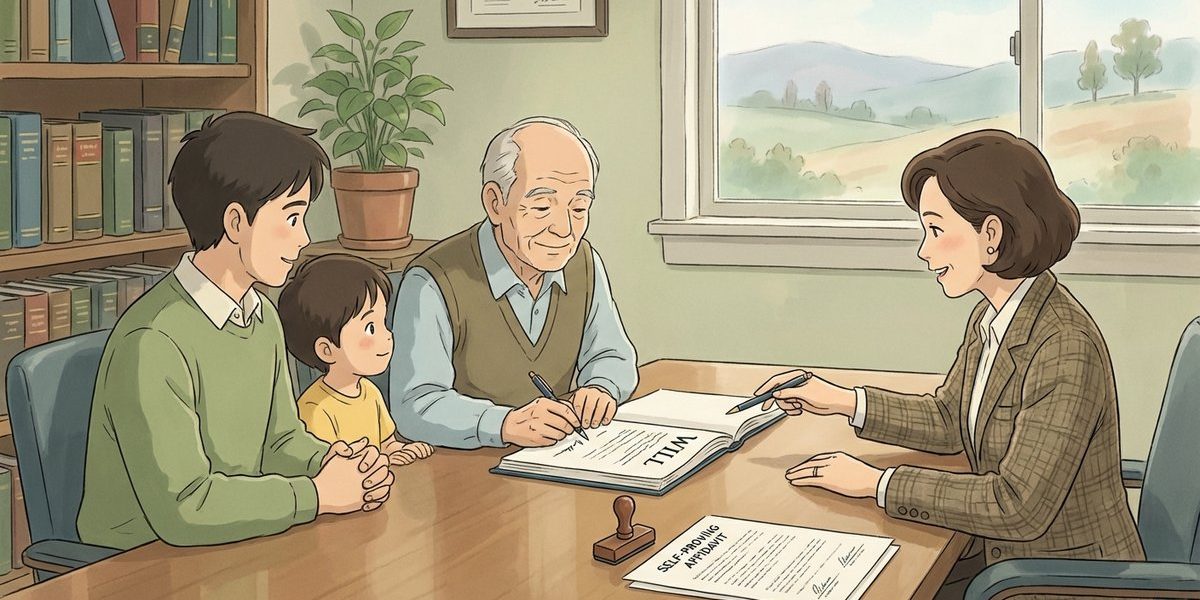
- Signing step: Schedule a signing with two competent witnesses present. The testator signs (or acknowledges a prior signature) and the witnesses sign in the testator’s presence. If using a self-proving affidavit, the testator and witnesses also sign the affidavit before a notary, and the affidavit is attached/annexed to the will.
Exceptions & Pitfalls
- Notary-only documents: A notarized document without the required witness signatures can create serious validity problems for an attested will in North Carolina.
- Witness problems: Using witnesses who are not truly present, or having witnesses sign outside the testator’s presence, can undermine the will. A self-proving affidavit can help later, but it does not fix a will that was not properly executed in the first place.
- Unclear gifts: Vague descriptions (for example, “leave the house stuff to the family”) can trigger disputes. Clear beneficiary names, clear property descriptions, and backup beneficiaries reduce confusion.
- Undue influence concerns: When a relative is heavily involved in arranging the will, it can raise later challenges. A clean process—where the testator gives instructions privately and the signing is handled carefully—helps reduce risk.
For more on execution and avoiding probate delays, see make sure it’s valid and notarized but doesn’t have witness signatures.
Conclusion
To get a will prepared in North Carolina for a family member leaving property to relatives, the safest approach is an attested written will: the testator signs with intent, and at least two competent witnesses sign in the testator’s presence. A self-proving affidavit signed before a notary is strongly recommended to make probate smoother later. The next step is to draft the will and then schedule a properly witnessed signing ceremony with the final documents.
Talk to a Estate Planning Attorney
If a family member is trying to leave property to relatives and wants a will that is drafted and signed correctly under North Carolina law, an estate planning attorney can help clarify options, prepare the documents, and coordinate a proper signing. Call us today at [919-341-7055].
Disclaimer: This article provides general information about North Carolina law based on the single question stated above. It is not legal advice for your specific situation and does not create an attorney-client relationship. Laws, procedures, and local practice can change and may vary by county. If you have a deadline, act promptly and speak with a licensed North Carolina attorney.

