
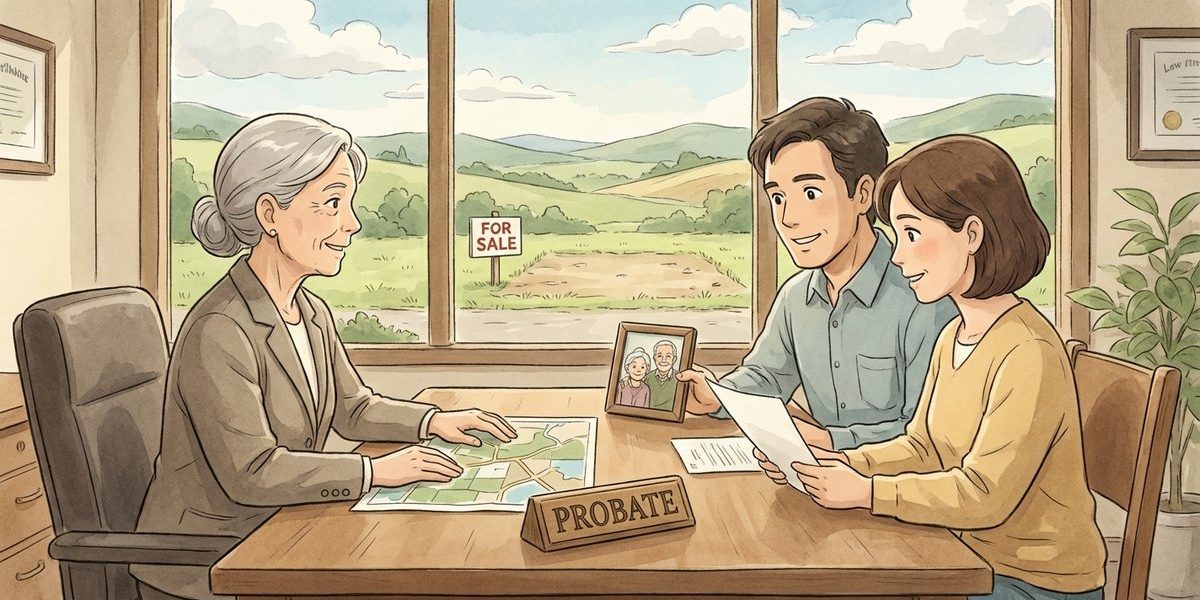
How do I transfer or clear title to a vacant lot that was owned by my parent who passed away? – North Carolina
Short Answer
In North Carolina, clearing title to a vacant lot after a parent’s death usually requires (1) probating the will with the Clerk of Superior Court and (2) recording the right documents in the county where the lot is located so the public records show the new owner. If the lot is in a trust, the trustee may be able to transfer title without a full estate administration, but the deed still must be recorded. The right path depends on how the lot was titled on the date of death and whether the property needs to be sold within two years.
Understanding the Problem
In North Carolina probate, the practical question is: can title to a vacant lot be transferred into the correct person’s name after a parent’s death so the property can be kept, insured, or sold? The key decision point is how the lot was owned at death (in the parent’s individual name, jointly with someone else, or in a trust), because that determines whether the Clerk of Superior Court must open an estate file and what must be recorded in the county land records.
Apply the Law
North Carolina generally treats real estate differently from bank accounts and other personal property. Title to real property typically passes to the heirs (if there is no will) or to the devisees named in a will, but the public records still need documentation to “clear” the chain of title. If there is a will, North Carolina law requires probate for the will to be effective to pass title, and special recording rules apply when the real property is in a different county than where the will was probated.
Key Requirements
- Confirm how the lot is titled: The deed and county records control whether the owner was the parent individually, a trust, or a joint owner (which can change whether probate is needed).
- Probate the will when required: If the lot was in the parent’s individual name and the parent left a will, the will generally must be probated through the Clerk of Superior Court to pass title under the will.
- Record the right documents in the right county: Even after probate, the county where the lot sits must have the probate documents (and often a deed) recorded so the Register of Deeds records reflect the new ownership.
What the Statutes Say
- N.C. Gen. Stat. § 31-39 (Probate necessary to pass title; recordation in county where real property lies) – Explains that a duly probated will passes title, and sets timing and county-recording rules that matter for real estate.
Analysis
Apply the Rule to the Facts: Here, the estate includes a parcel of real property (a vacant lot) and the parent left a will and also had a trust/investment account. If the vacant lot was titled in the parent’s individual name, clearing title usually means probating the will with the Clerk of Superior Court and then making sure the probate paperwork is filed in the county where the lot is located so the land records show the correct new owner. If the lot was titled in the name of the trust, the trustee may be the person with authority to sign and record a deed from the trust to the beneficiary or buyer, but the chain of title still needs to be documented carefully.
Process & Timing
- Who files: Usually the person named as executor in the will (or an heir) starts the process. Where: The Clerk of Superior Court (Estates) in the county where the parent was domiciled at death; and the Register of Deeds in the county where the vacant lot is located. What: File the will for probate and apply to qualify a personal representative if an estate administration is needed; then obtain certified copies of the will and probate certificate/order for recording in the land records. When: If the property may be sold or financed soon, timing matters; North Carolina has a key two-year rule in the probate statutes that can affect purchasers and creditors when a will is not timely probated and recorded for real estate.
- Title work and creditor notice planning: Before any sale or transfer, confirm the legal description, current deed, and any liens (tax liens, judgments, deeds of trust). Even when there are no known debts, real estate transactions often require careful handling of creditor-claim timing and documentation, especially if the property will be sold within two years of death.
- Record the transfer documentation: Depending on the situation, this may be (a) recording certified probate documents in the county where the lot is located, and/or (b) recording a deed signed by the personal representative or trustee to the new owner. Once recorded, the Register of Deeds index should reflect the new ownership chain.
Exceptions & Pitfalls
- Trust-owned lot vs. individually owned lot: A trust/investment account does not automatically mean the vacant lot is in the trust. If the deed never transferred the lot into the trust, probate may still be required for the real estate.
- Different county issue: If the will is probated in one county but the lot is in another, the probate documents typically must be filed in the county where the lot sits to protect the chain of title for real estate.
- “No debts” assumption: Even when there are no known debts and funeral expenses were paid, title companies and buyers often require proof that creditor issues were handled correctly (or that enough time has passed) before closing.
- Vehicle transfer is separate: An older vehicle is usually transferred through a DMV process (often using an estate affidavit process when eligible), but that does not clear title to real estate.
Conclusion
In North Carolina, clearing title to a vacant lot after a parent’s death usually turns on how the lot was titled at death. If the lot was in the parent’s individual name and there is a will, the will generally must be probated with the Clerk of Superior Court, and certified probate documents (and sometimes a deed) must be recorded in the county where the lot is located to update the land records. The most important next step is to file the will for probate with the Clerk and then record the certified probate documents in the property’s county as soon as possible.
Talk to a Probate Attorney
If a family is dealing with a vacant lot still titled in a parent’s name, a probate case (or trust transfer) and the right county recordings can make the difference between a clean sale and a delayed closing. Our firm has experienced attorneys who can help explain the options, paperwork, and timelines. Call us today at (919) 341-7055.
Disclaimer: This article provides general information about North Carolina law based on the single question stated above. It is not legal advice for your specific situation and does not create an attorney-client relationship. Laws, procedures, and local practice can change and may vary by county. If you have a deadline, act promptly and speak with a licensed North Carolina attorney.

