
If there is no will, what facts help determine whether someone should be treated as an heir in the estate process? – North Carolina
Short Answer
In North Carolina, when there is no will, “heirs” are the people the Intestate Succession Act says inherit—usually a spouse and close blood relatives, and sometimes adopted children or children born outside of marriage if certain legal steps were taken. The key facts are the family relationships (and whether they are legally recognized), whether anyone failed the survivorship rules, and whether any legal bar applies (such as the slayer rule). In practice, the estate process often turns on documents that prove those relationships, like birth certificates, marriage records, adoption decrees, and court orders establishing parentage.
Understanding the Problem
When a North Carolina resident dies without a will, the estate process must decide who counts as an “heir” before property can be distributed and before some payments can be safely made. The decision point is whether a particular person should be treated as an heir under North Carolina intestate succession rules, based on the person’s legal relationship to the person who died and any timing or disqualification issues that affect inheritance.
Apply the Law
North Carolina’s Intestate Succession Act (Chapter 29) sets the order of inheritance when there is no will. The Clerk of Superior Court (estate division) typically oversees the estate administration process, including appointing a personal representative and addressing questions about who the heirs are. In many estates, a practical “deadline trigger” arises from required notices (for example, creditor notice and related time windows) and from the need to confirm heirs before distributing funds.
Key Requirements
- A legally recognized family relationship: The person must fit into a class the statute recognizes (such as spouse, child/lineal descendant, parent, sibling, or more remote kin if closer relatives do not exist).
- Proof of that relationship: The estate must be able to document the relationship with reliable records (vital records, court orders, adoption decrees, or other legally meaningful proof).
- No disqualifying rule applies: Certain rules can treat a person as having predeceased the decedent or can bar inheritance (for example, survivorship rules and the slayer rule).
What the Statutes Say
- N.C. Gen. Stat. § 29-13 (Intestacy; survivorship rules) – Establishes that intestate distribution follows Chapter 29 and ties survivorship determinations to the survivorship rules in Chapter 28A.
- N.C. Gen. Stat. § 29-15 (Shares of heirs other than spouse) – Sets the order and shares for children/descendants, parents, siblings/descendants of siblings, and then more remote relatives if needed.
- N.C. Gen. Stat. § 29-16 (Distribution within a class) – Explains how shares are divided within a class (for example, among children and the descendants of a deceased child).
- N.C. Gen. Stat. § 29-19 (Children born out of wedlock; inheritance through parents) – Describes when a child born out of wedlock (and related family members) can inherit by, through, and from a parent, including specific ways paternity can be legally established and a notice requirement tied to creditor notice.
- N.C. Gen. Stat. § 29-18 (Legitimated children) – Provides that a child legitimated under North Carolina law (or comparable law elsewhere) inherits as if born in wedlock.
- N.C. Gen. Stat. § 31A-4 (Slayer barred) – Bars a “slayer” from inheriting and treats the slayer as having died before the decedent for inheritance purposes.
Analysis
Apply the Rule to the Facts: The key estate task is confirming who qualifies as an heir before money is paid out under a court order or as part of administration. If a signed order exists but has not posted publicly yet, the practical risk is paying the wrong person (or paying too early) before the estate has documented the correct heirs and any required notices have run. In North Carolina, heir status turns on legally provable relationships (spouse/children/parents/siblings, etc.), plus special rules for adoption and for children born outside marriage, and any disqualifying rules like survivorship or the slayer bar.
Process & Timing
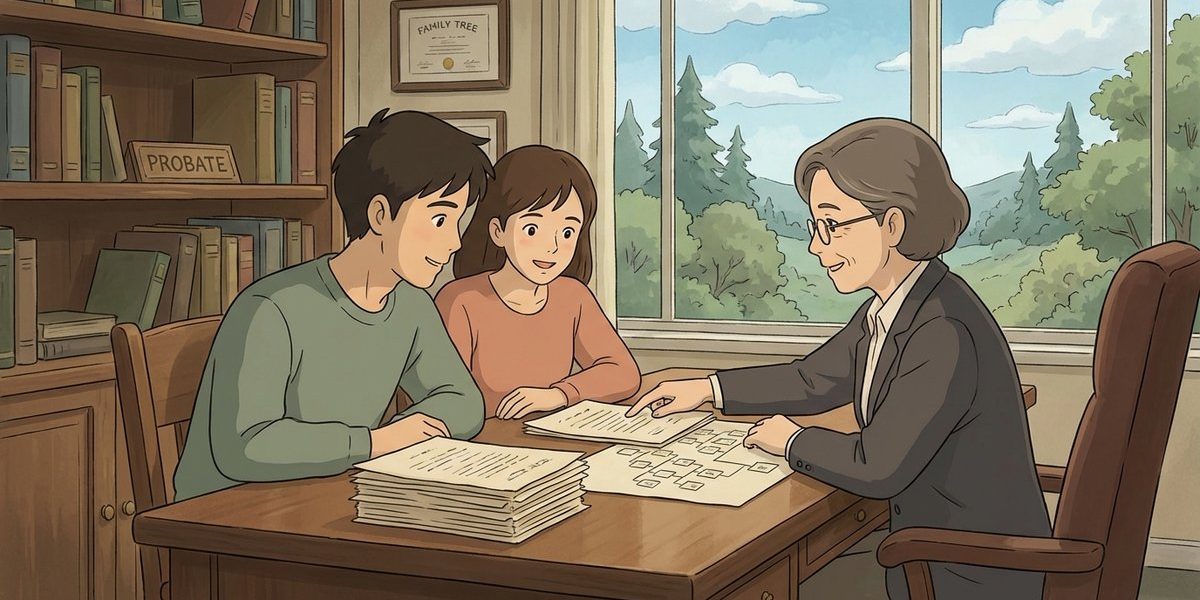
- Who identifies heirs: The personal representative (executor/administrator) typically identifies heirs. Where: The estate is handled through the Clerk of Superior Court (estate division) in the county where the decedent lived. What: The estate file commonly includes a family history summary and supporting records (for example, death certificate, marriage certificate, birth certificates, adoption decrees, and any court orders establishing parentage). When: Heir identification should be completed before distributions and before relying on a payment deadline tied to a court order.
- Confirm “who counts” under Chapter 29: The administrator works down the statutory order (spouse, descendants, parents, siblings/descendants of siblings, then more remote relatives). If a potential heir’s status depends on adoption or parentage, the administrator typically gathers the adoption decree or the paternity/legitimation documentation that makes the relationship legally recognized for inheritance.
- Document and distribute: After heirs are confirmed and the estate is in a position to distribute, the administrator makes distributions consistent with the statute and the estate accounting. If a court order requires a payment, the administrator should match the payee to the legally confirmed heir(s) and the estate’s authority to pay.
Exceptions & Pitfalls
- “Family” is not always “heir”: Stepchildren, long-term partners, and informal caregivers are often not heirs under intestacy unless there is a legally recognized relationship (for example, adoption or marriage).
- Adoption changes inheritance lines: A final adoption generally creates a parent-child relationship for inheritance purposes with the adoptive family, and it can sever inheritance rights through biological parents except in specific situations (such as certain stepparent adoptions). Missing the adoption decree (or misunderstanding what type of adoption occurred) can lead to the wrong heir list.
- Children born out of wedlock can require specific proof: Inheritance through a father can depend on a qualifying paternity adjudication, a properly executed and filed acknowledgment, or other statutory paths. A common mistake is assuming informal acknowledgments (or a name on paperwork that is not filed as required) automatically establishes inheritance rights.
- Survivorship and disqualification issues: If a potential heir did not survive the decedent long enough under the survivorship rules, or if the slayer rule applies, the law can treat that person as having predeceased the decedent, changing who inherits.
- Paying before heirship is clear: When a signed order has not posted publicly and a payment deadline is approaching, rushing to pay can create avoidable disputes if the estate later confirms a different heir set or a different share allocation under Chapter 29.
For more background on how intestate estates are handled, see what happens if there is no will or if it is unclear whether a will exists and how assets are divided when there is no will.
Conclusion
In North Carolina, a person should be treated as an heir in a no-will estate only if that person fits within the intestate succession classes and can prove a legally recognized relationship to the decedent (such as spouse, child/descendant, parent, or sibling), with special attention to adoption and parentage rules. Disqualifying rules (including survivorship and the slayer bar) can change the heir list. The next step is to gather relationship documents and file them with the Clerk of Superior Court as part of the estate administration before making any distribution or court-ordered payment.
Talk to a Probate Attorney
If there is a no-will estate and there is uncertainty about who should be treated as an heir before a payment is made or a deadline hits, our firm has experienced attorneys who can help explain the rules, gather the right proof, and keep the administration on track. Call us today at (919) 341-7055.
Disclaimer: This article provides general information about North Carolina law based on the single question stated above. It is not legal advice for your specific situation and does not create an attorney-client relationship. Laws, procedures, and local practice can change and may vary by county. If you have a deadline, act promptly and speak with a licensed North Carolina attorney.

