
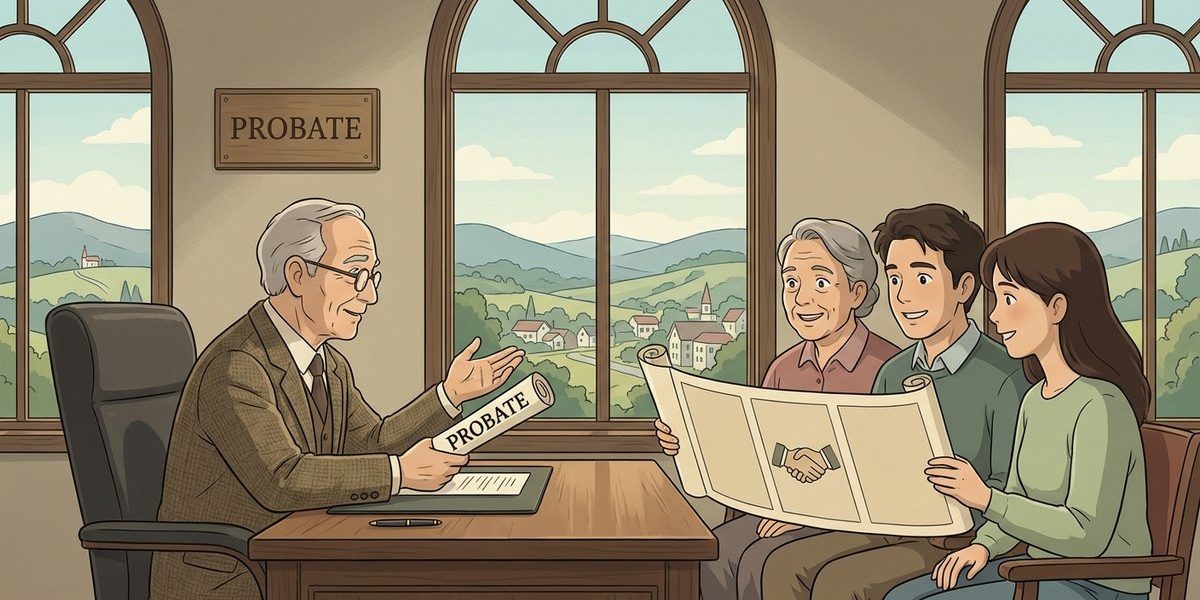
Can the heirs enforce a family agreement to split the estate equally if probate is taking too long? – North Carolina
Short Answer
Sometimes, but not just because probate is moving slowly. In North Carolina, heirs can often sign an agreement about how to divide what is left after valid debts, expenses, and any spouse/child allowances are handled, but the personal representative and the Clerk of Superior Court still control the probate process. If the agreement changes what a will says (or affects a will contest), court approval is usually required and the clerk may not have authority to approve it. When delays persist, the more direct solution is often to ask the clerk for action in the estate file rather than trying to “enforce” an informal split.
Understanding the Problem
In North Carolina probate, can heirs make a private family agreement to split an estate equally and then require the estate administrator to distribute the money that way when the estate has been stuck for a long time? The decision point is whether the agreement can be carried out within the probate case (under the Clerk of Superior Court’s supervision) or whether it conflicts with the will, creditor rights, or required probate steps that must happen before any distribution.
Apply the Law
North Carolina estates are administered under the supervision of the Clerk of Superior Court. Even when all heirs agree on an equal split, the estate still must follow the required order of administration: identify the proper beneficiaries, pay valid claims and administration costs, address any statutory allowances, and then distribute what remains. A family settlement agreement can be a useful tool to resolve a real dispute among interested persons, but it does not automatically override probate rules or speed up the clerk’s processing time. If the agreement would change the distribution required by a will (or is tied to a will contest), it typically needs the right kind of court approval.
Key Requirements
- Everyone with a real interest must be covered: A workable agreement usually requires all interested persons to be included (and able to legally consent). If someone is a minor, legally incompetent, unborn/unascertained, or otherwise cannot consent, the estate often needs a court-supervised process instead of a simple private agreement.
- The agreement cannot skip required estate obligations: Equal division happens only after the estate’s proper expenses and lawful claims are handled and any required allowances are addressed.
- The agreement must fit the forum’s authority: The Clerk of Superior Court supervises most estate administration issues, but some settlements (especially those that modify a will’s terms or resolve a caveat) require Superior Court involvement and approval.
What the Statutes Say
- N.C. Gen. Stat. § 1-301.3 (Estate matters decided by clerk; appeal) – In most trust and estate administration matters, the clerk decides issues of fact and law and enters orders; an aggrieved party generally has a short window to appeal after service of an order.
- N.C. Gen. Stat. § 29-13 (Intestate distribution; subject to costs and claims) – If there is no will, distribution follows the intestacy statute, but it is subject to administration costs and lawful claims.
- N.C. Gen. Stat. § 30-20 (Year’s allowance procedure) – The clerk addresses statutory allowances and enters orders awarding them, which can affect what is available for later distribution.
- N.C. Gen. Stat. § 31-37.1 (Settlement agreement in caveat; court approval) – In a will caveat (will contest), a settlement must be approved by the Superior Court and then reduced to judgment.
Analysis
Apply the Rule to the Facts: Here, the estate has been open for years and the file is reportedly waiting on the clerk after paperwork was filed to change the estate administrator. An equal-split agreement among heirs may help reduce conflict, but it does not replace the clerk’s role in appointing or changing the personal representative and supervising administration. If the agreement would change what a will requires (or if there is a dispute about the will), the agreement may need court approval in the proper forum before any distribution can safely be made. If the main problem is delay at the clerk’s office, the most effective step is usually to seek a clear status update and a scheduled hearing or order in the estate file.
Process & Timing
- Who files: Typically an heir, the current personal representative, or a proposed successor personal representative (often through counsel). Where: The Clerk of Superior Court in the county where the estate is administered (the estate file). What: A written request/motion/petition in the estate file asking the clerk to act on the pending administrator change and to set the matter for hearing if needed. When: As soon as it becomes clear the estate is stalled and a clerk’s order is needed to move forward.
- Next step: If all interested persons agree, counsel can present a proposed consent order or a settlement document for approval when approval is required. If not everyone can legally consent (for example, a minor heir), the matter may require a court-supervised proceeding with a guardian ad litem.
- Final step: Once the proper personal representative is in place and the estate is ready to close, the personal representative distributes remaining assets and files the closing paperwork with the clerk.
Exceptions & Pitfalls
- Changing a will is different from settling a dispute: If the agreement effectively rewrites the will’s distribution, it may not be something the clerk can approve in routine administration, and it may require Superior Court involvement (especially in a caveat context).
- Not everyone may be able to sign: If any interested person is a minor, legally incompetent, or unborn/unascertained, a private agreement may not be enough. The estate may need a court proceeding and a guardian ad litem to bind those interests.
- Debts, expenses, and allowances come first: Even a unanimous agreement cannot force distribution before the estate is actually ready to distribute under probate rules, including handling statutory allowances and valid claims.
- Delay may be administrative, not legal: When the holdup is clerk processing time or an incomplete filing, “enforcing” an agreement may not fix the bottleneck. A targeted request for clerk action (and a hearing date if needed) often addresses the real problem.
Conclusion
In North Carolina, heirs can sometimes use a family agreement to settle a real dispute about who gets what, but an equal-split agreement does not automatically override probate requirements or speed up a stalled estate. The Clerk of Superior Court still supervises administration, and agreements that change a will’s terms (or relate to a will contest) typically require court approval in the proper forum. The practical next step is to file a written request in the estate file asking the clerk to act on the pending change of administrator and set the matter for hearing if necessary.
Talk to a Probate Attorney
If a North Carolina estate has been stuck in probate and the family is trying to reach an equal split, our firm has experienced attorneys who can help clarify whether an agreement can be approved and what can be filed to move the clerk’s process forward. Call us today at [919-341-7055]. For more on delays, see what can be done to move a probate case forward and what to do if the estate still hasn’t been settled.
Disclaimer: This article provides general information about North Carolina law based on the single question stated above. It is not legal advice for your specific situation and does not create an attorney-client relationship. Laws, procedures, and local practice can change and may vary by county. If you have a deadline, act promptly and speak with a licensed North Carolina attorney.

