
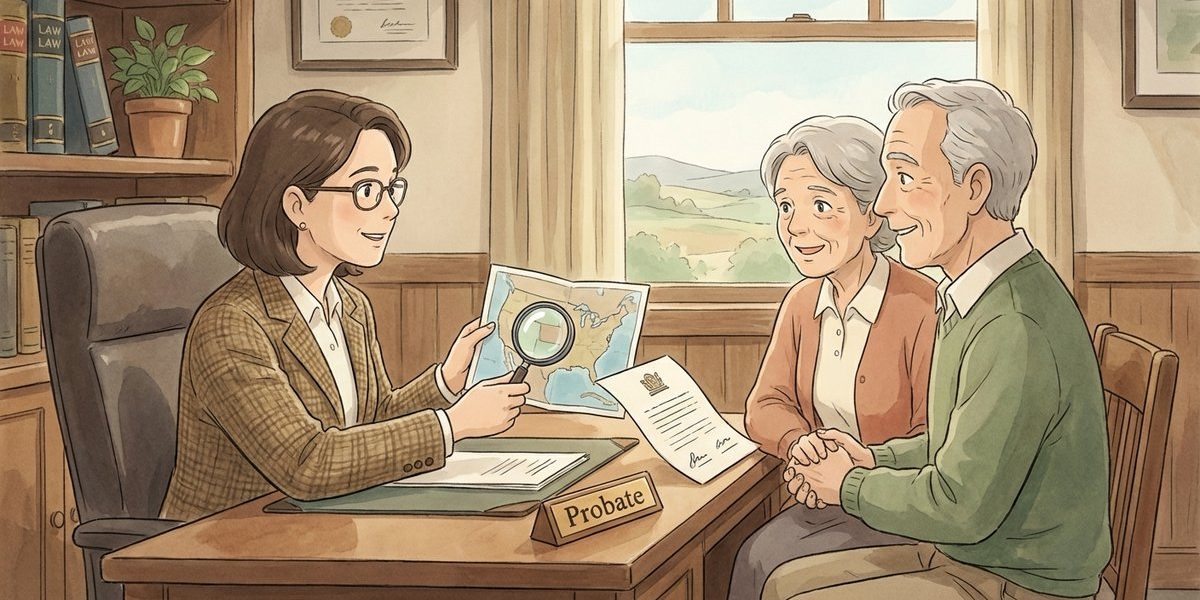
How do I request a death certificate for a relative who died in another state? – North Carolina
Short Answer
When a relative dies in another state, the death certificate is issued by that state’s vital records office (often the state department of health) or the local office in the county where the death occurred. The usual process is to submit an application, proof of identity, proof of eligibility (relationship or legal need), and a fee, then request one or more certified copies. In North Carolina probate and estate work, a certified death certificate is commonly needed to unlock financial and property transfers even if the Clerk of Superior Court can sometimes begin probate without it.
Understanding the Problem
In a North Carolina probate situation, can a family member request an official death certificate when the death happened outside North Carolina, and what office handles that request in the other jurisdiction? The key decision point is identifying the correct issuing office where the death was recorded and confirming whether the requester qualifies to receive a certified copy. This question usually comes up when an inheritance, beneficiary payment, or estate administration step cannot move forward without an official certificate.
Apply the Law
North Carolina law explains who may receive certified copies of vital records and why certified copies matter in estate administration, but it does not control how another state issues its death certificates. Practically, the death certificate must be requested from the state (or county) where the death occurred, using that jurisdiction’s rules on eligibility, identification, and fees. In North Carolina, certified copies of vital records are generally limited to close family members, people with a legal need tied to personal or property rights, and their attorneys or authorized agents.
Key Requirements
- Correct issuing office: The request must go to the vital records office in the state (and sometimes the county) where the death was registered, not to North Carolina.
- Eligibility to receive a certified copy: Most states restrict certified copies to close relatives, the personal representative, or someone who can show a legal need (for example, handling property or beneficiary claims).
- Proper documentation and payment: The request typically requires a completed application, acceptable photo ID, proof of relationship or legal interest if required, and the required fee and shipping method.
What the Statutes Say
- N.C. Gen. Stat. § 130A-93 (Access to vital records; copies) – Limits who can receive a certified copy (including certain relatives and people seeking information for a legal determination of personal or property rights).
- N.C. Gen. Stat. § 130A-93.1 (Fees for vital records copies or search) – Sets the state-level fee structure for North Carolina vital record copies and searches (useful for comparison and budgeting, even though the out-of-state fee will differ).
Analysis
Apply the Rule to the Facts: Here, a relative died in another jurisdiction and left money, but an official death certificate is needed to move forward. Because the death occurred outside North Carolina, the request must be made to the other jurisdiction’s vital records office or the local office that holds death records for the county of death. If the requester is an eligible relative or can show a legal need tied to property rights (such as administering an estate or collecting a beneficiary payment), the issuing office will typically provide certified copies once the application, ID, and fee requirements are met.
Process & Timing
- Who files: Usually an eligible family member, the personal representative, or an attorney/authorized agent. Where: The other state’s vital records office (and sometimes the county office where the death occurred). What: That jurisdiction’s “Application for Certified Copy of Death Certificate” (names vary), plus photo ID and any required proof of relationship or legal interest. When: As soon as the certificate is needed for estate or beneficiary steps; processing times vary by state and method (mail, online vendor, or in-person).
- Order enough certified copies: Estate administration often involves multiple institutions (banks, insurers, retirement administrators, title companies). Many will insist on a certified copy, not a photocopy. If the funeral home already provided some copies, it may still be necessary to order additional certified copies later.
- Use the certificate for the next step: Once received, the certified death certificate is typically used to support beneficiary claims and to support probate-related filings and transfers. It should be reviewed for accuracy because even small errors (like a misspelled name) can cause delays and may require a formal correction process with the issuing jurisdiction.
Exceptions & Pitfalls
- Certified vs. non-certified copies: Many financial institutions and courts require a certified copy. Ordering only informational copies can force a second request and add weeks of delay.
- Eligibility problems: If the requester is not within the other state’s eligible categories, the request may be denied unless a personal representative is appointed or an attorney authorization is provided.
- Errors on the certificate: Misspellings and incorrect personal details can stall estate and beneficiary transactions. Fixing errors usually requires working with the issuing jurisdiction’s correction process, which can take time.
Conclusion
For a relative who died outside North Carolina, the death certificate must be requested from the vital records office (or local issuing office) in the state and county where the death occurred, following that jurisdiction’s eligibility, ID, and fee rules. Under North Carolina practice, a certified death certificate is often needed to complete estate-related transfers even if probate can sometimes begin without it. The next step is to identify the county of death and submit the other jurisdiction’s certified-copy application with required ID as soon as possible.
Talk to a Probate Attorney
If dealing with an out-of-state death certificate is delaying an inheritance or the next probate step, our firm has experienced attorneys who can help identify the right issuing office, confirm what proof is typically needed, and keep the estate process moving. Call us today at (919) 341-7055.
Disclaimer: This article provides general information about North Carolina law based on the single question stated above. It is not legal advice for your specific situation and does not create an attorney-client relationship. Laws, procedures, and local practice can change and may vary by county. If you have a deadline, act promptly and speak with a licensed North Carolina attorney.

