
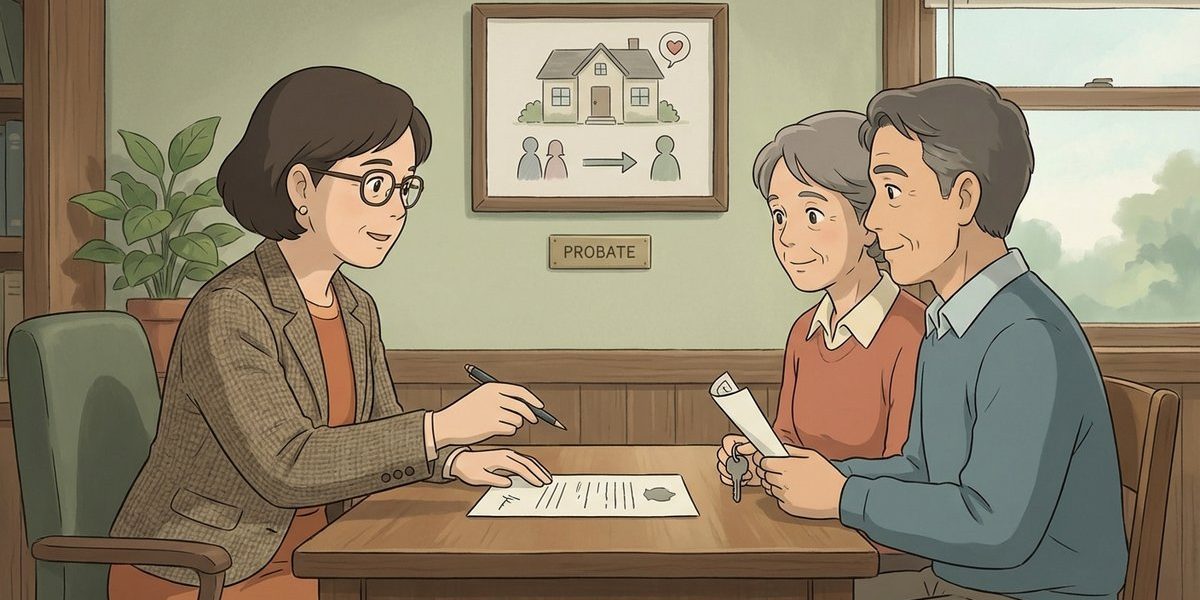
Does a jointly titled home automatically transfer to the surviving spouse, and does it still need to be included in probate? – North Carolina
Short Answer
In North Carolina, a jointly titled home often transfers to the surviving spouse automatically, but only if the deed created a survivorship form of ownership (most commonly “tenancy by the entirety” for married couples). When survivorship applies, the home generally does not pass under the will and is not a probate asset for distribution. Even so, the personal representative and the Clerk of Superior Court may still need to identify the property during the estate administration, and in limited situations it can matter for paying valid estate claims.
Understanding the Problem
In North Carolina probate, the key question is whether a home titled in both spouses’ names transfers automatically at death, or whether the personal representative must treat it as part of the probate estate. The decision point is the type of co-ownership shown on the recorded deed: some forms include a built-in right of survivorship, while others do not. If the deed does not include survivorship, the deceased spouse’s share may still pass under the will and may need probate administration to clear title.
Apply the Law
North Carolina recognizes different ways two people can co-own real estate. For spouses, the most common is tenancy by the entirety, which includes survivorship by operation of law. North Carolina also allows joint tenancy with right of survivorship if the deed clearly states survivorship language. If the deed creates a tenancy in common (the default when survivorship is not stated), there is no automatic transfer at death, and the deceased owner’s share typically passes under the will (or by intestacy if there is no will).
Forum note: probate and estate administration are handled through the Clerk of Superior Court in the county where the estate is opened. Title issues for real property are handled through the recorded deed and, when needed, follow-up filings in the county where the property is located.
Key Requirements
- Survivorship ownership must exist: The deed must reflect a survivorship form of ownership (commonly tenancy by the entirety for spouses, or a joint tenancy with right of survivorship if clearly stated).
- Correct deed language controls (not the will): If survivorship applies, the home passes to the survivor under the deed’s survivorship feature, not under the will’s gift provisions.
- Probate treatment depends on the ownership type: Survivorship property is generally outside probate for distribution, while a tenancy-in-common share is typically a probate asset that may require estate administration to transfer clear title.
What the Statutes Say
- N.C. Gen. Stat. § 41-64 (Tenancy by the entirety; survivorship at death) – provides that, at a spouse’s death, property held as tenants by the entirety belongs to the surviving spouse by survivorship, and the deceased spouse has no descendable interest.
- N.C. Gen. Stat. § 41-56 (Creation of tenancy by the entirety) – explains when a conveyance to spouses creates a tenancy by the entirety unless the deed shows a contrary intent.
- N.C. Gen. Stat. § 41-71 (Creation of joint tenancy with right of survivorship) – states that co-ownership defaults to tenancy in common unless the instrument expresses an intent to create a joint tenancy with right of survivorship.
Analysis
Apply the Rule to the Facts: The facts describe one property that appears jointly titled with the surviving spouse and other properties titled solely in the decedent’s name. If the jointly titled home is held as tenants by the entirety (the common result when the deed is to spouses and does not say otherwise), it typically transfers automatically to the surviving spouse and does not pass under the will. By contrast, the properties titled solely in the decedent’s name are generally probate assets that the personal representative must administer under the will, including the out-of-area property devised to the stepchild.
Process & Timing
- Who confirms ownership: the personal representative (or the person preparing the probate filings). Where: the recorded deed in the Register of Deeds office for the county where the home is located, and the estate file with the Clerk of Superior Court where probate is opened. What: review the deed language to confirm whether it is tenancy by the entirety, joint tenancy with right of survivorship, or tenancy in common.
- Inventory and administration: the estate administration focuses on assets titled solely in the decedent’s name and any non-survivorship interests. Even when survivorship applies, the Clerk may still expect the estate to disclose the existence of jointly owned/survivorship property in a practical way so the administration is accurate and creditor issues are evaluated.
- Title cleanup for the survivor: if the home passed by survivorship, the surviving spouse typically proves the transfer with the recorded deed and a death certificate (and sometimes additional title-company paperwork if the property will be sold or refinanced). If survivorship does not apply, the personal representative may need probate documents and deed work to transfer the decedent’s share to the proper beneficiary under the will.
Exceptions & Pitfalls
- “Jointly titled” does not always mean survivorship: if the deed does not create tenancy by the entirety or does not clearly state “right of survivorship,” North Carolina’s default is often a tenancy in common, and the decedent’s share may still require probate to transfer.
- Out-of-area property can require separate steps: even with a North Carolina probate, real estate located in another state often requires additional proceedings in that state to transfer title, depending on local law and how the deed is titled.
- Debt and claim issues: survivorship property generally does not pass under the will, but estate administration still needs to account for valid claims and how they will be paid. In some situations, the estate may need to evaluate whether certain non-probate assets can be reached to satisfy claims when probate assets are not enough.
- Deed wording and marital status matter: tenancy by the entirety depends on the parties being spouses at the time of the conveyance and on the deed not showing a contrary intent. A deed prepared incorrectly can change the outcome.
For more background on how co-ownership affects probate, see do we need to open probate to transfer or sell a home that is in both spouses’ names and what paperwork will a title company need.
Conclusion
In North Carolina, a jointly titled home transfers automatically to the surviving spouse only if the deed created a survivorship form of ownership (most often tenancy by the entirety for spouses). When survivorship applies, the home usually does not pass under the will and is not a probate asset for distribution, even though it may still need to be identified during estate administration. The next step is to obtain and review the recorded deed and confirm the ownership language before filing or finalizing the estate inventory with the Clerk of Superior Court.
Talk to a Probate Attorney
If a North Carolina estate includes multiple properties and one appears jointly titled with the surviving spouse, a short deed review can clarify whether the home transfers automatically or needs probate steps to clear title. Our firm has experienced attorneys who can help explain options, paperwork, and timelines. Call us today at (919) 341-7055.
Disclaimer: This article provides general information about North Carolina law based on the single question stated above. It is not legal advice for your specific situation and does not create an attorney-client relationship. Laws, procedures, and local practice can change and may vary by county. If you have a deadline, act promptly and speak with a licensed North Carolina attorney.

