
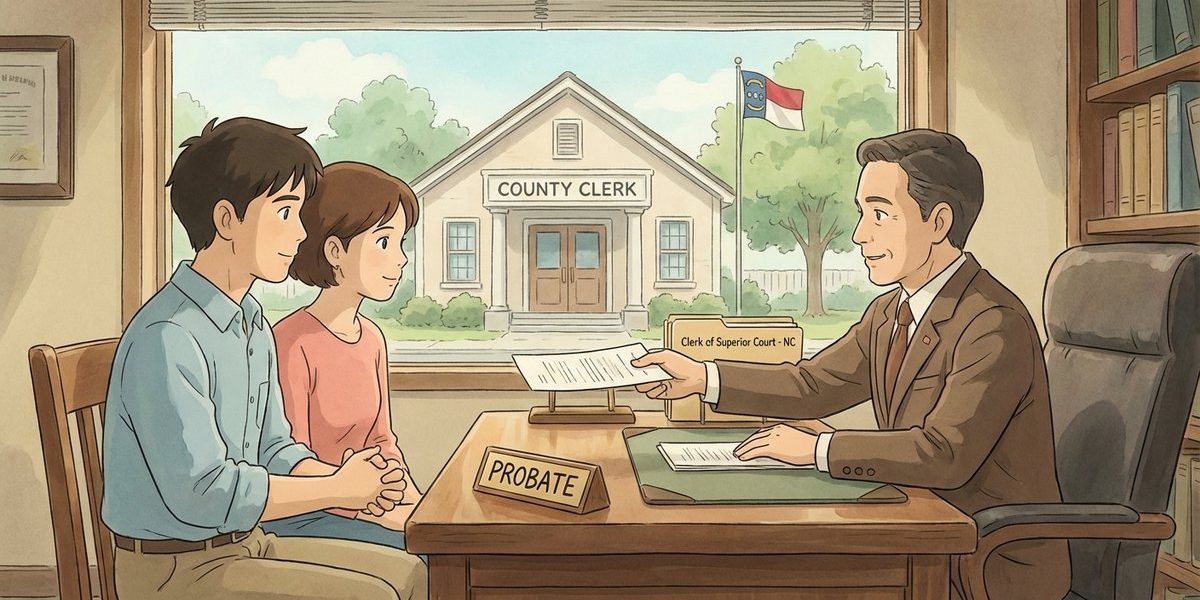
How can I get a copy of a will that isn’t scanned into the online court system? – North Carolina
Short Answer
In North Carolina, the practical way to get a will that is not imaged online is to request a copy directly from the Clerk of Superior Court (Estates) in the county where the will was filed for probate. The request can usually be handled by mail, email, or in person, and the clerk can provide either a regular copy or a certified copy depending on what is needed for a real property or title issue. If there is no probate file yet, the will is generally not public until it is offered for probate.
Understanding the Problem
In North Carolina probate, can a law firm obtain a copy of a decedent’s will when the will is not available in the online court system, and what is the correct place to request it when the copy is needed to help establish an ownership interest in real property?
Apply the Law
In North Carolina, the Clerk of Superior Court (Estates) is the office that handles probate filings, including wills that have been offered for probate. Once a will is filed for probate, it becomes part of the estate record maintained by the clerk, and copies are typically available upon request even if the document has not been scanned into an online portal. For real property purposes, a certified copy is often requested because it carries the clerk’s certification that it is a true copy of what is on file.
Key Requirements
- Identify the correct county file: The request usually needs the county where the will was offered for probate and enough identifying information (decedent name and date of death, approximate filing date, estate file number if known) for the Estates division to locate the record.
- Request the right type of copy: A regular copy may work for review, but a certified copy is commonly needed for title work, recording, or to prove the contents of the probate record in another setting.
- Confirm the will is public: A will held for safekeeping before death is not open for public inspection; it generally becomes public only after it is offered for probate.
What the Statutes Say
- N.C. Gen. Stat. § 31-11 (Wills deposited with the clerk for safekeeping) – provides that a will deposited for safekeeping is not public and is not open to inspection by others until it is offered for probate.
- N.C. Gen. Stat. § 98-5 (Certified copy of will record as evidence) – allows a certified copy of the will and the probate record to be used as competent evidence when it is necessary to establish title or for other purposes.
Analysis
Apply the Rule to the Facts: The scenario involves descendants who need a will copy to help prove an ownership interest in real property, but the will is not available online. Because North Carolina probate records are maintained by the Clerk of Superior Court (Estates), the next step is to request a copy directly from that clerk’s office in the county where the will was filed. If the purpose is to support a real property claim or title work, requesting a certified copy (and, when needed, certified probate documents that go with the will) usually fits the task better than an uncertified printout.
Process & Timing
- Who files: A requesting party (often an heir, attorney, or title professional). Where: Clerk of Superior Court, Estates division, in the county where the will was offered for probate in North Carolina. What: A written request for a copy of the will from the estate file, specifying whether a regular copy or a certified copy is needed, plus the decedent’s identifying information and any file number. When: As soon as the need is identified, especially if a closing, recording, or litigation deadline is approaching.
- Clerk processing: The Estates office locates the paper file (or microfilm/archived record if older) and prepares copies. If the will is not scanned, the clerk can still copy it from the physical file. Fees and turnaround time vary by county and by whether certification is requested.
- Deliverable: The clerk provides the requested copy. If certification is requested, the copy typically includes the clerk’s certification and seal/stamp. For real property issues, it may also be helpful to request certified copies of related probate documents that show the will was admitted to probate.
Exceptions & Pitfalls
- No probate file exists yet: If the will was never offered for probate, there may be no public estate file to copy from. A will deposited with the clerk for safekeeping before death is generally not open to public inspection until probate.
- Wrong county: A common delay happens when the request goes to the wrong county. For North Carolina real property issues, it is also common to need certified probate documents for recording or title purposes in the county where the land sits.
- Requesting the wrong format: An uncertified copy may not be accepted for title or recording purposes. When the goal is to prove an ownership interest in real property, asking up front for a certified copy (and any needed certified probate documents) can avoid rework.
- Older or archived records: Older wills may be stored offsite or in archived formats, which can add time. Building in extra lead time helps when a transaction or court date is approaching.
Conclusion
In North Carolina, when a will is not scanned into the online court system, the usual solution is to request a copy directly from the Clerk of Superior Court (Estates) in the county where the will was offered for probate. For real property purposes, a certified copy is often the safer request because it is designed to serve as proof of what is in the probate record. The next step is to submit a written copy request to the correct county clerk as soon as the need is identified.
Talk to a Probate Attorney
If a will is missing from the online portal and a copy is needed to help prove an ownership interest in real property, a probate attorney can help identify the correct county file, request the right certified documents, and coordinate what needs to be recorded or presented. Call us today at (919) 341-7055.
Disclaimer: This article provides general information about North Carolina law based on the single question stated above. It is not legal advice for your specific situation and does not create an attorney-client relationship. Laws, procedures, and local practice can change and may vary by county. If you have a deadline, act promptly and speak with a licensed North Carolina attorney.

