
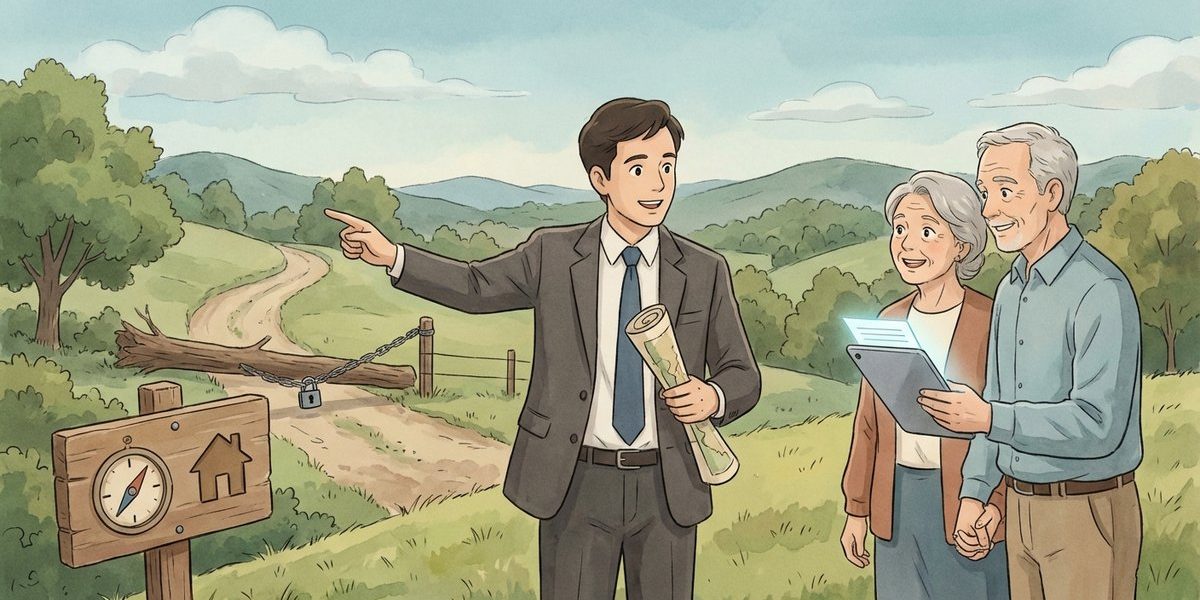
How can I handle an access dispute when I live out of state and can’t regularly monitor the property? – North Carolina
Short Answer
In North Carolina, an out-of-state co-owner can still protect access rights by creating a clear paper trail, using local professionals to document conditions, and—if needed—filing a court action to confirm or create enforceable access rights. The right approach depends on whether the access road is already covered by a recorded easement, can be proven as a long-used easement, or requires a court-ordered access route. When a neighbor is blocking or disputing access, waiting too long can make proof harder and can increase the risk of a “self-help” confrontation on the ground.
Understanding the Problem
In a North Carolina access dispute, the key question is whether a co-owner who lives out of state can protect the ability to use an existing road to reach and use the property without being physically present to monitor it. The dispute usually turns on what legal right (if any) already exists for the road, whether the neighbor is interfering with that right, and what steps can be taken to document the situation and enforce access through the county court system if informal resolution fails.
Apply the Law
North Carolina access disputes typically fall into a few legal “buckets”: (1) a recorded easement/right-of-way already exists in the deed or prior recorded documents; (2) an easement may exist based on long use or the way the property was originally divided; or (3) the property lacks adequate access and a court proceeding is needed to establish a private way to a public road. When the neighbor challenges access, a lawsuit is not always required, but court involvement is often the only way to obtain an enforceable order that clarifies rights and stops interference.
Key Requirements
- Identify the source of access rights: The first step is confirming whether access is based on a recorded easement, a claimed easement based on historical use, or a request for a court-established access route.
- Document interference and use: Access cases often turn on proof—photos, dated logs, witness statements, surveys, and recorded instruments—showing where the road is and how it has been used.
- Use the correct forum and remedy: Depending on the situation, the case may be filed as a civil action in Superior Court (for example, to determine competing claims to an easement) or as a special proceeding before the Clerk of Superior Court (for certain private-way/cartway proceedings).
What the Statutes Say
- N.C. Gen. Stat. § 41-10 (Quiet title / determine adverse claims) – Allows an action to determine adverse claims to interests in real property, which can include disputes over claimed access rights.
- N.C. Gen. Stat. § 136-68 (Special proceeding for cartways; petition; appeal) – Provides a special proceeding before the Clerk of Superior Court to establish certain private ways (cartways and similar easements) over another’s land.
- N.C. Gen. Stat. § 136-69 (Cartways laid out; procedure) – Describes when a private way may be ordered and how a “jury of view” may lay out the route and assess damages, with the Clerk overseeing the process.
- N.C. Gen. Stat. § 1-40 (Twenty years adverse possession) – Establishes a 20-year period relevant to certain long-term property claims; time-based proof issues often matter in access disputes involving long use.
Analysis
Apply the Rule to the Facts: The facts describe a co-owner of a large North Carolina property facing ongoing conflict with a neighbor over access using an existing road, with the co-owner living out of state and unable to monitor conditions regularly. That fact pattern usually calls for (1) confirming whether a recorded easement already exists in the chain of title, (2) preserving evidence of the road’s location and historical use while the dispute is active, and (3) choosing a remedy that results in an enforceable order if the neighbor continues to interfere. Because the dispute has lasted an extended period, building a clean record now (survey, photos, witness statements, and written communications) becomes especially important before conditions change on the ground.
Process & Timing
- Who files: The property owner(s) asserting access rights (sometimes all co-owners together). Where: Typically the North Carolina Superior Court in the county where the land is located; certain private-way/cartway matters begin as a special proceeding before the Clerk of Superior Court. What: Common filings include a complaint seeking a declaration of rights (often paired with claims to stop interference) or, for a cartway, a petition initiating the special proceeding under the cartway statutes. When: As soon as interference is recurring or escalating, especially before the road is altered, gated, or blocked in a way that changes evidence.
- Early evidence and “local eyes”: Because an out-of-state owner cannot monitor the property, the practical next step is to retain a North Carolina surveyor (to map the road and any claimed easement area) and a local professional (property manager, forester, or other neutral third party) to create dated documentation of conditions and any obstructions. Written, dated notices to the neighbor can also help clarify the dispute and reduce later “he said / she said” problems.
- Resolution path: If the neighbor cooperates, the dispute may resolve through a recorded easement agreement that clearly describes the route and permitted uses. If cooperation fails, the case may proceed to a court order that confirms the right-of-way (or establishes a private way through the statutory process), which can then be recorded to reduce future disputes.
Exceptions & Pitfalls
- Assuming “long use” automatically creates a legal right-of-way: Long use can matter, but access rights often depend on specific legal elements and proof; relying on informal history without documentation is a common weakness in these cases.
- Not checking the recorded documents first: Many access disputes can be clarified quickly by reviewing deeds, plats, and prior recorded easements. Skipping this step can lead to unnecessary conflict or the wrong type of court filing.
- Self-help escalation: Cutting locks, moving gates, or widening a road without clear rights can create counterclaims and make settlement harder. A structured approach—documentation, written notice, and the correct court remedy—usually reduces risk.
- Co-owner coordination problems: Because the property is co-owned, inconsistent actions by different co-owners (or granting informal permission to the neighbor) can complicate proof and strategy. A unified plan and consistent communications help.
Conclusion
In North Carolina, an out-of-state co-owner can handle an access dispute by confirming whether a recorded easement already exists, preserving proof of the road’s location and use through local documentation, and using the county court system when a neighbor continues to interfere. If the issue is a disputed property interest, a quiet-title style action may be appropriate; if the land lacks adequate access, a cartway special proceeding may apply. The most important next step is to gather records and file the appropriate action in the county where the property is located before conditions change.
Talk to a Real Estate Attorney
If an access road is being disputed and regular on-site monitoring is not possible, our firm has experienced attorneys who can help clarify the recorded rights, preserve evidence, and explain the court options and timelines in North Carolina. Call us today at (919) 341-7055.
Disclaimer: This article provides general information about North Carolina law based on the single question stated above. It is not legal advice for your specific situation and does not create an attorney-client relationship. Laws, procedures, and local practice can change and may vary by county. If you have a deadline, act promptly and speak with a licensed North Carolina attorney.

