
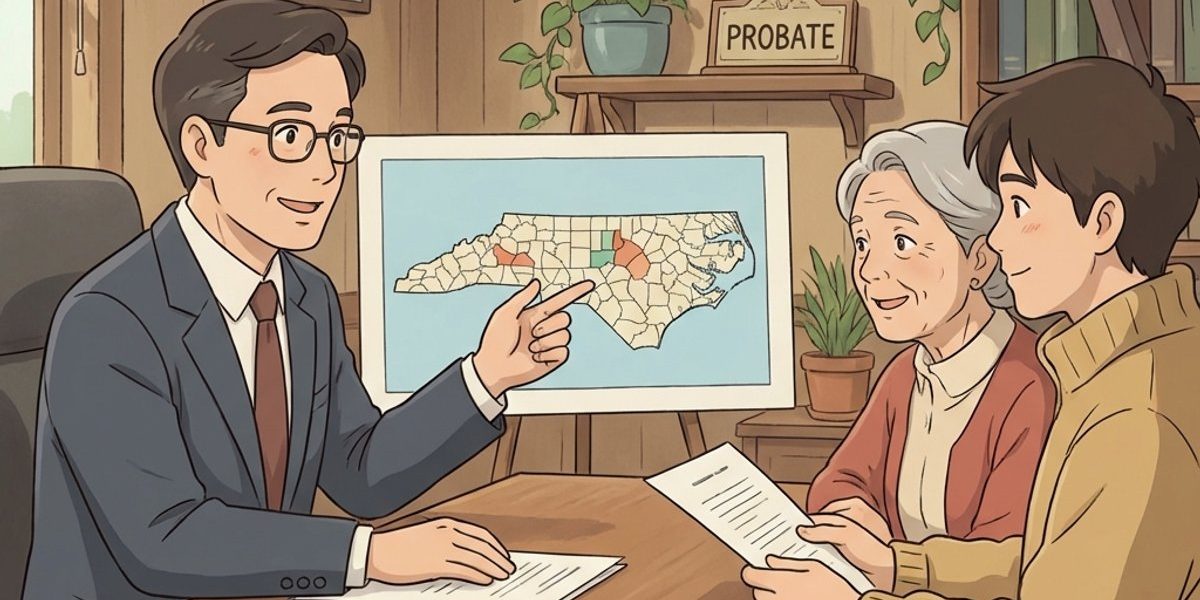
How do I start the process to transfer or sell inherited real estate when the property is in a different county? – North Carolina
Short Answer
In North Carolina, the estate is usually opened with the Clerk of Superior Court in the county tied to the decedent’s residence, but a transfer or sale of inherited real estate often requires a separate filing in the county where the land sits. The first step is to confirm whether the property can be transferred by recording probate documents, or whether a court-approved estate sale (a “special proceeding”) is needed. When a sale is required, the personal representative typically files a verified petition with the Clerk of Superior Court in the property’s county and serves all heirs or devisees.
Understanding the Problem
In North Carolina probate, the practical question is often: can inherited real estate located in a different county be transferred or sold without starting a new estate file in that county, or does the Clerk of Superior Court in the property’s county need a separate court file to approve the transfer or sale? This comes up when an heir is helping from out of state and the family land is located in a different North Carolina county than where the estate administration is pending. The answer usually turns on whether the estate has a qualified personal representative and whether the next step is (1) recording probate documents to clear title, or (2) petitioning the clerk for authority to sell the land through a special proceeding in the county where the land is located.
Apply the Law
North Carolina gives the Clerk of Superior Court (as the probate judge) authority over probate and estate administration matters. When the goal is to transfer or sell inherited real estate, the process typically starts with opening the estate and appointing a personal representative (executor or administrator). If the decedent left a will, probate can be necessary to make the will effective to pass title, and additional recording steps may be required in the county where the real property is located. If the estate needs to sell the property (for example, to pay claims, to create cash for administration, or to resolve co-owner issues), the personal representative commonly must file a special proceeding in the county where the land is located and give formal notice to the heirs or devisees.
Key Requirements
- Confirm the estate authority: A personal representative must be appointed (executor if there is a will, or administrator if there is no will) before most estate transfer or sale steps can move forward in an orderly way.
- Use the correct county and forum: Probate and many estate-related real estate filings are handled by the Clerk of Superior Court. A sale proceeding is often filed in the county where the land is located, even if the main estate file is in a different county.
- Give proper notice to all interested parties: Heirs and devisees generally must be made parties and served in the manner required by the North Carolina Rules of Civil Procedure for a court-authorized estate sale. Missing a required party can jeopardize the order.
What the Statutes Say
- N.C. Gen. Stat. § 7A-241 (Probate jurisdiction) – Gives the superior court division, through the Clerk of Superior Court, original jurisdiction over probate and estate administration.
- N.C. Gen. Stat. § 31-39 (Probate needed to pass title; filing in county where land lies) – Explains that probate is needed for a will to pass title, and that a certified copy of the probated will and probate certificate generally must be filed in the county where the real property is located to protect against certain third parties.
- N.C. Gen. Stat. § 1-339.8 (Judicial sales involving tracts in different counties) – Addresses how court-ordered sales work when separate tracts are located in different counties, including where reports and upset bids are handled.
Analysis
Apply the Rule to the Facts: The facts describe inherited real property located in a different North Carolina county, with an heir participating and another family member assisting from out of state. Under North Carolina practice, the starting point is confirming that a personal representative is in place and then deciding whether the goal is a straightforward title-clearing transfer (often involving recording probate documents in the property’s county) or a court-approved sale (often requiring a special proceeding before the Clerk of Superior Court in the county where the land is located). Because the property is in a different county, the process commonly includes at least one filing or recording step in that property county even if the main estate file is elsewhere.
Process & Timing
- Who files: The personal representative (executor/administrator), sometimes with counsel. Where: (1) the Clerk of Superior Court where the estate is opened for appointment/qualification, and (2) the Clerk of Superior Court in the county where the land is located for recording and/or a sale special proceeding. What: estate opening paperwork to qualify the personal representative; then, if a will is involved, certified probate documents for recording in the property county; if a sale is needed, a verified petition describing the property, the interested persons, and why a sale is in the estate’s best interest. When: as early as practical once the personal representative is appointed and the estate’s needs are identified.
- Notice and hearing: If a court-authorized sale is required, heirs/devisees are typically served and given a chance to respond. If the petition is not contested, the clerk may be able to proceed more efficiently; if contested, the matter can take longer and may require additional hearings.
- Sale mechanics and closing: Depending on what the clerk authorizes, the sale may follow judicial sale procedures (including upset bid rules in many situations). After confirmation/approval, the personal representative signs the deed and the closing documents are recorded with the Register of Deeds in the county where the property sits.
Exceptions & Pitfalls
- Recording is not the same as selling: Recording probate documents in the property’s county may help with title, but it does not automatically authorize a sale if court approval is required for the estate to sell.
- Missing an heir/devisee (or improper service): Sale proceedings often require formal service on all necessary parties. Leaving someone out or serving incorrectly can undermine the order and delay a closing.
- Minor or incapacitated beneficiaries: If any heir/devisee is a minor or legally incompetent, the court process can require extra protections and may require a judge’s involvement in addition to the clerk’s order.
Conclusion
In North Carolina, starting the process to transfer or sell inherited real estate in a different county usually means (1) confirming a personal representative is appointed through the Clerk of Superior Court handling the estate, and then (2) taking the correct county-specific step where the land is located—often recording certified probate documents to support title, and, if a sale is needed, filing a verified sale petition as a special proceeding with the Clerk of Superior Court in the property’s county. If a will exists, act promptly to probate and record the required certified documents within the statutory time limits.
Talk to a Probate Attorney
If inherited real estate is located in a different North Carolina county and the goal is to transfer title or complete a court-approved sale, our firm has experienced attorneys who can help clarify which clerk’s office must receive which filings and what timelines apply. Call us today at (919) 341-7055.
Disclaimer: This article provides general information about North Carolina law based on the single question stated above. It is not legal advice for your specific situation and does not create an attorney-client relationship. Laws, procedures, and local practice can change and may vary by county. If you have a deadline, act promptly and speak with a licensed North Carolina attorney.

