
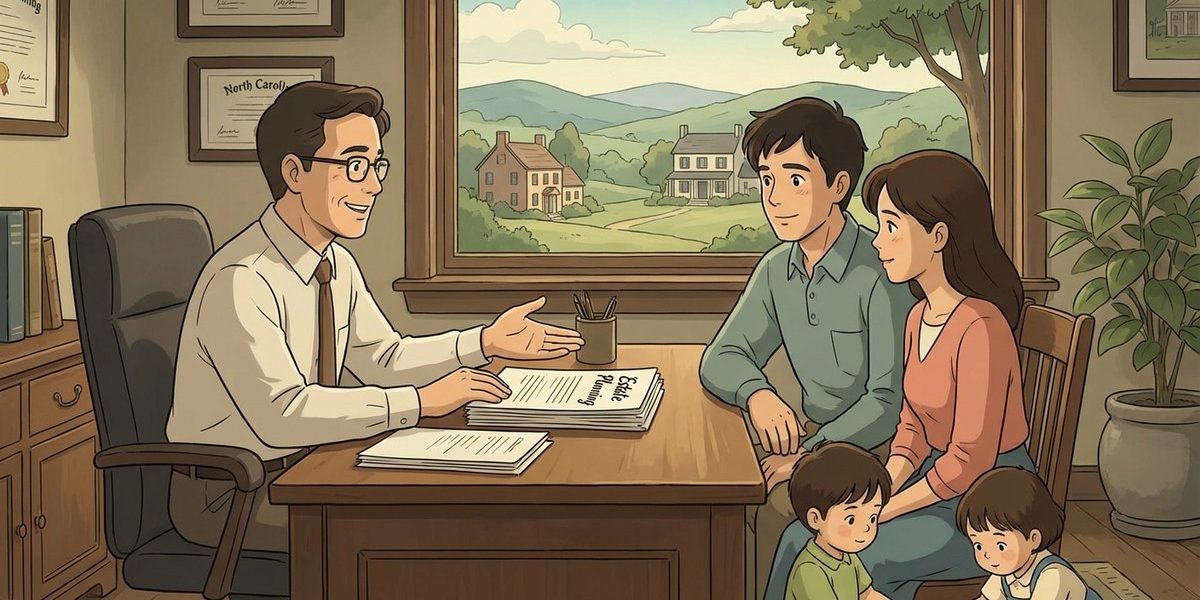
What estate planning documents should my spouse and I have if we have minor children and a home? – North Carolina
Short Answer
In North Carolina, most couples with minor children and a home should have (1) wills that name guardians for the children and direct where assets go, (2) financial durable powers of attorney, and (3) health care documents (a Health Care Power of Attorney and a Living Will/advance directive). Many families also benefit from a revocable living trust (plus a deed and beneficiary updates) to make it easier for the surviving spouse to manage the home and to hold money for children until an appropriate age.
Without these documents, North Carolina’s default rules and a court process may decide who manages money for minor children and how property is divided, which can create delays and extra expense.
Understanding the Problem
In North Carolina, when spouses have minor children and own a home, the key question is: what documents must be in place so that (1) a trusted adult can step in to care for the children if both parents die, (2) someone can manage finances and the home if a parent becomes incapacitated, and (3) assets can pass in an organized way without unnecessary court involvement. The decision point is whether the plan should rely only on basic documents (wills and powers of attorney) or also use a trust-based plan to manage inheritance for minor children and reduce probate friction for the surviving spouse.
Apply the Law
North Carolina law allows parents to recommend a guardian for minor children in a will, and the clerk of superior court gives that recommendation substantial weight when appointing a guardian, while still focusing on the child’s best interests. North Carolina also recognizes health care powers of attorney and advance directives so a chosen agent can make medical decisions if a person cannot communicate. For finances, a durable power of attorney can allow an agent to handle banking, bills, and real estate matters during incapacity; when real estate is involved, recording requirements can matter. If a person dies without a will, North Carolina’s intestacy statutes control how property is divided between a surviving spouse and children, which can be especially complicated when the children are minors and the family owns real property.
Key Requirements
- Guardianship planning for minor children: A will should name a preferred guardian (and backups) so the court has clear guidance if both parents are gone.
- Incapacity planning: Financial and medical decision-makers should be named in writing so bills can be paid, the home can be managed, and health care decisions can be made without a guardianship proceeding.
- Clear transfer and management of assets: A plan should address how the home and accounts pass at death and how any inheritance for minor children will be managed until they are mature enough to receive it.
What the Statutes Say
- N.C. Gen. Stat. § 35A-1225 (Testamentary recommendation of guardian) – Allows a parent to recommend a guardian for minor children in a will; the clerk gives strong weight to that recommendation but must still act in the child’s best interest.
- N.C. Gen. Stat. § 35A-1224 (Criteria for appointment of guardians) – Explains the clerk’s role and standards for appointing guardians for minors, including giving substantial weight to a parent’s recommendation.
- N.C. Gen. Stat. § 29-14 (Intestate share of surviving spouse) – Sets the default shares for a surviving spouse when a person dies without a will, including different rules for real property and personal property when there are children.
- N.C. Gen. Stat. § 32A-15 (Health care power of attorney purpose) – Recognizes the right to appoint an agent to make health care decisions when the principal lacks capacity.
- N.C. Gen. Stat. § 47-28 (Recording powers of attorney affecting real property) – Requires recording a power of attorney (or certified copy) in certain situations before an agent can transfer real property.
Analysis
Apply the Rule to the Facts: Here, the spouses have minor children, a home, and typical financial accounts, but no will, trust, or powers of attorney. Under North Carolina law, the most immediate gaps are (1) no written guardian recommendation for the children if both parents die, (2) no named agent to handle finances and the home during incapacity, and (3) no coordinated plan for how the home and accounts should pass and how a child’s inheritance should be managed. A basic plan usually starts with wills plus powers of attorney; a trust-based plan is often considered when the goal is to manage assets for minor children over time and reduce probate friction for the surviving spouse.
Process & Timing
- Who signs: Each spouse. Where: Typically signed with an estate planning attorney and then stored safely; if a financial power of attorney will be used for real estate, it is commonly recorded with the Register of Deeds in the county where the principal is domiciled or where the property is located. What: (a) Wills naming guardians and setting out distributions; (b) Financial Durable Power of Attorney; (c) Health Care Power of Attorney; (d) Living Will/advance directive.
- Next step: Update beneficiary designations (life insurance, retirement accounts) and review how the home is titled so the plan matches the documents. If a revocable trust is used, retitle selected assets (and possibly the home) into the trust and align beneficiary designations with the trust plan.
- Final step: Share the location of documents with the nominated fiduciaries (executor, trustee, and agents) and keep the plan current after major life changes (new child, move, refinance, major asset change).
Exceptions & Pitfalls
- Assuming the surviving spouse automatically gets everything: Under North Carolina intestacy rules, when there are children, the surviving spouse may receive only a partial share of real property and personal property, which can force co-ownership with minor children and require court involvement to manage the children’s share.
- Not planning for a child’s inheritance management: Even with a will, leaving assets outright to minors can trigger a guardianship of the estate or other court-supervised arrangement. Many families prefer a trust or custodial approach so a chosen adult can manage funds with clearer instructions.
- Using a power of attorney but not addressing real estate logistics: If an agent needs to sell or refinance the home during incapacity, recording rules can apply, and lenders often scrutinize POA language and execution.
- Beneficiary designations that contradict the plan: Retirement accounts and life insurance commonly pass by beneficiary form, not by will. If those forms name “minor children” directly, a court-managed process may still be needed.
- One document set for both spouses: Each spouse needs separate documents, with coordinated choices for backup agents, executors, trustees, and guardians.
Conclusion
For North Carolina spouses with minor children and a home, the core estate planning documents usually include two wills that recommend guardians for the children and direct how assets pass, plus financial and health care powers of attorney (and an advance directive) to cover incapacity. Many families also add a revocable trust to manage a child’s inheritance and reduce probate friction around the home and accounts. The most important next step is to sign wills that name guardians and an executor and then align beneficiary designations with that plan.
Talk to a Estate Planning Attorney
If a family has minor children and a home but no will, trust, or powers of attorney, a simple plan can prevent avoidable court involvement and clarify who will care for the children and manage finances. Our firm has experienced attorneys who can help explain options and timelines under North Carolina law. Call us today at (919) 341-7055.
Disclaimer: This article provides general information about North Carolina law based on the single question stated above. It is not legal advice for your specific situation and does not create an attorney-client relationship. Laws, procedures, and local practice can change and may vary by county. If you have a deadline, act promptly and speak with a licensed North Carolina attorney.

