
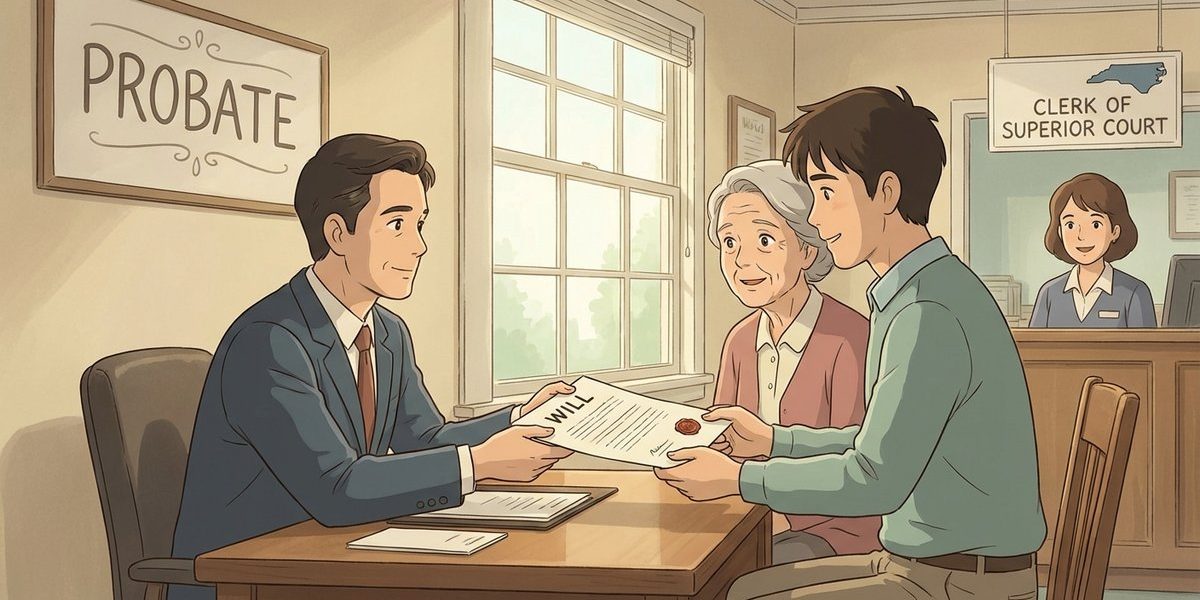
Who is allowed to receive and file the original will with the probate court? – North Carolina
Short Answer
In North Carolina, the original will is filed with (and kept by) the Clerk of Superior Court, acting as the judge of probate. The person named as executor in the will should deliver the original will to the clerk as soon as possible after death, but if the named executor does not act, other interested people may apply to probate the will after a short waiting period and required notice. Simply “recording” or “filing without probate” is different from probating the will and usually does not accomplish what probate does.
Understanding the Problem
In North Carolina probate, the key question is who can take possession of an original will after a death and deliver it to the Clerk of Superior Court for filing and probate. This issue often comes up when an original will is located later in a paper file, when a will was “recorded” but not probated, or when someone other than the named executor is holding the original. The decision point is whether the will is being delivered for probate (to start the court process that validates the will) or only being filed for recordkeeping without probate.
Apply the Law
North Carolina gives the Clerk of Superior Court exclusive original jurisdiction over probate of wills and estate administration. In practice, the clerk’s office receives the original will, reviews the application and supporting proof, and—if the legal requirements are met—issues a certificate admitting the will to probate. North Carolina procedure also recognizes that a will can be filed without probate in limited situations, but that filing does not validate the will or replace probate when probate is needed to accomplish legal goals like passing title.
Key Requirements
- Proper forum and custodian: The original will is delivered to the Clerk of Superior Court (estate division), who acts as the judge of probate and keeps the original will in the court records after probate.
- Right person to present the will: The executor named in the will is expected to deliver the will promptly after death; if the named executor does not do so within the statutory window, devisees and other interested persons may apply to probate the will after giving required notice to the named executor.
- Original document matters: For an attested written will, the clerk generally needs the original will with original signatures to probate it; a scan is useful for review and recordkeeping but usually does not replace the original for probate purposes unless a “lost or destroyed will” procedure applies.
What the Statutes Say
- N.C. Gen. Stat. § 7A-241 (Probate jurisdiction) – Gives the Clerk of Superior Court (as judge of probate) exclusive original jurisdiction over probate of wills and estate administration.
- N.C. Gen. Stat. § 31-39 (Probate needed to pass title; timing limits) – Explains that a duly probated will is effective to pass title and sets a key time limitation affecting lien creditors and purchasers.
- N.C. Gen. Stat. § 98-4 (Copy of lost will may be probated in certain situations) – Provides a pathway to probate a copy when original wills and will books on file with the clerk were lost or destroyed, under specific proof requirements.
- N.C. Gen. Stat. § 31-11 (Depositing wills for safekeeping while alive) – Allows a living person to deposit a will with the clerk for safekeeping and limits who may withdraw it before death.
Analysis
Apply the Rule to the Facts: The facts describe an original will located in a physical file that was not showing in the system and appears to have been recorded but not probated. Under North Carolina practice, the Clerk of Superior Court is the proper office to receive and keep the original will as part of probate records, and the will generally must be offered for probate (not merely recorded) to accomplish probate’s legal effect. Scanning the will into a secure portal can help parties review it quickly, but the clerk typically still needs the original instrument with original signatures to admit an attested written will to probate unless a separate lost-or-destroyed-will procedure applies.
Process & Timing
- Who files: Usually the executor named in the will; if the named executor does not act, a devisee or other interested person may apply after the statutory waiting period and required notice. Where: The Estates Division of the Clerk of Superior Court in the proper North Carolina county. What: Commonly an application to probate the will and (if needed) qualify a personal representative, often on a statewide AOC form such as AOC-E-201. When: The named executor should deliver the will to the clerk as soon as possible after death; if the named executor does not present it within 60 days after death, others may apply with required notice.
- Clerk review: The clerk reviews the application, any supporting proof, and the will itself to decide whether to admit it to probate. If the will is self-proved, the clerk may be able to proceed without live witness testimony, depending on what is attached to the will.
- Outcome: If admitted, the clerk issues a certificate of probate and the original will remains on file with the clerk as part of the court records. If the will is only filed without probate, it becomes a public record, but the clerk does not validate it or issue a certificate of probate.
Exceptions & Pitfalls
- “Recorded” is not the same as “probated”: A will can be filed without probate for recordkeeping, but that does not mean the will has been validated or that a certificate of probate exists. This distinction matters when the will needs to pass title or when someone needs formal authority to act for the estate.
- Original signatures usually required: For an attested written will, the clerk generally needs the original document with original signatures to probate it. A scan can help confirm what exists, but it usually does not replace the original for admission to probate.
- Title and timing risks: If the will is not offered for probate within the time limits that protect against lien creditors and purchasers, the will may not be effective against certain third parties even if it is valid. This issue often arises when a will sits “on record” but no one actually probates it.
- Lost/destroyed will procedures are proof-heavy: If the original cannot be produced, probate may still be possible in limited situations, but it typically requires specific proof and a formal proceeding. Treating a missing original as a simple “copy filing” can create delays and disputes.
Conclusion
In North Carolina, the Clerk of Superior Court is the probate court and the proper office to receive and keep an original will. The executor named in the will should deliver the original will to the clerk promptly after death, but if the named executor does not act within 60 days after death, other interested persons may apply to probate the will after giving required notice. A will that is only recorded or filed without probate is not the same as a probated will. The next step is to file an application to probate the will with the Clerk of Superior Court within the required timeline.
Talk to a Probate Attorney
If a will was found later in a file, was recorded but not probated, or there is uncertainty about who should present the original will to the Clerk of Superior Court, our firm has experienced attorneys who can help explain the proper filing path and the deadlines that may apply. Call us today at (919) 341-7055.
Disclaimer: This article provides general information about North Carolina law based on the single question stated above. It is not legal advice for your specific situation and does not create an attorney-client relationship. Laws, procedures, and local practice can change and may vary by county. If you have a deadline, act promptly and speak with a licensed North Carolina attorney.

