
What’s the difference between a will being recorded and a will being probated? – North Carolina
Short Answer
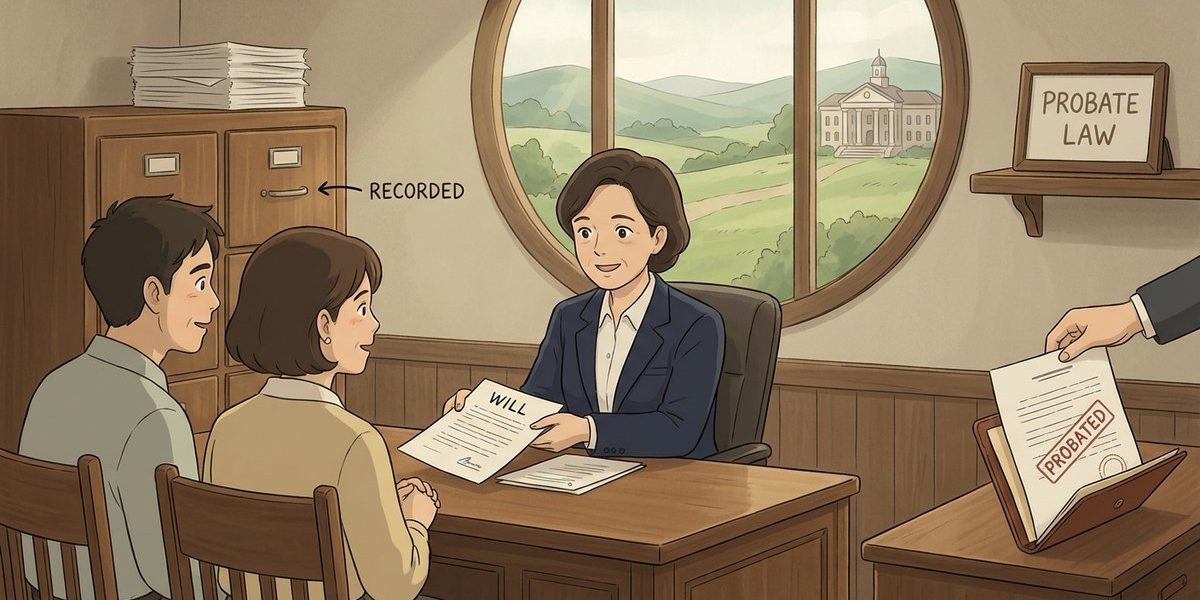
In North Carolina, a will being recorded generally means the document has been filed or entered into a records system, but it has not necessarily been accepted by the court as valid. A will being probated means the Clerk of Superior Court (acting as the judge of probate) has reviewed the will and the required proof and has formally admitted it to probate. Probate is the step that gives the will legal effect to control who inherits and, in many situations, to protect title against later claims.
Understanding the Problem
In North Carolina probate practice, the key question is whether a will that shows up in a records office file has merely been placed into the public record system or whether it has been formally admitted by the Clerk of Superior Court as the decedent’s last will. This distinction matters because the probate process is the court procedure that confirms the will’s validity and allows the estate to move forward under the will’s terms. The triggering event is the will being offered to, and accepted by, the Clerk of Superior Court for probate.
Apply the Law
Under North Carolina law, probate is the court-supervised process where the Clerk of Superior Court determines whether the document was properly executed and should be treated as the decedent’s last will. By contrast, recording is an administrative records step (for example, scanning, indexing, or placing a copy in a file) that does not, by itself, establish validity or activate the legal effects that come from a will being admitted to probate. Probate occurs in the Office of the Clerk of Superior Court, which has original jurisdiction over probate and estate administration. While North Carolina generally does not impose a strict deadline to offer an attested written will for probate, a separate timing rule can affect whether the will protects title against lien creditors or purchasers who rely on intestate heirs.
Key Requirements
- Probate (court admission): The Clerk of Superior Court reviews the will and the required proof (such as witness affidavits or a self-proving affidavit) and issues a certificate/order admitting the will to probate.
- Recording (records entry): The will is placed into a recordkeeping system (paper or electronic), but no judicial determination has been made that it is valid or that it controls the estate.
- Legal effect and timing: A duly probated will is effective to pass title, and probate timing can matter for protection against lien creditors and certain purchasers who deal with intestate heirs.
What the Statutes Say
- N.C. Gen. Stat. § 7A-241 (Probate jurisdiction) – Gives the Clerk of Superior Court original jurisdiction over probate of wills and estate administration.
- N.C. Gen. Stat. § 31-39 (Probate necessary to pass title; timing protection) – Explains that a duly probated will is effective to pass title and sets a timing rule affecting lien creditors and certain purchasers if probate is delayed.
- N.C. Gen. Stat. § 31-11.6 (Self-proved wills) – Allows a will to be made “self-proved,” which can simplify the proof needed to admit it to probate.
Analysis
Apply the Rule to the Facts: The facts indicate the original will exists and was found in a physical file, but it has only been recorded and not probated. That suggests the records office has (or will) scan and upload the document, but the Clerk of Superior Court has not yet admitted it to probate through the probate process. Until the will is offered and admitted to probate, the will generally does not carry the same legal effect as a probated will, including the protections tied to probate timing for title issues.
Process & Timing
- Who files: Typically the named executor in the will or another interested person. Where: Office of the Clerk of Superior Court in the county with probate jurisdiction for the decedent’s estate in North Carolina. What: File the original will for probate along with the appropriate application form used by the North Carolina court system (often an application for probate and, if needed, appointment of a personal representative). When: For most written attested wills, North Carolina generally allows probate to be started without a strict filing deadline, but delays can create title risks under the timing rule in N.C. Gen. Stat. § 31-39.
- Clerk review and proof: The Clerk reviews the will and the proof of execution. If the will is self-proved, the Clerk can usually rely on the self-proving affidavit instead of tracking down witnesses.
- Admission to probate: If the Clerk is satisfied the document is the decedent’s last will and was properly executed, the Clerk admits it to probate and issues a certificate of probate. After admission, the will remains with the Clerk as part of the court’s public records, and the estate can proceed under the will.
Exceptions & Pitfalls
- “Recorded” can be misleading: A scanned or indexed will may be easy to locate, but that does not mean the Clerk has admitted it to probate or that the will has been legally validated.
- Proof problems can delay probate: If the will is not self-proved, the Clerk may require witness affidavits or other proof of due execution before admitting it to probate.
- Real estate in multiple counties: Even after probate in one county, additional filing steps may be needed to protect title to real property located in other North Carolina counties within the time limits tied to N.C. Gen. Stat. § 31-39.
- Will contests: Once a will is admitted to probate, interested persons can challenge validity only through the proper will-contest procedure (a caveat), which can change how quickly the estate can move forward.
Conclusion
In North Carolina, “recorded” usually means the will has been placed into a records system, but “probated” means the Clerk of Superior Court has formally admitted the will as the decedent’s last will after reviewing the required proof. Probate is the step that gives the will legal effect to control inheritance and helps protect title, including under the timing rule in N.C. Gen. Stat. § 31-39. The next step is to file the original will with the Clerk of Superior Court for probate, ideally within two years of the date of death when title protection is a concern.
Talk to a Probate Attorney
If a will has been found in the records but has not been admitted to probate, an attorney can help confirm the correct filing path, gather the proof the Clerk will require, and identify any timing issues that could affect estate property. Call us today at (919) 341-7055.
Disclaimer: This article provides general information about North Carolina law based on the single question stated above. It is not legal advice for your specific situation and does not create an attorney-client relationship. Laws, procedures, and local practice can change and may vary by county. If you have a deadline, act promptly and speak with a licensed North Carolina attorney.

