
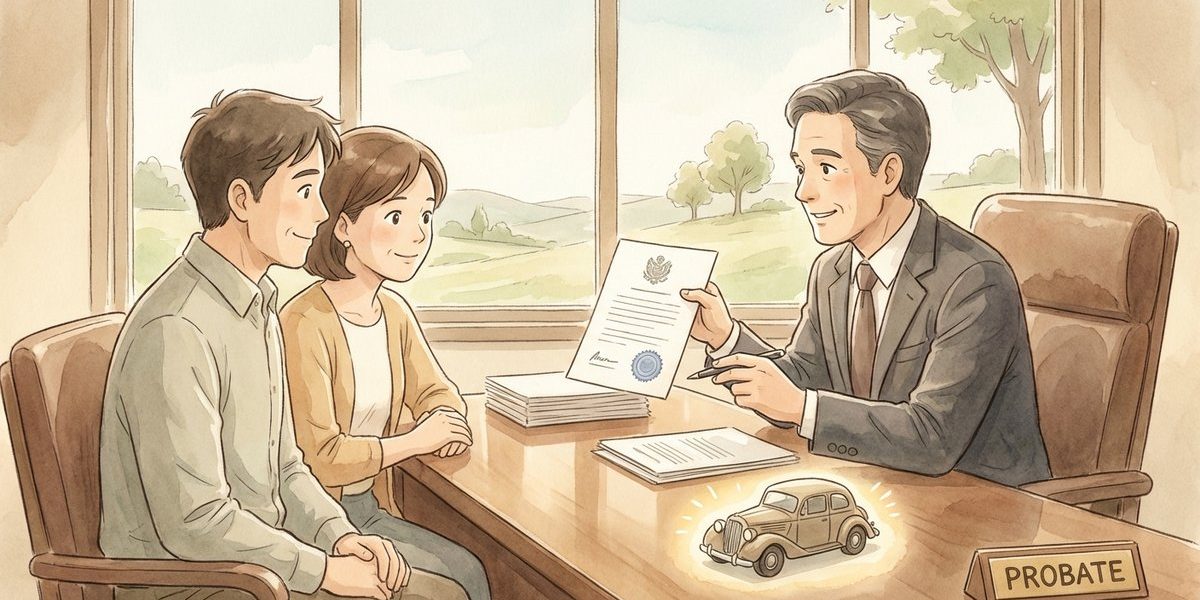
Am I allowed to drive or insure the vehicle while the title is still in the deceased person’s name? – North Carolina
Short Answer
In North Carolina, a vehicle can often be kept insured and used temporarily after the owner’s death, but the title still needs to be transferred through the proper estate process before the vehicle can be lawfully sold, permanently registered, or fully placed in the surviving owner’s name. Insurance companies may allow coverage during the transition, but they commonly require proof of authority (such as Letters of Administration/Testamentary) or a DMV affidavit process for small estates. Because DMV and insurer rules can be strict, it is safest to confirm the insurer’s requirements and start the title-transfer process promptly.
Understanding the Problem
In North Carolina probate, the practical question is whether a surviving spouse administering a small estate can keep a decedent’s vehicle on the road and insured while the certificate of title still lists the decedent as owner. The decision point is whether the person acting for the estate has recognized authority to handle the vehicle and keep it properly registered and insured during the transition period. Timing matters because the vehicle often needs continued insurance and registration to be driven, even though the formal title transfer may take additional steps through the Clerk of Superior Court and the DMV.
Apply the Law
Under North Carolina law, ownership and the power to transfer a decedent’s property generally flow through the estate process. A will does not effectively pass title against certain third parties until it is properly handled through probate, and a personal representative (when one is appointed) is typically the person with authority to sign title documents for estate property. North Carolina also has a simplified DMV process that can allow transfer of a deceased owner’s vehicle title by affidavit in certain small-estate situations when no estate administration is pending or expected. In practice, the DMV and insurers often want documentation showing who has authority to act for the estate before they will process a title transfer or change the policy/registration.
Key Requirements
- Authority to act for the estate: Either a qualified personal representative (with court-issued Letters) or a qualifying small-estate/affidavit route that the DMV will accept.
- DMV transfer paperwork and supporting documents: The DMV typically requires the existing title (or a duplicate-title process if the title is missing), proof of death, and the correct application/affidavit forms.
- Insurance and tax/registration compliance: North Carolina title applications commonly require proof of liability insurance and confirmation that vehicle taxes are handled as part of registration and titling.
What the Statutes Say
- N.C. Gen. Stat. § 31-39 (Probate necessary to pass title) – Explains that a will must be duly probated to be effective to pass title, with timing rules that can matter when third parties are involved.
Analysis
Apply the Rule to the Facts: Here, a surviving spouse is administering a small estate and needs to transfer a vehicle titled in the decedent’s name through a DMV in another jurisdiction. Until the spouse has recognized authority (either as a court-appointed personal representative with Letters, or through a qualifying affidavit process for assigning title), the spouse may face problems changing the title, registration, or insurance into the spouse’s name. Even if the vehicle can be kept insured and used temporarily, the clean solution is to match the paperwork route to the estate posture (full administration versus small-estate/affidavit transfer) so the DMV and insurer will accept the transaction.
Process & Timing
- Who files: Usually the personal representative (if one has qualified) or the heirs using the DMV affidavit process when it applies. Where: North Carolina Clerk of Superior Court for estate authority (when needed) and the North Carolina Division of Motor Vehicles for titling/registration steps. What: Commonly the existing certificate of title signed by the personal representative as seller, a title application (often on the back of the title or DMV Form MVR-1 when needed), proof of death, and certified Letters if a personal representative has qualified; if the title is missing, a DMV duplicate-title/transfer process may be required. When: Start promptly after death if the vehicle must remain on the road; timing can also matter for probate effectiveness and third-party reliance.
- Insurance coordination: The insurer typically needs the decedent’s death information and the name of the person with authority to keep or change coverage. Many insurers will continue coverage for a short transition period, but they may require the policy to be rewritten into the estate or surviving spouse’s name once authority is documented.
- DMV completion: After the DMV accepts the transfer, it issues a new title and registration in the proper name. In many transfers, a new plate may be required even if the vehicle stays with the surviving spouse.
Exceptions & Pitfalls
- Small-estate affidavit limits: North Carolina’s DMV affidavit transfer route generally applies only when no administration is pending or expected and the required heirs/devisees sign; it may not fit a situation where a personal representative has already qualified or will qualify.
- Missing title or liens: If the original title cannot be found or a lien still appears in DMV records, the transfer may require additional DMV steps and lien-release documentation before a new title can issue.
- Insurance mismatch: Driving with a policy that is not properly updated after the owner’s death can lead to coverage disputes. Insurers often want the policyholder/insured updated to the estate or the authorized person as soon as practical.
- Out-of-jurisdiction processing: If the transfer must be handled through a DMV office outside North Carolina, that office may require additional documentation beyond North Carolina’s baseline requirements, even when North Carolina law controls the estate authority.
Conclusion
In North Carolina, a surviving spouse can often keep a decedent’s vehicle insured and in use temporarily, but the title still needs to be transferred using the correct estate-based authority. The key is having recognized authority to act (court-issued Letters for a personal representative, or a qualifying DMV affidavit process in limited small-estate situations) and then completing the DMV title application with proof of death and related documents. The next step is to confirm the correct transfer route and file the required DMV title-transfer paperwork promptly.
Talk to a Probate Attorney
If a vehicle is still titled in a deceased person’s name and insurance or DMV transfer issues are delaying the process, our firm has experienced attorneys who can help explain the options and timelines under North Carolina probate rules. Call us today at (919) 341-7055.
Disclaimer: This article provides general information about North Carolina law based on the single question stated above. It is not legal advice for your specific situation and does not create an attorney-client relationship. Laws, procedures, and local practice can change and may vary by county. If you have a deadline, act promptly and speak with a licensed North Carolina attorney.

