
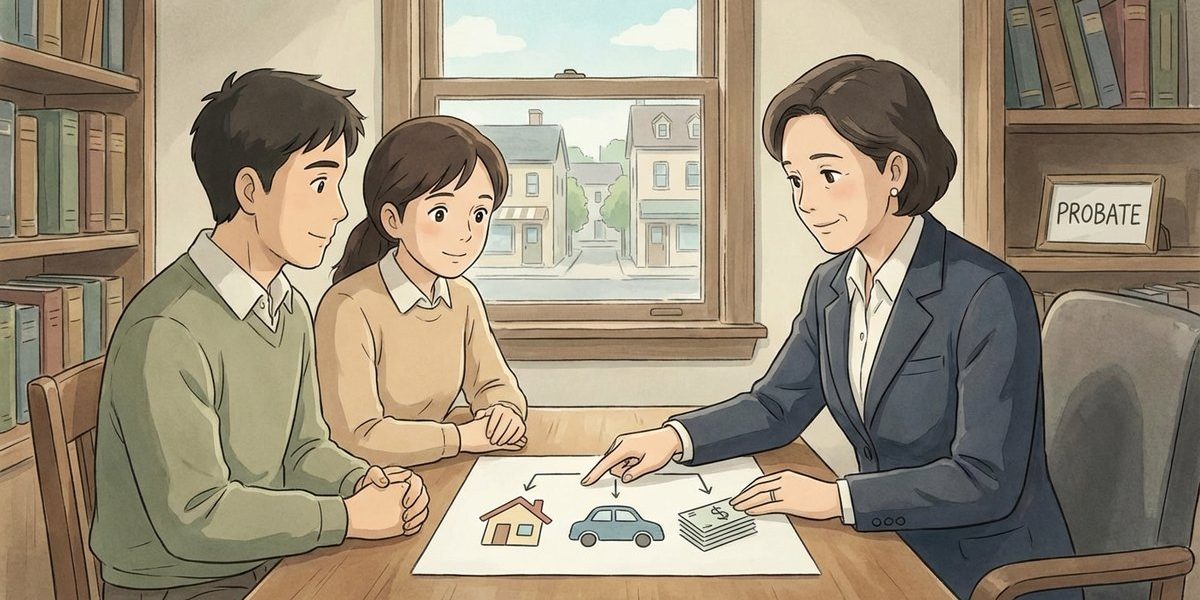
If we don’t know whether a will exists, how are the house, bank accounts, and cars divided, and how can I access those records? – North Carolina
Short Answer
In North Carolina, if no valid will is found and probated, the estate is usually handled under the intestacy rules (the “no-will” rules), but many assets never go through probate because they pass by title or beneficiary designation. The house, bank accounts, and vehicles may pass to a surviving spouse automatically (for example, through joint ownership with survivorship) or may require an estate to be opened with the Clerk of Superior Court to transfer title and access records. When a spouse is pressuring heirs to sign waivers, it is often safer to pause and confirm whether a will exists, what assets exist, and how each asset is titled before signing anything.
Understanding the Problem
In North Carolina probate, the key question is: if a parent dies and no one can confirm whether a will exists, can a surviving spouse control the house, bank accounts, and cars, and how can the children find out what the parent owned and how it must be divided? This situation often turns on whether an estate must be opened with the Clerk of Superior Court, whether a will is later located and offered for probate, and whether the assets are “probate assets” (controlled by the estate) or “non-probate assets” (controlled by a title or beneficiary form). Timing matters because the process for probating a will and appointing a personal representative can affect who has legal authority to collect information and stop improper transfers.
Apply the Law
North Carolina divides property based on (1) whether a valid will is found and probated and (2) how each asset is titled. A personal representative (executor/administrator) appointed by the Clerk of Superior Court generally has the legal authority to gather estate assets, request records, and handle transfers. If there is no will, the estate is distributed under North Carolina intestate succession rules, but assets with survivorship rights or payable-on-death beneficiaries typically pass outside the estate and are not divided by intestacy.
Key Requirements
- Confirm whether a will exists and is produced: A will must be located and offered for probate to control probate assets; if someone has it, North Carolina law provides a process to compel production through the Clerk of Superior Court.
- Identify what is a probate asset versus a non-probate asset: Joint accounts with survivorship, payable-on-death accounts, and some jointly titled property generally pass by contract/title, not by a will or intestacy.
- Open the proper estate proceeding to gain authority and access records: Without appointment by the Clerk of Superior Court, family members often cannot obtain full bank, title, and transaction records or stop transfers; appointment also creates a formal file and reporting duties.
What the Statutes Say
- N.C. Gen. Stat. § 31-39 (Probate necessary to pass title; time limits against purchasers/creditors) – A will generally must be probated to be effective to pass title, and there are important time limits that can affect real and personal property transfers.
- N.C. Gen. Stat. § 29-8 (Partial intestacy) – Even if a will exists, any property not disposed of by the will can still pass under intestacy rules.
Analysis
Apply the Rule to the Facts: The facts describe a recent death with a surviving spouse and adult children, uncertainty about whether a will exists, and pressure to sign papers waiving appointment as personal representative. Under North Carolina practice, the first step is to confirm whether a will exists (home papers, safe deposit box, prior lawyer, and the Clerk’s will depository) because a will changes who has priority and what shares apply to probate assets. Next, each asset must be classified: if the home deed, bank accounts, or vehicles are jointly titled with survivorship or have beneficiary designations, they may pass outside probate; if they are solely titled in the decedent’s name, an estate administration is usually needed to access records and transfer title. The mention of funds being held from a late sibling’s estate is a common trigger for opening an estate because third parties often require letters of administration/testamentary before releasing money.
Process & Timing
- Who files: A person with priority to serve (often the surviving spouse, but sometimes an adult child or another interested person if the spouse declines or is disqualified). Where: The Clerk of Superior Court (Estates) in the county where the decedent was domiciled in North Carolina. What: An application to probate the will (if found) and qualify a personal representative, or an application for administration (if no will is available). When: As soon as practical after death, especially when assets are being sold or third-party funds are being held pending an estate opening.
- Locate and secure information: A will search typically includes checking the decedent’s home papers, contacting the lawyer who drafted any estate plan, checking whether a will was deposited with the Clerk for safekeeping, and determining whether a safe deposit box exists. If a safe deposit box may contain the will, North Carolina has a formal process for opening the box to search for a will.
- Use the estate file to access records and stop improper transfers: Once appointed, the personal representative can request bank information, gather vehicle title information, and identify how the home is titled. If there is credible concern that a will is being withheld, North Carolina procedure allows an interested person to ask the Clerk to compel production of the will.
Exceptions & Pitfalls
- Non-probate transfers can override expectations: Joint bank accounts with right of survivorship and payable-on-death accounts usually pass to the named survivor/beneficiary, not through the will or intestacy, even if that result feels “unfair.”
- Signing “waivers” too early: A waiver of appointment or similar paperwork can reduce leverage and limit who can demand records through the estate process. It is often better to confirm the will status, asset titles, and the proposed administrator’s plan before signing.
- Safe deposit box missteps: Entering a safe deposit box after death without following the proper procedure can delay administration and create disputes about what was removed.
- Vehicle and personal property transfers without authority: If vehicles were solely titled in the decedent’s name, sales or title transfers may require estate authority; informal transfers can create later disputes and may complicate recovery.
- Hidden “partial intestacy” issues: Even with a will, some assets may not be covered by it (or may fail to pass under it), which can push part of the estate back into intestacy rules.
Conclusion
In North Carolina, when no one can confirm a will, property division depends on whether a will is located and probated and whether each asset is a probate asset or passes by survivorship or beneficiary designation. The practical way to access records and protect inheritance rights is usually to open an estate with the Clerk of Superior Court and have a personal representative appointed, then confirm the deed, account ownership/beneficiaries, and vehicle titles. The most important next step is to file to open the estate with the Clerk of Superior Court promptly before signing any waiver of appointment.
Talk to a Probate Attorney
If a surviving spouse is pressuring signatures, a will cannot be located, and assets like vehicles, bank accounts, or a home are being controlled or sold, a probate lawyer can help confirm what must go through the estate, how to get records, and what deadlines and filings apply. Call today at (919) 341-7055.
Disclaimer: This article provides general information about North Carolina law based on the single question stated above. It is not legal advice for your specific situation and does not create an attorney-client relationship. Laws, procedures, and local practice can change and may vary by county. If you have a deadline, act promptly and speak with a licensed North Carolina attorney.

