
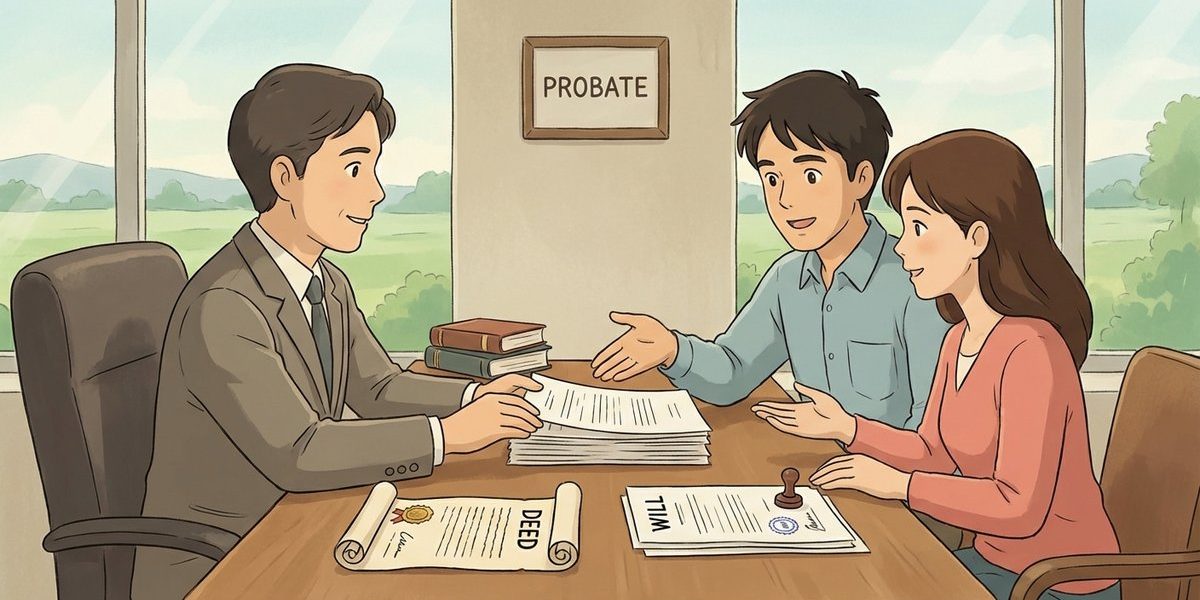
What documents will the recorder require to accept a deed from an estate, and will letters of administration or the will be enough? – North Carolina
Short Answer
In North Carolina, the Register of Deeds usually will not accept a “deed from an estate” based on a will or letters alone. The recorder typically needs (1) a properly drafted deed signed by the personal representative, (2) proper notarization/acknowledgment, and (3) recorded probate documentation in the county where the property sits (often a certified copy of the will and the certificate of probate, if the estate is testate). Letters of administration or letters testamentary prove authority to sign, but they usually do not replace the deed and county-specific probate recordation steps.
Understanding the Problem
Under North Carolina probate practice, a common question is: can a personal representative record a deed that moves real estate out of an estate and into an heir’s or beneficiary’s name, and what will the Register of Deeds require to accept it? The decision point is whether the documents on hand (letters of administration/letters testamentary and/or the will) are enough for the recorder to accept the transfer in the county where the land is located, especially when the same person serves as personal representative for more than one related estate and there is an existing mortgage.
Apply the Law
North Carolina treats probate paperwork and land records as connected but not identical. The Clerk of Superior Court (Estates Division) handles probate and issues letters that show the personal representative’s authority. The Register of Deeds records deeds and other instruments affecting title. In a testate estate, a will can pass title, but North Carolina law also places important limits on when an unrecorded/unprobated will protects title against lien creditors and purchasers, and it requires county-by-county filing for real property located outside the county of probate.
Key Requirements
- A recordable deed signed by the right person: The Register of Deeds records deeds, not “letters.” A personal representative typically signs the deed in a representative capacity (for example, as executor/administrator of the estate) to transfer the estate’s interest.
- Proof the signer has authority (and that probate is on record where the land is): Letters testamentary/letters of administration show the personal representative’s appointment. For a will-based transfer, the will must be duly probated, and for land in a different county, certified probate documents generally must be filed with the Clerk of Superior Court in the county where the land lies.
- Proper recording formalities: The deed must meet North Carolina recording requirements (including acknowledgment/notarization and required indexing information). Local Register of Deeds offices may also require specific formatting and fee-related cover sheets depending on the county.
What the Statutes Say
- N.C. Gen. Stat. § 31-39 (Probate necessary to pass title; recordation in county where real property lies) – Explains that a duly probated will is effective to pass title, sets limits on effectiveness against lien creditors/purchasers if not timely probated, and requires filing certified probate documents in the county where the real property is located when probate occurred in another county.
- N.C. Gen. Stat. § 8-36 (Authenticated copy of record of administration) – Addresses use of properly certified administration records/letters as evidence when issued in another state or territory.
- N.C. Gen. Stat. § 8-32 (Certified copies of deeds and wills from other states) – Addresses use of properly certified copies of wills/deeds from other states as evidence when originals cannot be obtained for registration.
Analysis
Apply the Rule to the Facts: The facts describe a transfer of a grandparent’s property to two people, followed by the death of one of them, with the same person serving as personal representative for both estates and needing to retitle the deed and deal with an existing mortgage. In that situation, letters of administration/letters testamentary help show that the personal representative has authority to sign documents for each estate, but the Register of Deeds generally still expects a recordable deed to move title. If the transfer depends on a will, North Carolina practice often requires making sure the will and certificate of probate are on record in the county where the property sits, not only in the county where the estate was opened.
Process & Timing
- Who files: The personal representative (or the attorney for the estate). Where: (1) Clerk of Superior Court (Estates Division) for probate filings; and (2) Register of Deeds in the county where the real property is located for recording the deed. What: Typically includes (a) the deed signed by the personal representative and properly acknowledged, and (b) for a testate estate with land in a different county, certified copies of the will and the certificate of probate filed with the Clerk of Superior Court in the county where the land lies. When: For will-based title protection against lien creditors/purchasers, North Carolina law sets a deadline tied to the earlier of the final account approval or three years from the decedent’s death.
- Confirm county recording expectations: County practices vary. Some offices want the deed to reference the estate file number and the personal representative’s authority. Some counties also expect supporting probate documents to already appear in the local record (especially when probate occurred in another county).
- Address the mortgage and closing mechanics: A deed that transfers title does not automatically change the borrower on a mortgage. If the goal is to refinance, assume, or otherwise modify the loan, the lender will usually require certified probate documents, death certificates, and recorded title evidence before it will process the request.
Exceptions & Pitfalls
- Probate filed in the wrong place (or not filed where the land is): When a will is probated in one county but the land is in another, failing to file certified probate documents in the land county can create a title gap for recording and future sale/refinance purposes.
- Using “letters” as a substitute for a deed: Letters show authority to act, but they usually do not transfer title by themselves in the land records. A deed (or other recordable instrument) is typically needed to retitle into an individual’s name.
- Document mismatch issues: Small inconsistencies (name variations, legal description errors, missing marital status language where applicable, or missing acknowledgments) can cause rejection by the Register of Deeds or create later title problems.
- Two estates and chain-of-title confusion: When one beneficiary dies after the first owner, the transfer may require documenting each step in the chain (grandparent’s estate transfer, then the sibling’s estate transfer) so the land records clearly show how full title ends up in one name.
- Mortgage servicing requirements: Even if the Register of Deeds records the deed, the lender may still require additional probate documents and recorded evidence before it will discuss payoff, assumption, or refinance options.
Conclusion
In North Carolina, the Register of Deeds usually needs a properly executed and notarized deed to record a transfer of real estate out of an estate; letters of administration/letters testamentary and a will typically support the authority and the chain of title but do not replace the deed. If the transfer depends on a will, the will must be duly probated and, when the property is in a different county, certified probate documents generally must be filed in the county where the land lies. The key next step is to file the deed with the Register of Deeds in the county where the property is located.
Talk to a Probate Attorney
If you’re dealing with recording a deed from an estate and sorting out what the Register of Deeds will accept, our firm has experienced attorneys who can help explain the paperwork, the county filing steps, and the timing issues that affect title. Call us today at (919) 341-7055.
Disclaimer: This article provides general information about North Carolina law based on the single question stated above. It is not legal advice for your specific situation and does not create an attorney-client relationship. Laws, procedures, and local practice can change and may vary by county. If you have a deadline, act promptly and speak with a licensed North Carolina attorney.

