
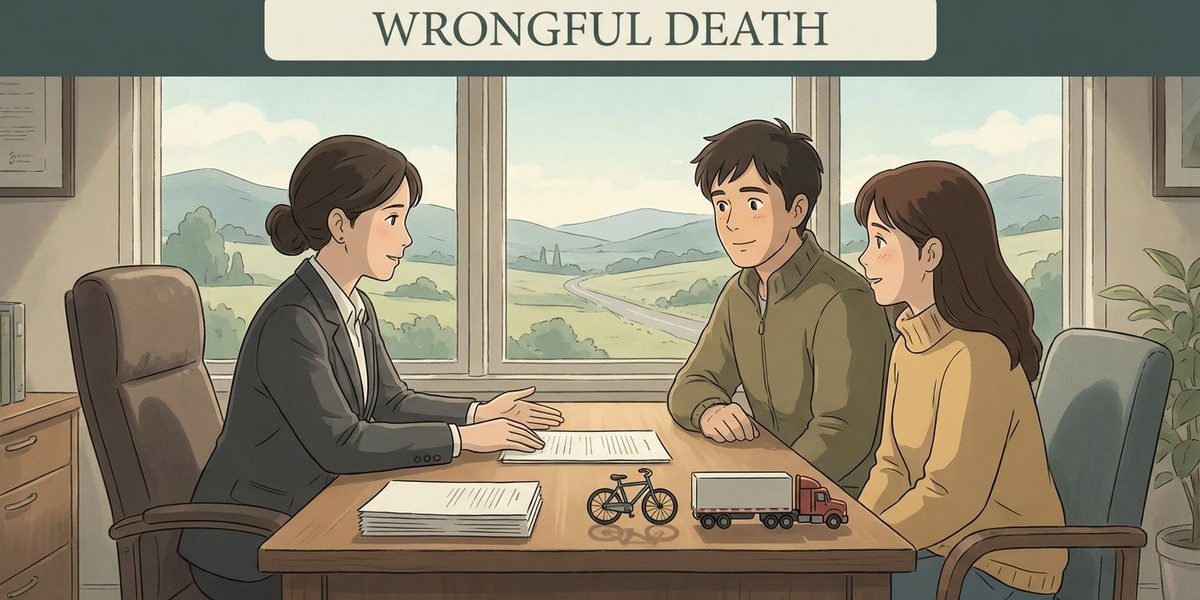
How can I start a wrongful death claim after my spouse was hit by a tractor-trailer while riding a bicycle, and what evidence do I need if the driver left the scene or says they were off duty? – North Carolina
Short Answer
In North Carolina, a wrongful death claim is started by the deceased person’s personal representative (usually appointed through the Clerk of Superior Court) and is then filed in the proper court against the responsible driver and any other legally responsible parties. Early steps often include opening the estate, securing key records (law enforcement crash reports, medical records, and death-related documents), and sending preservation letters so critical evidence is not lost. If the driver left the scene or claims they were “off duty,” the claim can still move forward, but it typically requires fast evidence collection to prove identity, fault, and whether any company responsibility or insurance coverage applies.
Understanding the Problem
In North Carolina, can a spouse start a wrongful death claim after a fatal bicycle crash involving a tractor-trailer when the driver may have left the scene or later claims to have been off duty? Who has the legal authority to act for the deceased person, and what records and proof are needed early to preserve the claim? The key trigger is the death, and the main decision point is whether a personal representative has been appointed to act for the estate so the claim can be opened, investigated, and filed in the proper forum.
Apply the Law
North Carolina wrongful death claims are brought by the personal representative of the deceased person’s estate, not by family members in their individual names. The claim generally alleges that a wrongful act, neglect, or default caused the death and that the deceased person could have brought a personal injury claim if they had lived. When a tractor-trailer is involved, the investigation often focuses on identifying the correct driver and vehicle, preserving electronic and paper records, and confirming what insurance and employment relationships apply, even if the driver claims to be “off duty.”
Key Requirements
- Proper party (personal representative): The estate must have a court-appointed personal representative with authority to request records, sign releases, and file the wrongful death lawsuit.
- Proof of fault and causation: Evidence must show the tractor-trailer driver (or another responsible party) acted carelessly or wrongfully and that this conduct caused the death.
- Proof of identity and responsibility: Evidence must connect the crash to the correct tractor-trailer/driver and, when applicable, show whether any company or insurer is legally responsible even if the driver claims to be “off duty.”
What the Statutes Say
- N.C. Gen. Stat. § 20-166.1 (Crash reports and investigation) – Requires notice and investigation of reportable crashes and addresses preparation and availability of law enforcement crash reports.
- N.C. Gen. Stat. § 143-299 (Claims involving State agencies) – Sets a shorter filing deadline for wrongful death claims that must be filed with the North Carolina Industrial Commission when the claim is against State departments, institutions, or agencies.
- N.C. Gen. Stat. § 90-603 (Notification of next of kin) – Requires reasonable efforts by law enforcement to notify next of kin when an accident-trauma victim is hospitalized or dead.
Analysis
Apply the Rule to the Facts: Here, the death occurred after a nighttime bicycle crash involving a tractor-trailer in North Carolina, and the driver may have left the scene and later claimed to be off duty. The first legal hurdle is authority: the estate needs a personal representative so someone can formally request records, coordinate with law enforcement and the medical examiner, and file the wrongful death claim. The next hurdles are proof and preservation: a hit-and-run allegation and an “off duty” defense both increase the need for fast collection of objective evidence tying the truck and driver to the crash and clarifying what insurance and company responsibility may apply.
Process & Timing
- Who files: The personal representative of the estate. Where: Typically, the estate is opened with the Clerk of Superior Court in the county where the deceased person lived (or another proper North Carolina county under local practice). What: The estate opening paperwork and appointment documents (often called letters of administration or letters testamentary, depending on whether there is a will). When: As soon as possible so the personal representative can act quickly to preserve evidence and handle time-sensitive issues like records and property.
- Early evidence and record requests: Request the investigating agency’s crash report and any supplemental reports, and confirm which agency investigated (city police, sheriff, or State Highway Patrol). Under North Carolina law, law enforcement prepares a written report and forwards it through the required channels, and certified copies can be requested. This step often also includes requesting 911 call records, dispatch logs, body-worn camera or dash camera footage (if any), and photographs taken by officers.
- Preservation and investigation steps: Send preservation letters to the driver, the tractor-trailer owner, and any involved company demanding that they keep the truck, trailer, onboard electronic data, driver logs, communications, maintenance records, and GPS/telematics data. If the driver left the scene, the investigation commonly focuses on locating the truck through physical evidence (paint transfer, damage patterns), nearby surveillance video, and witness statements, then matching that to company records and insurance information.
Exceptions & Pitfalls
- “Off duty” does not automatically end the case: A driver’s statement that they were off duty may affect whether a company is responsible, but it does not erase the driver’s potential personal liability. It also does not control what insurance coverage applies. The investigation should focus on objective proof of what the driver was doing, who controlled the truck, and what policies cover the vehicle and driver.
- Hit-and-run proof problems: When a driver leaves the scene, identification becomes a core issue. Waiting too long can mean lost video, faded witness memories, repaired vehicle damage, and overwritten electronic data. Fast preservation requests and prompt record collection often make the difference.
- Report and record confusion: Not every “report” is equally usable in court. North Carolina law treats some non-officer reports as not usable as evidence, while law enforcement reports are generally public records and can be obtained. A careful approach avoids relying on the wrong document and focuses on admissible proof (witnesses, photos, measurements, video, and qualified reconstruction opinions).
- Estate authority delays: Without a personal representative, it is harder to obtain certain medical records, handle body release issues, and negotiate with insurers. Delays can also slow down preservation efforts for trucking evidence.
- Death certificate and body release issues: If a death certificate contains inaccuracies or a hospital will not release the body without proper authority, the estate and next-of-kin process must be handled promptly and carefully so it does not stall the investigation and claim setup.
Conclusion
In North Carolina, a wrongful death claim must be brought by the personal representative of the deceased person’s estate, and the case depends on proof of fault, causation, and correct identification of the driver/vehicle and any responsible parties. When the driver may have left the scene or claims to have been off duty, early preservation and objective evidence become even more important. The most practical next step is to open the estate and obtain appointment as personal representative through the Clerk of Superior Court as soon as possible so evidence requests and preservation letters can go out immediately.
Talk to a Wrongful Death Attorney
If you’re dealing with a fatal tractor-trailer bicycle crash and questions about hit-and-run proof or an “off duty” defense, experienced attorneys can help identify the right parties, preserve critical evidence, and track deadlines. Call us today at (919) 341-7055.
Disclaimer: This article provides general information about North Carolina law based on the single question stated above. It is not legal advice for your specific situation and does not create an attorney-client relationship. Laws, procedures, and local practice can change and may vary by county. If you have a deadline, act promptly and speak with a licensed North Carolina attorney.

