
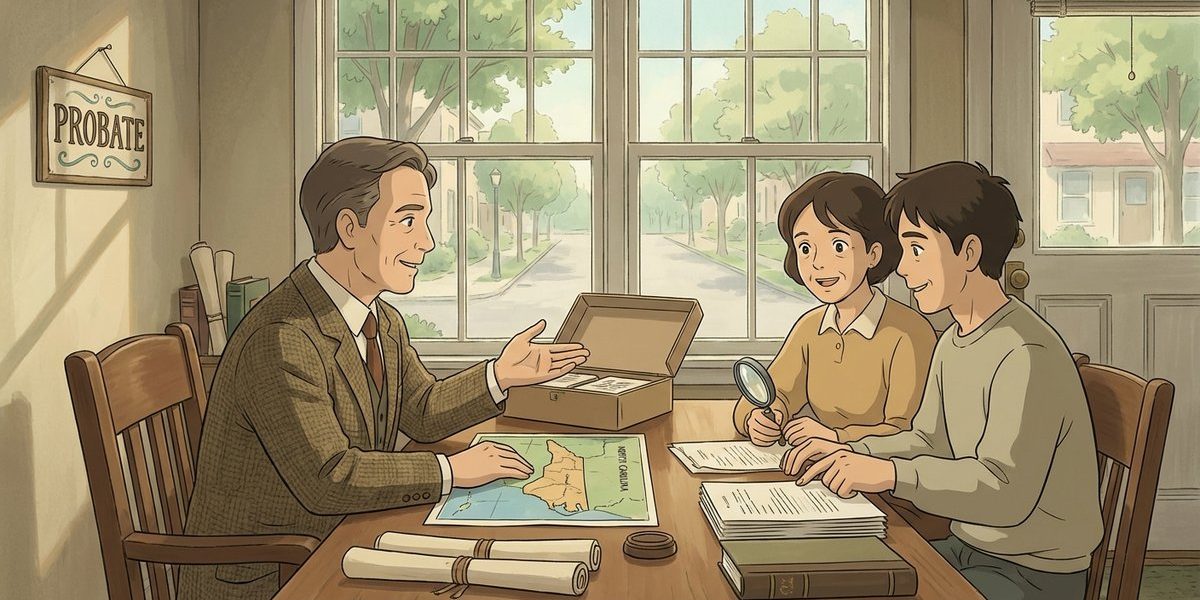
How can I find the original will if family members aren’t sure where to look? – North Carolina
Short Answer
In North Carolina, the search for an original will usually starts with a practical “paper trail” search (home papers, safe deposit box, and the lawyer who drafted it) and a check with the Clerk of Superior Court for any will deposited for safekeeping. If someone is believed to be holding the will, North Carolina law allows the Clerk to compel that person to produce it. If the original still cannot be found after a diligent search, it may be possible to ask the Clerk to admit a copy through a court proceeding, but the missing original must be satisfactorily explained.
Understanding the Problem
In North Carolina probate, the key question is often: “How can the family locate the original signed will so it can be filed with the Clerk of Superior Court and used to start the estate?” This issue usually comes up when family members find copies (or multiple versions) but do not know where the original is stored, or when the decedent’s living arrangements make it unclear which county has the right probate file. The decision point is whether the original will can be located and produced, because the process and proof requirements change if only a copy exists.
Apply the Law
North Carolina gives the Clerk of Superior Court (as the probate judge) the authority to handle probate and estate administration. As a practical matter, the Clerk’s office can also help confirm whether a will was deposited for safekeeping or whether an estate file already exists in another North Carolina county. If the original will cannot be found, North Carolina generally requires a stronger showing before a copy can be treated as the will, because the law often assumes a missing original might have been revoked unless the absence is properly explained.
Key Requirements
- Diligent search: A thorough, documented search in the places the original will would most likely be kept (not just a quick check of obvious drawers).
- Correct probate forum: Filing and inquiries usually go through the Clerk of Superior Court with probate jurisdiction, typically tied to the decedent’s North Carolina domicile (and sometimes requiring additional steps if property is in other counties).
- Proof if the original is missing: If only a copy is available, the party asking to use it generally must prove the will was properly signed, prove the contents, explain the loss or destruction, and show it was not missing because the decedent intended to revoke it.
What the Statutes Say
- N.C. Gen. Stat. § 7A-241 (Probate jurisdiction) – Gives the Clerk of Superior Court authority over probate and estate administration.
- N.C. Gen. Stat. § 31-39 (Probate needed to pass title; time limits) – Explains why timely probate matters and includes a two-year limitation that can be affected by proceedings to obtain or establish a lost will.
- N.C. Gen. Stat. § 98-6 (Establishing contents of a destroyed will) – Allows a petition to establish the contents of a will in certain destroyed-record situations and sets procedures for interested parties and fact disputes.
- N.C. Gen. Stat. § 98-4 (Copy of lost will may be probated in certain circumstances) – Describes when a preserved copy can be admitted in specific lost-record circumstances and the kind of proof that may be required.
Analysis
Apply the Rule to the Facts: The facts describe two versions of a will (an older notarized version and a later unnotarized version) and uncertainty about where the decedent was living for probate purposes. That combination makes the “diligent search” step especially important, because the Clerk will typically want confidence that the original of the most recent valid will was not simply misplaced or intentionally revoked. If the original cannot be found, the family may need a court proceeding to try to admit a copy, and the filing location will likely depend on where the decedent was domiciled at death, even if the decedent used a P.O. box elsewhere.
Process & Timing
- Who searches: The person expected to serve as personal representative (executor) and close family. Where: The decedent’s home and personal papers; any safe deposit box; the office of the lawyer who drafted the will; and the Clerk of Superior Court (including the will depository) in the county that appears most connected to the decedent’s domicile. What: Ask the Clerk to check whether a will was deposited for safekeeping and whether an estate file already exists in another North Carolina county. When: As soon as possible after death, before taking major steps with estate assets.
- If a safe deposit box may hold the will: Arrange for a lawful inventory/opening process through the Clerk as required by North Carolina procedure. Avoid informal entry after death, because the Clerk may require an affidavit about what was removed and why, which can slow the probate timeline.
- If the original still cannot be found: Consider an estate proceeding to admit a copy of the will. This typically involves filing a verified petition with the Clerk of Superior Court and serving all interested persons (including people who would inherit if there were no will). The petition usually must address execution, contents, loss, lack of intent to revoke, and the diligent search.
Exceptions & Pitfalls
- Assuming a copy is “good enough”: North Carolina often requires a satisfactory explanation for why the original is missing before a copy can be admitted, because a missing original can raise a revocation issue.
- Searching the wrong county first: A P.O. box does not necessarily establish domicile. Probate jurisdiction often tracks where the decedent was domiciled at death, so it is important to gather facts showing where the decedent actually lived and intended to remain.
- Not checking the Clerk’s will depository: Some wills are deposited for safekeeping with the Clerk. Finding a will there does not always mean it is the most recent will, so the search should continue for later documents or codicils.
- Safe deposit box missteps: Entering a box after death without following the proper inventory process can create delays and extra paperwork.
- Asset pressure (like selling a vehicle): Selling estate property too early can create title and authority problems. The ability to transfer title often depends on having the right personal representative appointed and having the correct will accepted for probate.
Conclusion
In North Carolina, locating the original will usually requires a structured search: personal papers, safe deposit box, the drafting lawyer, and the Clerk of Superior Court’s will depository. If the original cannot be found, a copy may still be usable, but only after a stronger showing that the will was properly signed, its contents are known, and the original is missing for reasons other than revocation. The most important next step is to file the will (or a verified petition to establish a lost will) with the Clerk of Superior Court within the time limits that apply.
Talk to a Probate Attorney
If a family is trying to locate an original will, dealing with competing versions, or facing time pressure to handle estate assets, an attorney can help organize the search, identify the right Clerk’s office, and explain the steps to probate an original will or pursue a lost-will proceeding. Call us today at (919) 341-7055.
Disclaimer: This article provides general information about North Carolina law based on the single question stated above. It is not legal advice for your specific situation and does not create an attorney-client relationship. Laws, procedures, and local practice can change and may vary by county. If you have a deadline, act promptly and speak with a licensed North Carolina attorney.

