
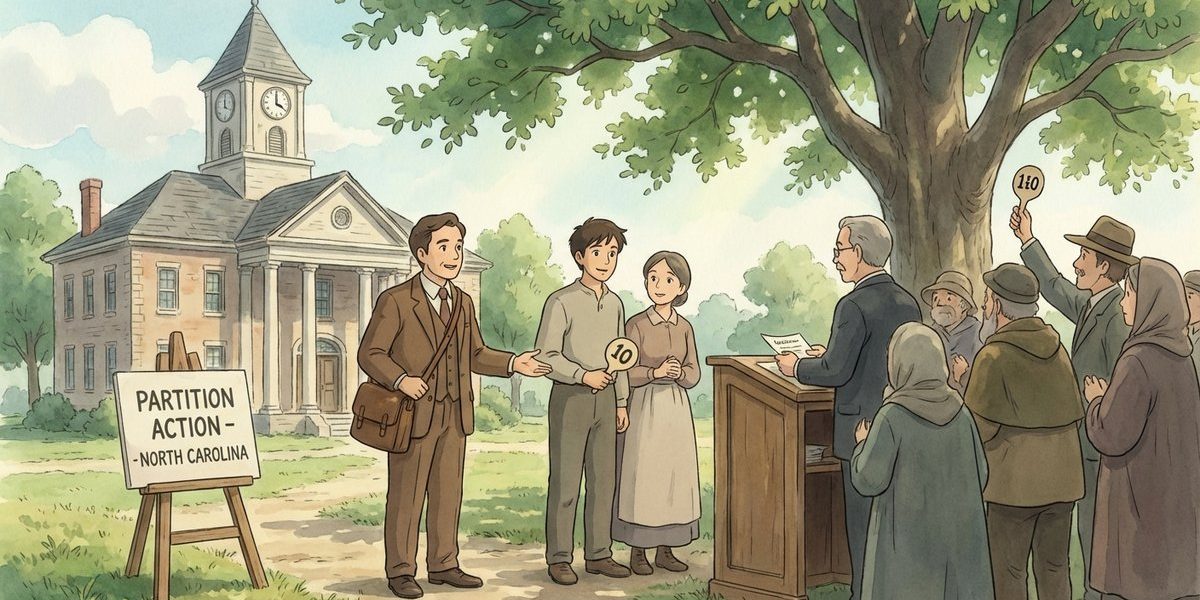
Can the other co-owner buy the property at the public sale, and what happens if a third party outbids them? – North Carolina
Short Answer
Yes. In a North Carolina partition sale, a co-owner can bid at the public sale like anyone else, unless the court orders otherwise for a specific reason. If a third party outbids the co-owner and the sale is later confirmed, the third party becomes the buyer and receives a deed conveying the interests of the co-owners and other parties to the case. The sale is not fully locked in until the clerk enters an order confirming the sale and it becomes final.
Understanding the Problem
In a North Carolina partition action involving co-owners of the same property, the key question is whether one co-owner can bid and buy at the court-ordered public sale, and what happens if someone else bids higher. This issue usually comes up after the clerk of superior court orders a partition sale instead of dividing the land, and a commissioner schedules a public sale. The practical decision point is whether the co-owner who wants to keep the property can compete at the sale, or whether the highest outside bidder controls the outcome once the sale is confirmed.
Apply the Law
North Carolina partition sales are court-supervised sales handled through the clerk of superior court and a court-appointed commissioner. When the court orders a public sale, the commissioner conducts the sale under the procedures that apply to judicial sales, and then reports the result to the court for confirmation. A co-owner is generally allowed to participate as a bidder at a public sale, and the highest bid is typically accepted subject to later court confirmation and any required upset-bid process under North Carolina’s judicial sale rules.
Key Requirements
- Court-ordered sale and commissioner authority: The clerk orders the sale method in the partition case and appoints a commissioner to conduct the sale and report back for confirmation.
- Proper notice of the public sale: The commissioner must mail notice of the public sale to parties who were served in the case at least 20 days before the sale and certify that mailing to the court.
- Confirmation and finality before ownership changes: The sale does not fully transfer ownership until the clerk confirms the sale and the confirmation becomes final; after that, the successful bidder can complete the purchase and receive a deed.
What the Statutes Say
- N.C. Gen. Stat. § 46A-76 (Sale procedure) – Requires partition sales to follow North Carolina’s judicial sale procedures and adds a 20-day mailed notice requirement for public sales.
- N.C. Gen. Stat. § 46A-85 (Order becoming final; appeal; purchase of property) – Sets when a confirmation order becomes final, when a buyer can purchase, what the deed conveys, and how sale proceeds get distributed.
- N.C. Gen. Stat. § 46A-84.5 (Revocation based on default bid) – Allows the court to revoke a confirmation order and require a resale if the purchaser defaults and cannot cure the default.
Analysis
Apply the Rule to the Facts: The facts describe two co-owners of a farm/rural property and a filed partition case seeking a sale to cash out. If the clerk orders a public sale and appoints a commissioner, the other co-owner can generally bid at that sale to try to keep the property, but must compete with any third-party bidders. If a third party submits the highest bid and the clerk later confirms the sale and it becomes final, the third party becomes the purchaser and the co-owners receive their shares of the sale proceeds rather than keeping the land.
Process & Timing
- Who files: A party to the partition case (often through the commissioner) asks the clerk to confirm the reported sale. Where: The Clerk of Superior Court in the county where the partition case is pending in North Carolina. What: The commissioner’s report of sale and a proposed order of confirmation (exact form names vary by county). When: After the public sale occurs and the commissioner reports the result; the commissioner must mail notice of the public sale at least 20 days before the sale.
- Confirmation stage: The clerk reviews whether the sale followed the required procedures (including notice) and then enters an order confirming the sale if appropriate. The confirmation order becomes final 15 days after entry (or later if a revocation petition is denied).
- Closing and deed: After the confirmation becomes final, the successful bidder may complete the purchase and receive a deed from the commissioner. The deed conveys the title and interests that the co-owners and other parties had in the property, and the court then secures each co-owner’s ratable share of the sale proceeds.
Exceptions & Pitfalls
- Sale is not “done” on sale day: A high bid at the public sale is usually still subject to court confirmation and any required judicial-sale steps, so planning should account for the time between the sale and final confirmation.
- Notice problems can derail a sale: If the commissioner cannot prove the required mailed notice went out at least 20 days before the sale, the clerk may refuse to confirm the sale or require corrective steps.
- Buyer default can trigger a resale: If the successful bidder (whether a co-owner or a third party) defaults and cannot cure, a party can petition to revoke the confirmation and the court can order a resale.
Conclusion
In North Carolina, a co-owner can generally bid at a partition public sale, but the property typically goes to the highest bidder if the clerk later confirms the sale and the confirmation becomes final. If a third party outbids the co-owner and the sale is confirmed, the third party becomes the buyer and receives a deed conveying the parties’ interests, while the co-owners receive their shares of the sale proceeds. The next step is to track the commissioner’s sale notice and confirmation filings, including the 20-day mailed notice requirement.
Talk to a Partition Action Attorney
If you’re dealing with a North Carolina partition sale and questions about whether a co-owner can bid or what happens when an outside bidder wins, our firm has experienced attorneys who can help explain the process, deadlines, and practical options. Call us today at (919) 341-7055.
Disclaimer: This article provides general information about North Carolina law based on the single question stated above. It is not legal advice for your specific situation and does not create an attorney-client relationship. Laws, procedures, and local practice can change and may vary by county. If you have a deadline, act promptly and speak with a licensed North Carolina attorney.

