
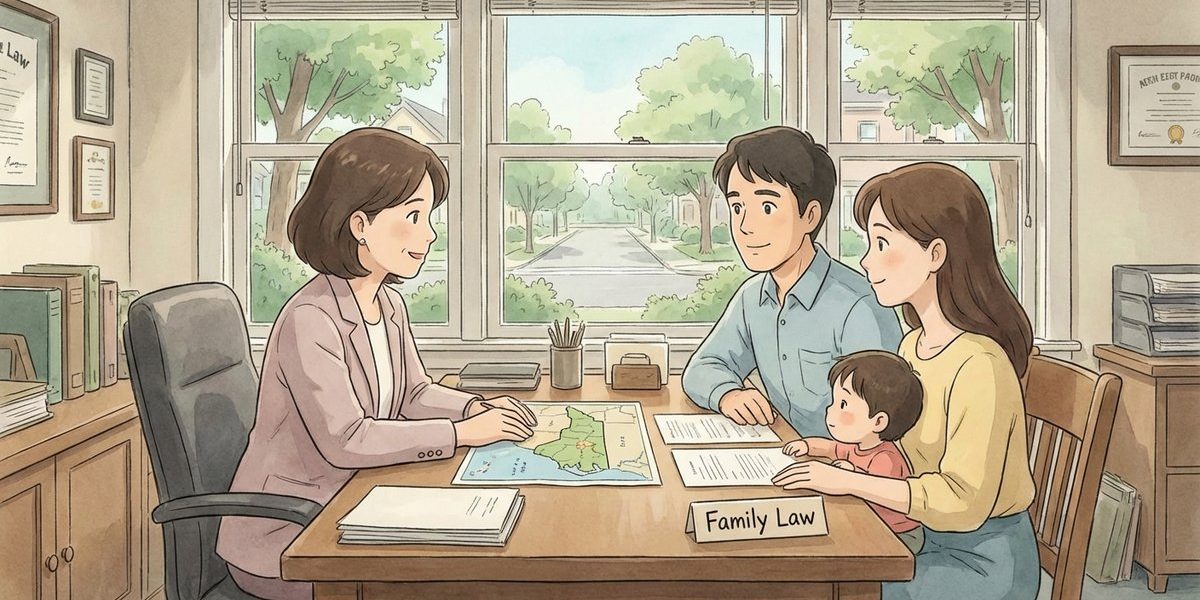
How do I start or change a child support case in my county? – North Carolina
Short Answer
In North Carolina, a child support case usually starts by filing a child support claim in District Court (often through the Clerk of Superior Court) in the county where a parent or the child lives or is physically present. If there is already a child support order, changing it typically requires filing a “motion in the cause” and proving a “changed circumstance.” Many counties use a child support hearing officer for faster scheduling, and proper service and notice rules still apply.
Understanding the Problem
In North Carolina family law, the practical question is whether a child support case needs to be started for the first time or changed after an order already exists. Starting a case focuses on where the claim can be filed in the county court system and how the case gets scheduled for a support hearing. Changing a case focuses on what must be filed in the existing case and what must be shown to justify a new support amount or different terms.
Apply the Law
North Carolina child support cases are handled in District Court, and many counties use an expedited process where a child support hearing officer conducts the hearing and enters a recommended order or order as provided by statute. When a support order already exists, North Carolina allows modification “at any time,” but only if the moving party proves a changed circumstance and follows the correct procedure in the existing case. Whether starting or changing a case, the initiating party must follow the Rules of Civil Procedure for service and notice so the other party receives proper legal notice of the hearing.
Key Requirements
- Proper county and forum: The case must be brought in the correct North Carolina county and heard in District Court (often through a child support hearing officer if the county uses the expedited process).
- Correct procedure for the request: Starting support generally requires filing a new claim; changing support generally requires a motion in the existing case (“motion in the cause”).
- Legal basis to change an existing order: A modification requires proof of a “changed circumstance” since the last order.
What the Statutes Say
- N.C. Gen. Stat. § 50-36 (Expedited child support process; scheduling; hearing officer) – In counties with an expedited process, child support cases are scheduled before a child support hearing officer, and the initiating party must provide notice and follow civil service rules.
- N.C. Gen. Stat. § 50-13.7 (Modification of child support order) – A North Carolina child support order may be modified or vacated upon motion in the cause and a showing of changed circumstances.
- N.C. Gen. Stat. § 110-130 (County may institute support/paternity proceedings) – A county’s designated representative may bring or pursue support (and paternity) proceedings in certain counties tied to where the parents or child reside or are found.
- N.C. Gen. Stat. § 50-13.9 (Procedure to help ensure payment of child support) – The court can direct payments through the State Child Support Collection and Disbursement Unit and address tools like income withholding and show-cause procedures.
Analysis
Apply the Rule to the Facts: Here, the goal is to schedule an appointment about a child support case in a North Carolina county. If there is no existing order, the key first step is identifying the correct county and filing method so the case can be scheduled (often before a child support hearing officer in expedited counties). If there is already an order, the key first step is filing the correct motion in the existing case and preparing to prove a changed circumstance, because the court will not change support just because a party asks.
Process & Timing
- Who files: The parent, custodian, or (in some cases) the county child support enforcement agency. Where: District Court in the county where the case is properly filed; filings are typically made through the Clerk of Superior Court. What: A complaint/claim to establish child support (to start a case) or a “motion in the cause” (to change an existing order). When: A modification request can be filed after an order exists, but it must be supported by changed circumstances.
- Scheduling and notice: In counties using the expedited process, the case is generally scheduled before a child support hearing officer, and the initiating party must send notice of the hearing and complete service as required by the North Carolina Rules of Civil Procedure.
- Hearing and order: The hearing officer (or a district court judge in transferred/complex cases) reviews evidence, including financial information, and enters a recommended order or order as provided by statute that sets support and how it will be paid (often through the State Child Support Collection and Disbursement Unit).
Exceptions & Pitfalls
- Filing in the wrong county: Venue disputes can delay a case; if the other party timely objects, the court may require the case to be moved.
- Trying to “change” support without changed circumstances: A modification requires proof of a meaningful change since the last order (for example, a change in income or a change affecting the child’s needs).
- Service and notice mistakes: Even in expedited counties, the initiating party must follow civil service rules; improper service can cause continuances or dismissal.
- Complex issues may leave the expedited track: Contested paternity, custody/visitation disputes, or other complex issues can be transferred to a district court judge, which can change timing and procedure.
- IV-D vs. non-IV-D confusion: If the case is handled through the child support enforcement agency (a Title IV-D case), that agency typically monitors compliance and initiates many enforcement steps, while the clerk maintains the official court record.
Conclusion
In North Carolina, starting a child support case generally means filing a support claim in District Court in the proper county so it can be scheduled (often before a child support hearing officer in expedited counties). Changing an existing child support order usually requires filing a motion in the cause and proving changed circumstances. The most important next step is to file the correct pleading with the Clerk of Superior Court in the proper county and ensure the other party is properly served under the Rules of Civil Procedure.
Talk to a Family Law Attorney
If you’re dealing with starting a new child support case or trying to change an existing child support order in North Carolina, our firm has experienced attorneys who can help explain the process, the paperwork, and the timelines in the local court system. Call us today at (919) 341-7055.
Disclaimer: This article provides general information about North Carolina law based on the single question stated above. It is not legal advice for your specific situation and does not create an attorney-client relationship. Laws, procedures, and local practice can change and may vary by county. If you have a deadline, act promptly and speak with a licensed North Carolina attorney.

