
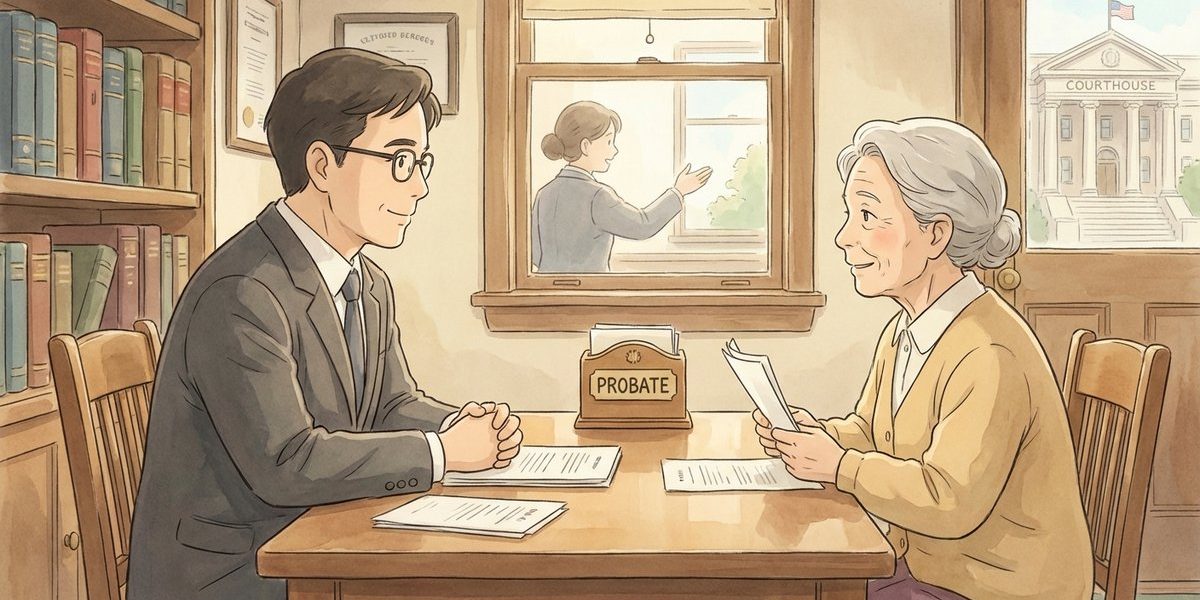
How do I schedule a court hearing for a year’s allowance when my spouse’s death certificate wrongly says they were divorced? – North Carolina
Short Answer
In North Carolina, a year’s allowance (often called a “year’s support”) is handled through the Clerk of Superior Court in the county where the estate is administered. If the death certificate incorrectly lists the decedent as “divorced,” the clerk may require proof of a valid marriage before setting or holding a hearing in a contested estate proceeding. In practice, the fastest path is usually to (1) start the allowance request with the clerk using the standard allowance process when possible, and (2) pursue a correction through North Carolina Vital Records so the marital status record matches the marriage evidence used in the estate file.
Understanding the Problem
In North Carolina probate, can a surviving spouse get a hearing date before the Clerk of Superior Court to decide a year’s allowance when a key record (the death certificate) incorrectly states the decedent was divorced, and the clerk or other interested persons question whether the petitioner qualifies as a “surviving spouse” for the allowance?
Apply the Law
North Carolina law gives a surviving spouse the right to claim a spousal year’s allowance by filing a verified petition with the Clerk of Superior Court in the proper county. The clerk can award the allowance based on the petition and estate information, but the clerk may require a hearing (and can direct the matter into a contested estate proceeding) if entitlement is disputed or unclear. When a dispute exists, the hearing is typically handled as a contested estate proceeding under Chapter 28A, Article 2, with notice to the required parties.
Key Requirements
- Standing as a “surviving spouse”: The petitioner must show a valid marriage existed at the time of death and that no legal bar applies.
- Proper filing with the Clerk of Superior Court: The request is made by a verified petition filed in the county where venue is proper for the estate.
- Meet the applicable timing rule: If a personal representative has been appointed, the claim must be made within six months after letters issue; an “additional allowance” proceeding has its own filing deadlines and proceeds as a contested estate proceeding.
What the Statutes Say
- N.C. Gen. Stat. § 30-15 (Spouse entitled to allowance; how and when to claim) – Allows a surviving spouse to claim a spousal allowance by verified petition filed with the clerk; if a personal representative is appointed, the claim must be made within six months after letters issue and a copy must be delivered or mailed to the personal representative.
- N.C. Gen. Stat. § 30-20 (Clerk procedure; when a hearing may be required) – Directs the clerk to determine entitlement and enter an order; permits the clerk to require a hearing and direct the petitioner to commence a contested estate proceeding to determine the allowance.
- N.C. Gen. Stat. § 30-27 (Additional allowance; contested estate proceeding; deadlines) – Allows a surviving spouse to seek an additional allowance in a contested estate proceeding and sets a filing deadline (generally within one year of death, or within six months after letters issue if a personal representative was appointed).
- N.C. Gen. Stat. § 30-23.1 (Contested proceeding challenging an allowance) – Allows a person with standing to challenge a year’s allowance order through an estate proceeding, with a one-year deadline measured from the order.
Analysis
Apply the Rule to the Facts: The issue is not only getting a date on the clerk’s calendar, but also showing standing as a “surviving spouse.” When a death certificate says “divorced,” the clerk or other interested persons may treat the marriage status as disputed and require proof (for example, a certified marriage certificate and evidence no divorce occurred) before the clerk will award the allowance without a hearing, or before the clerk will set the matter for a contested hearing. If the clerk requires a hearing, the matter typically moves into a contested estate proceeding track, which requires proper filings and notice to parties in interest.
Process & Timing
- Who files: The surviving spouse (or a permitted representative). Where: The Clerk of Superior Court (Estates Division) in the county where the estate is administered in North Carolina. What: A verified petition for spousal year’s allowance (commonly filed on the statewide AOC form used for “Application and Assignment of Year’s Allowance,” often labeled AOC-E-100 in practice), plus supporting documents showing the marriage. When: If a personal representative has been appointed, file within six months after letters testamentary or letters of administration are issued, and deliver or mail a copy of the petition to the personal representative.
- Request the hearing date (if needed): If the clerk will not enter the allowance order based on the petition because marital status is disputed, ask the Estates Division what filing is required to open a contested estate proceeding and what local scheduling steps apply. After the contested matter is opened, obtain a hearing date from the clerk and send written notice of the hearing to the required parties in interest (the exact parties depend on the posture of the estate and whether the matter is an “additional allowance” proceeding).
- Fix the record problem in parallel: Start the correction process for the death certificate through North Carolina Vital Records so the marital status is corrected. In many estates, the clerk relies on sworn probate filings to establish death, but third parties and court staff often still review the death certificate for accuracy, and a correction can reduce delays and disputes.
Exceptions & Pitfalls
- Assuming the death certificate controls marital status: A wrong marital-status entry can trigger extra scrutiny, but the core question is whether a valid marriage existed at death. The clerk may require additional proof when the certificate conflicts with other records.
- Filing the wrong type of proceeding: A basic spousal allowance claim is typically handled through the clerk’s allowance procedure, while an “additional allowance” request must be filed as a contested estate proceeding with added pleading and party requirements.
- Missing the six-month deadline when letters have issued: When a personal representative is appointed, the timing rule becomes strict. Waiting while trying to correct the death certificate can create avoidable deadline risk.
- Notice problems: When the matter becomes contested, failure to give proper notice to parties in interest can delay the hearing or lead to an order being challenged later.
Conclusion
In North Carolina, a year’s allowance is requested through the Clerk of Superior Court where the estate is administered, usually by filing a verified petition and supporting proof that the petitioner is the surviving spouse. If the death certificate incorrectly says “divorced,” the clerk may require a contested estate proceeding and a hearing to resolve entitlement before entering an allowance order. The most important next step is to file the verified allowance petition with the clerk and, if a personal representative has been appointed, do so within six months after letters are issued.
Talk to a Probate Attorney
If a spouse’s death certificate lists the wrong marital status and that mistake is blocking a year’s allowance hearing in North Carolina, our firm has experienced attorneys who can help explain the clerk’s process, prepare the filings, and track the deadlines. Call us today at (919) 341-7055.
Disclaimer: This article provides general information about North Carolina law based on the single question stated above. It is not legal advice for your specific situation and does not create an attorney-client relationship. Laws, procedures, and local practice can change and may vary by county. If you have a deadline, act promptly and speak with a licensed North Carolina attorney.

