
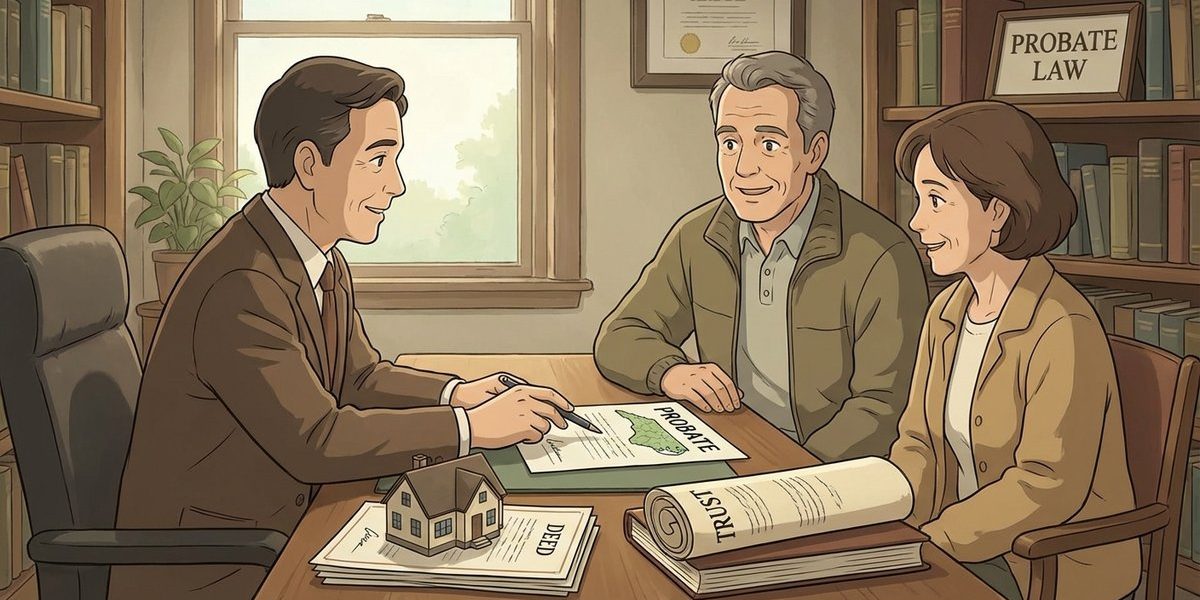
If my parent had a trust, do I still need a probate case to sell real estate that’s titled in their name? – North Carolina
Short Answer
Often, yes. In North Carolina, a trust can avoid probate only for assets the trust actually owns. If the real estate is still titled in the parent’s individual name at death, a probate estate (or another estate-related court process) is commonly needed to put someone in legal authority to sign a deed and deliver marketable title for a sale.
Understanding the Problem
In North Carolina probate practice, the key question is whether the real estate was titled in the trust’s name before the parent died or whether it remained titled in the parent’s individual name. If the deed still shows the parent as owner, a buyer and title company usually require an estate pathway that legally transfers or confirms who has authority to convey the property. This issue commonly comes up when a trust exists, but the property was never deeded into the trust, or the deed and the trust do not match.
Apply the Law
North Carolina generally treats a trust as a separate owner: the trustee can sell trust-owned real estate if the trust holds title and the trustee has authority under the trust. But if the decedent died owning real estate in an individual name, the transfer and sale typically run through an estate process because the deed must be signed by the right legal party (often heirs/devisees and/or a personal representative) and the public records must support that authority. Timing matters because North Carolina law also protects purchasers and lien creditors when a will is not timely probated and recorded in the county where the land is located.
Key Requirements
- Title controls: The recorded deed (and any recorded trust-related documents) must show whether the trust or the individual owned the property at death.
- Proper authority to sign: If the trust owns the property, the trustee signs. If the decedent owned the property, an estate process usually determines who can sign (for example, heirs/devisees and/or a court-appointed personal representative).
- County recording rules and deadlines: When a will affects title, North Carolina requires probate and (for land in a different county) filing certified probate documents in the county where the land lies, with a key two-year timing rule that can affect purchasers and lien creditors.
What the Statutes Say
- N.C. Gen. Stat. § 31-39 (Probate necessary to pass title; recordation in county where real property lies) – Explains that a will must be probated to pass title and sets a two-year rule that can affect purchasers and lien creditors; also requires filing certified probate documents in the county where the real property is located.
- N.C. Gen. Stat. § 1-339.32 (Judicial sales; reporting after sale) – Part of North Carolina’s judicial sale framework that can apply when an estate must sell property through a court-supervised process.
Analysis
Apply the Rule to the Facts: The parent had a trust and the estate was handled through that trust, but the real property still appears titled in the parent’s individual name. That mismatch usually means the trust alone cannot convey the property, because the trust does not appear as the record owner. A title search and trust review should confirm whether the property was ever deeded into the trust, whether there is a “pour-over” will, and whether an estate filing is needed in North Carolina (and where) to create clear authority to transfer or sell.
Process & Timing
- Who files: Typically a family member or nominated fiduciary starts the estate process if the deed is still in the decedent’s name. Where: The Clerk of Superior Court (Estates) in the proper North Carolina county for the estate administration, and recording with the Register of Deeds in the county where the land is located. What: Estate opening documents to appoint a personal representative if needed, plus recording documents that the title company will require for the sale. When: Act early if a sale is planned, and pay close attention to the two-year timing rule tied to probate and recording when a will affects title.
- Confirm the correct sale pathway: If the personal representative has authority to sell under the will (or the will grants a power of sale), a sale may be handled without a separate court sale proceeding. If the personal representative lacks that authority and the estate needs the sale to pay debts/expenses or for the advantage of the estate, a special proceeding for a court-supervised sale may be required, and North Carolina procedures can include an upset-bid period.
- Close and record: Once the correct signing authority is established (trustee or estate authority), the deed is signed and recorded with the Register of Deeds, and the closing attorney/title insurer confirms marketable title for the buyer.
Exceptions & Pitfalls
- The trust exists, but the deed never moved: A common problem is that the trust was signed, but the real estate was never deeded into the trust, so the trustee cannot sell based on the trust alone.
- Wrong county filings: Even when a will is probated, North Carolina can require filing certified probate documents in the county where the land lies to protect against later claims by purchasers or lien creditors.
- Assuming “no probate” means “no estate paperwork”: Even if most assets avoided probate, a limited estate filing may still be needed to clear title to a specific parcel.
- Sale authority issues: If a personal representative must sell and lacks a power of sale, a court-supervised sale process may apply, which can add steps and timing (including an upset-bid period).
- Heir/devisee coordination: When heirs or devisees want to sell, the estate’s ability to pay debts and expenses matters, and the personal representative may need to participate to deliver good title.
Conclusion
In North Carolina, a trust avoids probate only for property titled in the trust. If the deed still shows the parent as the owner at death, a probate estate or related court process is often needed so the correct legal party can sign a deed and the public records support the transfer. When a will affects title, timing can matter, including a two-year rule tied to probate and county recording. Next step: open the appropriate estate filing with the Clerk of Superior Court and coordinate recording in the county where the land is located before listing the property for sale.
Talk to a Probate Attorney
If a parent had a trust but real estate is still titled in the parent’s name, the next steps often depend on the deed, the trust terms, and what the title search shows. Our firm has experienced attorneys who can help review the trust, confirm how title is held, and map out the fastest compliant path to a sale. Call us today at (919) 341-7055.
Disclaimer: This article provides general information about North Carolina law based on the single question stated above. It is not legal advice for your specific situation and does not create an attorney-client relationship. Laws, procedures, and local practice can change and may vary by county. If you have a deadline, act promptly and speak with a licensed North Carolina attorney.

