
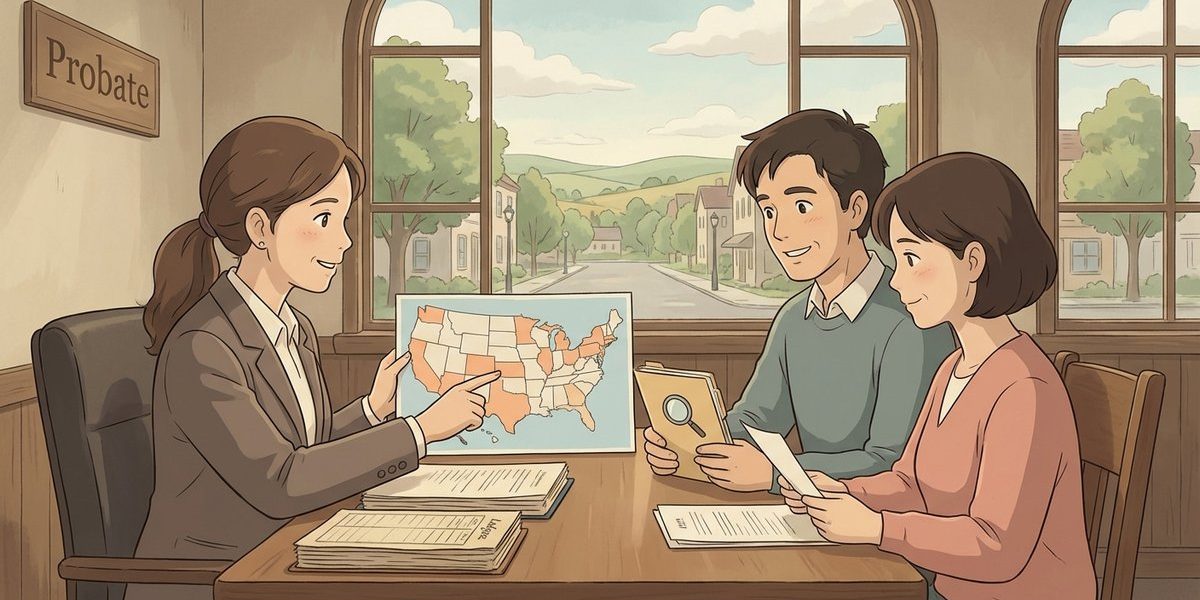
How do I find and claim any unknown or out-of-state accounts or unclaimed property when the deceased lived in multiple places? – North Carolina
Short Answer
In North Carolina, the personal representative (executor or administrator) typically starts by collecting records, contacting known financial institutions, and searching official unclaimed property databases for every state where the deceased lived, worked, or held accounts. If property has been turned over to a state as “unclaimed,” it is usually claimed through that state’s unclaimed property office using proof of death and proof of authority (Letters Testamentary or Letters of Administration). When accounts or property are in another state, the estate may also need an out-of-state procedure (often called ancillary administration) to access or transfer certain assets, especially real estate.
Understanding the Problem
When a North Carolina estate involves a deceased person who lived in multiple places, the decision point is whether the asset is still held by a bank, insurer, employer, or other “holder,” or whether it has already been transferred to a state unclaimed property program. The personal representative must identify what exists, determine which state has custody of any unclaimed property, and then claim it using the estate’s authority. If the named executor lives outside North Carolina, the estate administration may also require steps to qualify in the North Carolina Clerk of Superior Court, including bond and a resident process agent, before institutions will release information or funds.
Apply the Law
North Carolina treats unclaimed property as property that may be taken into custody by the State Treasurer under North Carolina’s unclaimed property laws. Which state has custody often depends on the owner’s last known address shown in the holder’s records; if the records do not show an address, other rules can apply (including where the holder is domiciled). If property is escheated or held by the State, an heir or certain creditors may be able to file a claim to recover it. Separately, when property is located in another state (especially real estate), the estate often must follow that other state’s transfer rules, which may require filing authenticated probate documents and sometimes opening an ancillary estate there.
Key Requirements
- Proof of authority: Financial institutions and state unclaimed property programs usually require current Letters Testamentary or Letters of Administration (or similar proof) showing the personal representative has authority to act for the estate.
- Correct state and correct owner identity: The claim must be made in the state that has custody of the property, using the deceased person’s correct legal name(s), prior addresses, and identifying details that match the holder’s records.
- Asset-by-asset classification: Some assets pass outside probate (for example, certain joint accounts with survivorship or payable-on-death designations), but they can still matter if the estate needs funds to pay valid debts and expenses.
What the Statutes Say
- N.C. Gen. Stat. § 116B-56 (Rules for taking custody) – Explains when North Carolina can take custody of property presumed abandoned, including rules tied to the owner’s last known address and, in some cases, the holder’s domicile.
- N.C. Gen. Stat. § 116B-4 (Claims by heirs or creditors to escheated property) – Allows certain heirs and certain creditors to claim escheated property held by the Escheat Fund, subject to limits that can apply to creditor claims.
- N.C. Gen. Stat. § 116B-66 (Claim of another state to recover property) – Addresses situations where another state may have a superior claim to property that was delivered to North Carolina, based on last-known-address and record-accuracy rules.
- N.C. Gen. Stat. § 116B-3 (Unclaimed personalty on settlements of decedents’ estates) – Requires certain unclaimed estate assets to be paid to the State Treasurer before closing an estate in specific “no known heirs” situations.
- N.C. Gen. Stat. § 116B-2.2 (Unclaimed real and personal property escheats) – Describes when property can escheat when a person dies without heirs (or without fully disposing of property), and the State Treasurer’s ability to pursue an escheat action.
Analysis
Apply the Rule to the Facts: Here, the estate appears modest, but the deceased lived in multiple places and there is uncertainty about out-of-state or international accounts. That fact pattern makes it important to (1) use the prior banking records to identify “holders,” (2) confirm whether any property has already been transferred to a state unclaimed property program, and (3) claim property using proof of authority once the North Carolina Clerk of Superior Court issues Letters. Because the executor is outside North Carolina, the qualification steps (including bond and a resident process agent) often become the practical trigger for getting cooperation from banks and for filing unclaimed property claims in the estate’s name.
Process & Timing
- Who files: The personal representative (executor named in the will, once qualified) or a North Carolina ancillary personal representative if another state’s process requires it. Where: North Carolina Clerk of Superior Court in the county where the estate is opened, and each relevant state’s unclaimed property office for unclaimed property claims. What: Probate filings to obtain Letters (and any bond/resident process agent paperwork required for a nonresident personal representative), plus unclaimed property claim forms required by each state. When: As soon as practical after qualification, because institutions and state programs usually require current Letters and a death certificate before releasing information or paying a claim.
- Build the asset map: Review mail, email, tax documents, old statements, and prior banking records to list every possible holder (banks, credit unions, brokerages, insurers, employers, utilities, and safe deposit boxes). Then contact each holder to ask whether an account exists, whether it has a beneficiary or survivorship feature, and whether it has been reported to a state as unclaimed.
- Search unclaimed property by state: Search North Carolina and every other state where the deceased lived, worked, owned property, or had a mailing address. If a claim is located, submit the state’s claim packet with proof of death and proof of authority; some states also require proof tying the deceased to the address shown on the unclaimed property record.
- Handle out-of-state property correctly: If the deceased owned real estate outside North Carolina, that state may require filing authenticated probate documents (often an exemplified set of the probate record) and may require ancillary administration there before title can transfer. For North Carolina real estate located in a different North Carolina county than the probate county, recording certified probate documents in the county where the land sits can be an important step for title and future transfers.
Exceptions & Pitfalls
- Assuming “out-of-state” means “out-of-reach”: Many accounts can be claimed without opening a full ancillary estate, but real estate and some institution-specific policies may require an ancillary process in the state where the asset sits.
- Name and address mismatches: A misspelling, missing middle initial, or an old address can cause a denial or long delay. Using multiple name variations and confirming the death certificate’s accuracy helps reduce problems.
- Confusing probate assets with non-probate assets: Joint accounts with survivorship and payable-on-death accounts often pass by contract, not by the will. Even so, North Carolina law can allow certain non-probate assets to be pulled in to pay valid claims if the probate estate is not enough, which can affect how aggressively the personal representative must investigate.
- Closing the estate with “unknowns” still outstanding: If an estate is ready to close but assets remain unclaimed in certain “no known heirs” situations, North Carolina law can require payment to the State Treasurer before closing, and later claims may run through the State’s process.
- Tax non-filing and missing records: Several years of unfiled taxes often means missing W-2s, 1099s, and brokerage tax forms that also serve as an asset roadmap. A tax attorney or CPA may be needed to reconstruct records without guessing.
Conclusion
In North Carolina, the personal representative typically finds unknown or out-of-state assets by (1) qualifying with the Clerk of Superior Court to obtain Letters, (2) contacting likely holders using the deceased’s records, and (3) searching and claiming property through each state’s unclaimed property program where the deceased lived or had an address on file. The key threshold is whether the property is still with a holder or has been transferred to a state. The next step is to open the North Carolina estate and obtain Letters so claims can be submitted promptly.
Talk to a Probate Attorney
If a North Carolina estate involves possible out-of-state accounts or unclaimed property and the executor lives outside North Carolina, our firm has experienced attorneys who can help clarify the steps, documents, and timelines to collect assets and administer the estate. Call us today at (919) 341-7055.
Disclaimer: This article provides general information about North Carolina law based on the single question stated above. It is not legal advice for your specific situation and does not create an attorney-client relationship. Laws, procedures, and local practice can change and may vary by county. If you have a deadline, act promptly and speak with a licensed North Carolina attorney.

