
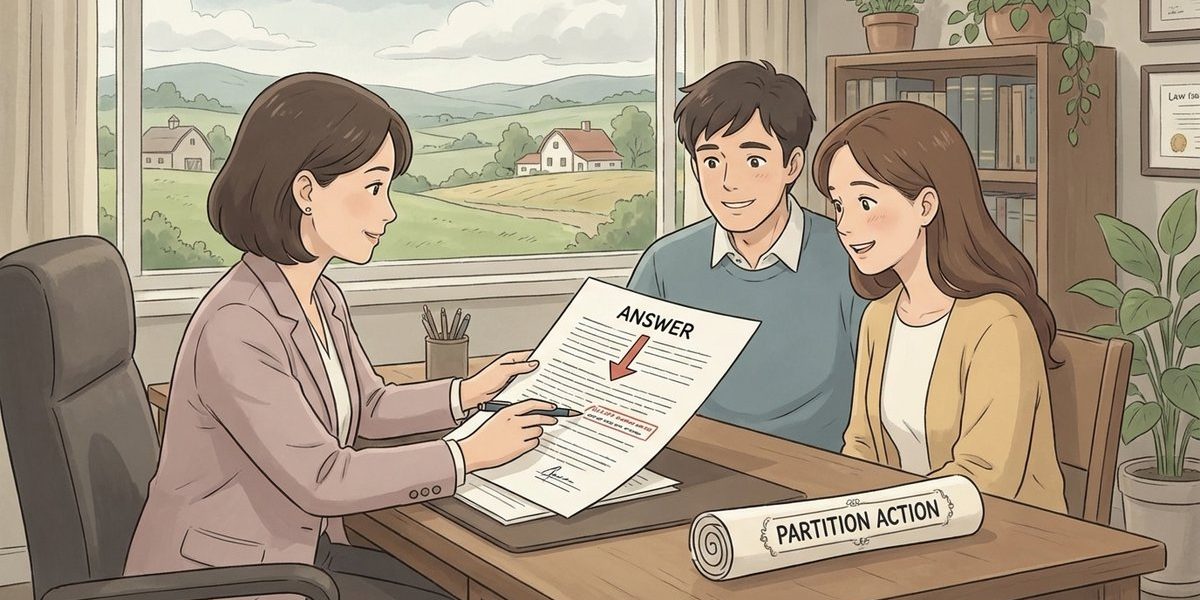
How do I respond to a partition lawsuit if I agree the land can be sold but the paperwork lists the wrong heirs and misspells names? – North Carolina
Short Answer
In North Carolina, a respondent in a partition case can agree that a sale may be appropriate while still filing a timely Answer to correct party names, identify missing or incorrect heirs, and dispute who owns what share. The key is to respond within the summons deadline and clearly state which allegations are admitted (sale/partition requested) and which are denied (identity of cotenants, spelling, and ownership interests). North Carolina law allows the court to move forward with partition or a partition sale even if ownership shares are disputed, but the record still needs the right parties and correct names for notice and a valid result.
Understanding the Problem
In a North Carolina partition action, a cotenant files a special proceeding before the clerk of superior court asking the court to divide family land or order a sale and split the proceeds. The decision point is how to respond when the sale itself is not the main disagreement, but the petition lists the wrong heirs, leaves out people who may have an ownership interest, or misspells names in a way that could affect notice and who gets paid. The response needs to preserve the ability to correct the parties and ownership interests while still allowing the case to move forward on the sale issue.
Apply the Law
North Carolina partition cases are generally brought as special proceedings before the clerk of superior court. The petitioner must join and serve all tenants in common and joint tenants, and may join other people with an interest in the property (like lienholders). If names are unknown or title is disputed, North Carolina partition law allows the court to treat disputed or unknown interests together for purposes of moving the partition case forward, and it may postpone deciding competing claims to the same interest until later. Separately, North Carolina’s partition statutes tie the time to answer the summons to the civil procedure deadline referenced in the partition chapter, so a timely Answer matters even when the respondent generally agrees with a sale.
Key Requirements
- Timely response to the summons: File an Answer within the deadline stated by the summons rules referenced in the partition statute, or request additional time through proper procedure if needed.
- Clear admissions and denials: Admit the parts that are true (for example, that partition is requested or that a sale may be appropriate) and deny the parts that are wrong (incorrect heirs, missing parties, misspellings, and disputed ownership shares).
- Correct parties and interests: Identify who should be included as cotenants (or who may claim the same interest) and state what is known about the chain of ownership so the court can ensure proper notice and a workable order.
What the Statutes Say
- N.C. Gen. Stat. § 46A-2 (Summons; answer time; notice in petition) – Ties the time to answer in a partition case to the summons answer period referenced in the statute and requires notice language in the petition.
- N.C. Gen. Stat. § 46A-21 (Necessary and proper parties) – Requires the petitioner to serve and join all cotenants and allows joinder of others with an interest.
- N.C. Gen. Stat. § 46A-52 (Unknown cotenants; title disputed) – Allows the case to proceed even when names are unknown or ownership shares are disputed, and permits later resolution of competing claims.
- N.C. Gen. Stat. § 46A-75 (Sale in lieu of actual partition) – Sets the standard for when the court may order a partition sale and notes the court may proceed even if parties dispute who owns a particular share.
Analysis
Apply the Rule to the Facts: Here, multiple relatives believe they are heirs to family land, and the petition reportedly misspells names and lists the wrong heirs while seeking a private sale. Under North Carolina law, the response can admit that a partition sale may be acceptable, but it should deny and specifically correct the allegations about who the cotenants are and what interests they own. Because the statutes allow a partition case to move forward even when title or shares are disputed, the Answer should also preserve the dispute about ownership interests so the court does not treat an incorrect list of heirs as “undisputed” by default.
Process & Timing
- Who files: Any respondent who was served (a named heir/cotenant or alleged heir). Where: The special proceeding before the Clerk of Superior Court in the county where the case is filed. What: An Answer (and, when appropriate, a motion asking the court to correct names, add necessary parties, or require proof of ownership interests). When: File within the answer deadline stated by the summons rules referenced in N.C. Gen. Stat. § 46A-2.
- Next step: In the Answer, separate what is agreed (for example, that the property cannot be fairly divided and a sale may be appropriate) from what is disputed (identity of cotenants, spelling of legal names, and each person’s share). If there are missing heirs or unknown claimants, raise that issue early so the court can address notice and party joinder before major sale steps occur.
- Final step: The court can decide whether to order an actual partition or a sale under the partition statutes. If the court orders a sale, disputes about who owns a particular share may still be resolved later, but the case record should reflect the dispute and the correct parties so proceeds are not distributed based on an incorrect list.
Exceptions & Pitfalls
- Default risk: Missing the Answer deadline can lead to losing the chance to dispute the listed heirs and ownership shares in a meaningful way, even if a sale is not opposed.
- “Agreeing to sale” vs. “agreeing to the parties”: An Answer that generally agrees with the petition but does not clearly deny incorrect heirship allegations can be treated as an admission of facts that should have been disputed.
- Necessary parties and notice problems: Partition requires joining and serving cotenants. If an heir or cotenant is left out, the case can become delayed or vulnerable to later challenge, and distribution of proceeds can become complicated.
- Name accuracy: Misspellings and wrong legal names can cause service problems, title problems, and payment problems at closing. The Answer should state the correct legal name and explain the error plainly.
- Title disputes may be deferred: North Carolina law can allow the court to order partition or a sale without first deciding which of several respondents owns a particular share. That makes it important to raise the dispute early and ask the court to preserve the proceeds or otherwise address distribution later.
Conclusion
In North Carolina, a respondent can agree that family land may be sold in a partition case and still file an Answer that corrects misspellings, identifies missing or incorrect heirs, and disputes ownership shares. The petition should include and serve all cotenants, and the court may still move forward with partition or a sale even if title or shares are disputed. The most important next step is to file an Answer with the Clerk of Superior Court by the summons response deadline and clearly admit the sale issue while denying the incorrect party and heirship allegations.
Talk to a Partition Action Attorney
If a partition lawsuit seeks a sale but the petition lists the wrong heirs or misspells names, our firm has experienced attorneys who can help clarify the proper parties, protect ownership claims, and track court deadlines. Call us today at (919) 341-7055.
Disclaimer: This article provides general information about North Carolina law based on the single question stated above. It is not legal advice for your specific situation and does not create an attorney-client relationship. Laws, procedures, and local practice can change and may vary by county. If you have a deadline, act promptly and speak with a licensed North Carolina attorney.

