
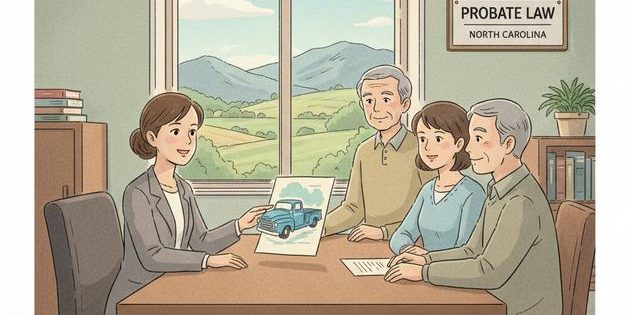
How can I legally get back an estate truck that my sibling is using without transferring the title? – North Carolina
Short Answer
In North Carolina, an executor generally has the legal right (and duty) to collect and control estate property, including a truck still titled in the decedent’s name, so it can be administered and distributed under the will. If a sibling refuses to return the truck, the executor can often seek a court order through an estate proceeding (including an examination and demand for return) and, if needed, file a civil action in Superior Court to recover possession. The executor can do this without “transferring title” to the executor first, because the goal is possession and control for administration, not a permanent title change.
Understanding the Problem
In North Carolina probate, the issue usually comes up when an executor must collect an estate vehicle for administration, but a family member is already using it and refuses to give it back. The key decision point is whether the executor can require the return of the truck for estate administration even though the title still shows the decedent as owner and no title transfer has been made. The practical goal is lawful possession and control of the truck so it can be insured, inventoried, safeguarded, and later distributed under the will.
Apply the Law
North Carolina law places responsibility on the personal representative (executor) to identify, gather, and protect estate assets. When an asset is personal property (like a truck) and it belongs to the estate, the executor can pursue formal procedures to recover it from someone who is holding it. If the person in possession claims the vehicle is “really” theirs (for example, because they say they paid for it), that claim can turn the matter into a dispute that may require the Superior Court to decide who has the right to possession and ownership.
Key Requirements
- Estate ownership/estate interest: The truck must be estate property to be collected and administered (often supported by the current DMV title showing the decedent as titled owner).
- Executor authority and duty to marshal assets: The executor must have been appointed and have authority to act for the estate (usually shown by Letters Testamentary/Letters of Administration).
- Proper forum and procedure: Recovery can proceed through (1) an estate proceeding before the Clerk of Superior Court to examine a person believed to possess estate property and demand its return, and/or (2) a civil action in Superior Court to recover estate property when a possession/ownership dispute requires full civil process.
What the Statutes Say
- N.C. Gen. Stat. § 20-77 (Transfer by operation of law; inheritance/devise) – Explains how DMV can issue a new title when ownership passes by law (including by inheritance/devise) and describes documents that may be required.
- N.C. Gen. Stat. § 1-472 (Claim for delivery of personal property) – Allows a plaintiff in an action to recover personal property to request immediate delivery before final judgment.
- N.C. Gen. Stat. § 1-474 (Order of seizure and delivery) – Allows the clerk of court (with notice/hearing and bond requirements) to order the sheriff to seize the property and deliver it to the plaintiff in a qualifying claim-and-delivery case.
- N.C. Gen. Stat. § 7A-241 (Probate jurisdiction) – Places probate and estate administration within the superior court division, exercised by the Clerk of Superior Court as judge of probate.
Analysis
Apply the Rule to the Facts: Here, the client is the appointed executor, the will instructs the executor to distribute estate vehicles, and the truck remains titled in the decedent’s name. Those facts strongly support treating the truck as estate property that the executor must collect and control during administration. The sibling’s claim that they “paid for it” creates a potential ownership dispute, but it does not automatically override the executor’s duty to secure the truck and require lawful proof before treating it as non-estate property.
Process & Timing
- Who files: The executor (personal representative). Where: Typically with the Clerk of Superior Court handling the estate administration in North Carolina, and/or in North Carolina Superior Court for a civil recovery action if the dispute requires it. What: A verified petition in an estate proceeding to examine the person believed to possess estate property and demand recovery, or a civil complaint seeking return of the truck (often paired with a request for immediate delivery/claim and delivery when appropriate). When: As soon as the executor identifies the truck as an estate asset and learns someone is withholding it, because delays can create insurance, damage, and loss risks.
- Next step: Service/notice must be completed correctly. In an estate proceeding before the clerk, the matter can proceed as a contested estate proceeding, and the clerk may order an examination and address return issues within the clerk’s authority. If the dispute centers on ownership and the person refuses voluntary return, a Superior Court civil action may be needed so the parties can litigate the right to possession with full civil remedies.
- Final step: If the court orders return and the person still does not comply, enforcement may involve the sheriff (depending on the remedy pursued). Once the executor has lawful possession, the executor typically secures insurance, accounts for the truck on the estate inventory, and later completes the appropriate DMV transfer to the correct beneficiary (or sells the truck) as part of distribution.
Exceptions & Pitfalls
- “It’s mine because I paid for it” claims: A sibling may argue the truck is not estate property (for example, claiming it was a gift, the sibling was the true purchaser, or there was an agreement to transfer). Those disputes often require evidence and may need to be resolved in Superior Court.
- Self-help risks: Trying to take the truck back without consent (for example, taking keys or retrieving it from private property) can create safety issues and potential civil or criminal allegations. Court process is usually the safer path when the person in possession refuses to cooperate.
- Insurance and liability gaps: A truck titled to a decedent and driven by someone else can create coverage problems. Securing possession quickly and confirming coverage during administration helps reduce risk.
- Mixing up “possession now” vs. “title later”: Getting control of the truck for estate administration is different from deciding who ultimately receives it. The executor may need possession immediately even if the final distribution or ownership dispute is decided later.
- Notice and service mistakes: Contested estate proceedings and civil recovery cases have service requirements. Improper service can delay recovery and increase costs.
Conclusion
In North Carolina, an executor must collect and safeguard estate property, including a truck still titled in the decedent’s name, so it can be administered and distributed under the will. If a sibling refuses to return the truck, the executor can seek a court order through an estate proceeding and, if necessary, file a Superior Court action to recover possession without first transferring title into the executor’s name. The practical next step is to file a verified petition with the Clerk of Superior Court requesting examination and recovery of the truck promptly after learning it is being withheld.
Talk to a Probate Attorney
If a family member is using an estate vehicle and refuses to return it, experienced attorneys can help explain the court options, the correct forum, and the timelines for recovering possession while the estate is pending. Call us today at (919) 341-7055.
Disclaimer: This article provides general information about North Carolina law based on the single question stated above. It is not legal advice for your specific situation and does not create an attorney-client relationship. Laws, procedures, and local practice can change and may vary by county. If you have a deadline, act promptly and speak with a licensed North Carolina attorney.

