
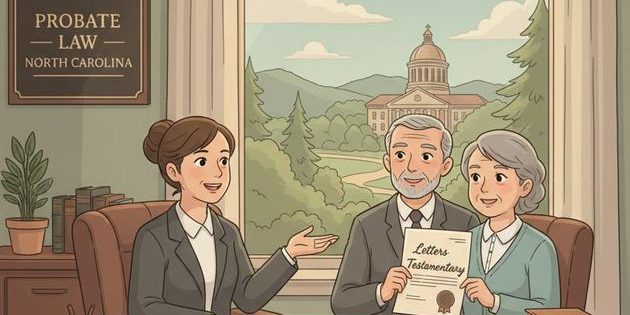
What is a letter of testamentary and why do I need it to handle an estate? – North Carolina
Short Answer
In North Carolina, “letters testamentary” are court-issued papers from the Clerk of Superior Court that show an executor has been officially appointed and has legal authority to act for a decedent’s estate. Many banks, healthcare providers, and other institutions will not release information, accept an estate authorization, or pay estate-related funds without seeing these court letters. The letters help prevent fraud by giving third parties a simple way to confirm who can act for the estate.
Understanding the Problem
In North Carolina probate, the practical question often becomes: can an executor handle a decedent’s estate based on a will, a death certificate, or a signed “executor authorization,” or is a court-issued document required? The issue usually comes up when a third party (such as a healthcare provider’s billing or liability department) asks for proof that the executor has been formally appointed. The key trigger is whether the Clerk of Superior Court has opened the estate and issued official letters that confirm the executor’s authority.
Apply the Law
North Carolina estates are supervised through the Clerk of Superior Court (acting as the probate judge). When a person qualifies as executor under a will, the Clerk can issue letters testamentary. Those letters function as the executor’s proof of authority to collect and safeguard estate property, deal with creditors and claims, and carry out distributions under the will. Without letters, many third parties will treat the executor as “not yet authorized,” even if the will names that person.
Key Requirements
- Qualification before the Clerk: The named executor must formally qualify with the Clerk of Superior Court before acting with full legal authority on behalf of the estate.
- Probate proceeding and appointment: The will must be accepted for probate (in a testate estate), and the Clerk must appoint the personal representative (executor) before letters issue.
- Ongoing court-supervised duties: After appointment, the executor must handle non-tax administration tasks like gathering assets, paying lawful debts and expenses, keeping records, and distributing what remains as required by the will and North Carolina probate procedures.
What the Statutes Say
- N.C. Gen. Stat. § 7A-241 (Probate jurisdiction) – places probate and estate administration in the superior court division and authorizes clerks of superior court to exercise probate jurisdiction according to law.
- N.C. Gen. Stat. § 28A-6-3 (Letters to issue after qualification of personal representative) – provides for issuance of letters testamentary to an executor after qualification.
Analysis
Apply the Rule to the Facts: A healthcare provider requested a court-issued letter of testamentary naming the executor, even though the executor signed an authorization as “estate executor” and the provider received a revised death certificate. Under North Carolina practice, third parties commonly require letters testamentary because the letters are the standard proof that the Clerk of Superior Court has officially appointed the executor and the executor’s authority is active. A death certificate confirms death, but it does not confirm who has legal authority to act for the estate.
Process & Timing
- Who files: The person named as executor in the will (often with counsel). Where: The Clerk of Superior Court in the county where the estate is opened in North Carolina. What: The probate filing to open the estate and qualify the executor (the Clerk’s office uses North Carolina Judicial Branch estate forms). When: As soon as estate action is needed, especially before requesting records, negotiating claims, or collecting funds held in the decedent’s name.
- After qualification, the Clerk issues letters testamentary and the executor can request certified copies. Many institutions ask for a certified copy dated recently, so the executor often orders multiple certified copies for banks, insurers, and medical providers.
- The executor then uses the letters to gather estate assets, address claims and expenses, keep required records, and move the estate toward closing with the Clerk’s office through the required filings and accounting steps.
Exceptions & Pitfalls
- Letters testamentary vs. letters of administration: Letters testamentary apply when there is a will and an executor qualifies. If there is no will (or the executor cannot serve), the Clerk typically issues “letters of administration” (or similar letters) to an administrator instead.
- Assuming a will alone is enough: A will names an executor, but third parties commonly require proof of appointment. Acting without proper court appointment can create delays and may raise fiduciary and recordkeeping problems once the estate is opened.
- Not ordering certified copies: Many organizations will not accept a plain photocopy. Requesting several certified copies at the start can reduce repeated trips and turnaround time.
- Authority can end or change: If the Clerk revokes the executor’s letters or a successor personal representative is appointed, the prior letters no longer show current authority, and third parties may require updated letters.
Conclusion
In North Carolina, a letter of testamentary is the Clerk of Superior Court’s official document proving an executor has been appointed and can act for an estate. Institutions often require it before they will release records, discuss claims, or pay estate funds because it is the standard proof of authority. The practical next step is to open the estate and qualify the executor with the Clerk of Superior Court so certified letters testamentary can be issued as soon as they are needed.
Talk to a Probate Attorney
If an institution is requesting court-issued letters testamentary before it will release records or funds, a probate attorney can help open the estate, obtain certified letters, and keep the administration on track with the Clerk of Superior Court. Call us today at (919) 341-7055.
Disclaimer: This article provides general information about North Carolina law based on the single question stated above. It is not legal advice for your specific situation and does not create an attorney-client relationship. Laws, procedures, and local practice can change and may vary by county. If you have a deadline, act promptly and speak with a licensed North Carolina attorney.

