
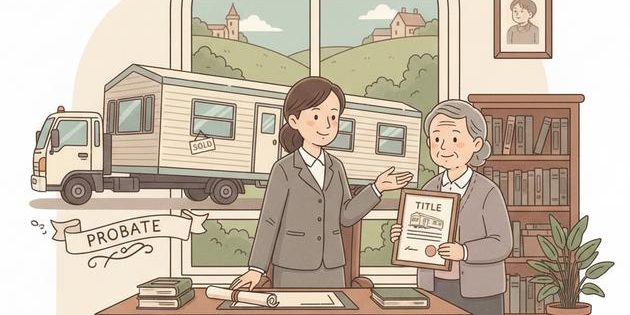
Can we donate a mobile home from an estate and still qualify for a tax benefit? – North Carolina
Short Answer
Possibly, but only if the estate (through the personal representative) has legal ownership and authority to transfer the mobile home and the donation is properly documented. In North Carolina, a mobile home is often transferred through title procedures similar to motor vehicles, so a title problem (such as the title still being in a third party’s name) can prevent a valid “estate donation.” Also, any tax benefit depends on federal tax rules and which taxpayer (the estate or an heir) makes the donation, so a tax attorney or CPA should confirm the correct approach.
Understanding the Problem
In a North Carolina probate estate, can a personal representative donate a mobile home that is listed as an estate asset, and can that donation create a tax benefit for the estate or heirs? The key issue is whether the estate can legally transfer the mobile home at all, because a donation requires a valid transfer from the true owner. Timing also matters because an older, still-open estate usually must complete final asset transfers before the Clerk of Superior Court will allow a final accounting and closing.
Apply the Law
Under North Carolina probate practice, the personal representative must identify and control assets that actually belong to the decedent’s estate, then distribute or otherwise transfer them consistent with the will (if any), North Carolina intestacy rules, and the personal representative’s duties. A mobile home commonly transfers through a title process (similar to a motor vehicle), which means the name on the title often controls who can sign a transfer. If the title never transferred into the decedent’s name, the estate may not have an asset it can donate, even if heirs informally “allocated” it on paper.
Key Requirements
- Estate ownership/authority to transfer: The personal representative generally can only donate property the decedent owned at death (or that later became an estate asset). If the title shows a different owner, the estate may need to resolve ownership before any donation.
- Proper transfer mechanics for mobile homes: Mobile homes are commonly transferred through North Carolina Division of Motor Vehicles title procedures. The charity typically will not accept a gift unless the title can be signed over correctly.
- Donation documentation and tax reporting: A tax benefit generally requires a completed gift to a qualifying charity plus proper records and, for some property, additional valuation support. Whether the deduction belongs to the estate or an heir depends on who legally makes the donation.
What the Statutes Say
- N.C. Gen. Stat. § 20-109.2 (Surrender of title to manufactured home) – Provides a DMV process to surrender/cancel a manufactured home title in certain situations when the home qualifies as real property; it highlights that the titled owner controls key title steps.
- N.C. Gen. Stat. § 47-20.7 (Declaration of intent to affix manufactured home) – Explains how a manufactured home can be treated as part of real property after certain recording steps; this can affect whether “title transfer” or “real estate transfer” rules apply.
- N.C. Gen. Stat. § 1-301.3 (Clerk decides estate proceedings) – Confirms the Clerk of Superior Court’s authority over many estate administration issues, including resolving problems that block final closing.
Analysis
Apply the Rule to the Facts: The facts describe a mobile home titled in a third party’s name that was never transferred to the decedent. That is a red flag because a donation requires the true owner (the titled owner, or someone with legal authority through probate or another court process) to sign a valid transfer. The heirs’ agreement to “allocate” half the mobile home on paper does not, by itself, fix title. Without a clean chain of title into the estate (or directly into an heir), a charity may not accept the donation and any claimed tax benefit could be challenged.
Process & Timing
- Who files: Usually the personal representative (or counsel for the personal representative). Where: Clerk of Superior Court (Estates) in the county where the estate is administered; DMV/license plate agency for title paperwork. What: Title transfer paperwork required by the North Carolina DMV for a manufactured home/mobile home (forms vary), plus probate documents (often including certified Letters and a death certificate) if the decedent is the titled owner. When: Before any donation is finalized and before filing the final account and application to close the estate.
- Clear the title issue first: If a third party remains on title, the practical next step is to determine why (for example, an uncompleted sale, a family arrangement, or a missing prior transfer) and to obtain a legally valid title transfer or court-backed correction. The correct route depends on the history of the title and whether the titled owner is available and willing to sign.
- Then complete the donation or distribution: Once the estate can legally sign over ownership, the personal representative can transfer the mobile home either (a) directly to a qualifying charity as a donation, or (b) to an heir as part of distribution, after which that heir could donate. The estate’s final accounting should reflect what happened to the asset and include supporting paperwork.
Exceptions & Pitfalls
- No estate ownership means no “estate donation”: If the decedent never held title and there is no other legal basis for ownership, the estate may have nothing to donate even if the heirs believe the mobile home was “part of the estate.”
- Mobile home classification issues: Some manufactured homes are treated more like vehicles (titled personal property), while others may be converted to real property after specific steps. The wrong assumption can derail a transfer.
- Documentation gaps for tax purposes: Tax benefits commonly depend on who donated the property, the charity’s status, and the quality of records (including valuation support when required). A donation without clean title and documentation can create audit risk.
- Old, open estates: When an estate has been open for years, the Clerk may scrutinize missing asset transfers and incomplete reporting more closely. Delays can also increase the chance that records, titles, or key signatures become hard to obtain.
Conclusion
In North Carolina, a mobile home can be donated from an estate only if the estate can legally transfer it, which usually means the decedent was the titled owner (or the estate can lawfully fix the title problem first). A title still held in a third party’s name often blocks a valid donation and can also undermine any claimed tax benefit. The most important next step is to confirm and correct title, then document the transfer and report it in the final account filed with the Clerk of Superior Court before closing the estate.
Talk to a Probate Attorney
If an estate includes a mobile home with a title problem and the estate is ready to close, a probate attorney can help map out the safest path to correct ownership, complete a valid transfer or donation, and finish the closing process with the Clerk of Superior Court. Call today at (919) 341-7055.
Disclaimer: This article provides general information about North Carolina law based on the single question stated above. It is not legal advice for your specific situation and does not create an attorney-client relationship. Laws, procedures, and local practice can change and may vary by county. If you have a deadline, act promptly and speak with a licensed North Carolina attorney.

