
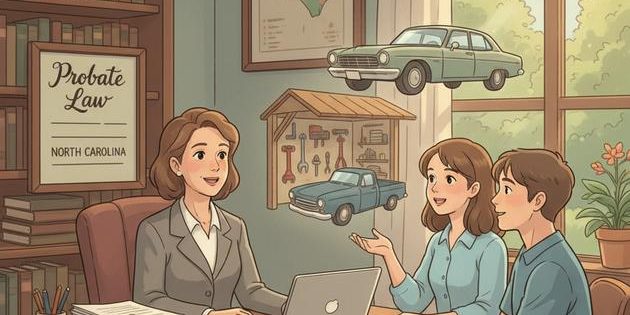
Can I use and transfer dad’s tools and vehicles before the estate is probated? – North Carolina
Short Answer
Usually, no. In North Carolina, most transfers of a deceased person’s vehicles and other personal property should wait until someone is officially appointed by the Clerk of Superior Court as the estate’s personal representative and receives “Letters” (letters testamentary or letters of administration). Until then, family members generally may safeguard property, but using, selling, giving away, or re-titling tools and vehicles can create serious problems if the property is part of the probate estate.
Understanding the Problem
In North Carolina probate, a common question is whether an adult child can start using a deceased parent’s tools or transfer vehicles right away, before the estate is opened and an executor or administrator is appointed. The decision point is whether the tools and vehicles are probate assets that require action by an appointed personal representative, or whether they pass outside probate based on how title is held. Timing matters because the authority to sign over titles and make distributions typically starts only after the Clerk of Superior Court issues the appointment paperwork.
Apply the Law
Under North Carolina law, a personal representative (executor named in a will or an administrator appointed when there is no will) is the person with legal authority to gather, protect, and distribute probate assets. For many assets, third parties (including the North Carolina Division of Motor Vehicles) expect to see certified Letters before they will recognize a transfer on behalf of an estate. Separate rules can apply if a vehicle is jointly owned with a right of survivorship, or if the estate qualifies for a simplified small-estate process.
Key Requirements
- Authority to act: A person generally needs an official appointment as personal representative (and issued Letters) before selling, gifting, or re-titling probate property.
- Correct ownership classification: The answer depends on whether the tools and vehicles are probate assets in the decedent’s name alone, or non-probate assets (such as certain jointly owned property with survivorship).
- Protection, not distribution, before appointment: Before a personal representative is appointed, the safer role is preservation (securing items, preventing loss, documenting what exists), not using or transferring property.
What the Statutes Say
- N.C. Gen. Stat. § 31-39 (Probate necessary to pass title) – Explains the importance of probate for passing title under a will and sets rules that can affect transfers and purchasers.
- N.C. Gen. Stat. § 31C-5 (Perfection of title; duty upon written demand) – Allows certain actions to perfect title to covered property and describes when a personal representative’s duty is triggered by a written demand.
Analysis
Apply the Rule to the Facts: The facts describe tools and vehicles and concern about unauthorized transfers. If the vehicles were titled only in the decedent’s name (or the estate’s interest is unclear), transferring title typically requires an appointed personal representative to sign as the seller and to provide certified Letters, and using or distributing those vehicles early can look like an unauthorized transfer of estate property. If some vehicles were jointly titled, transfer may be possible based on the form of co-ownership and DMV requirements, but the title type must be confirmed first.
Process & Timing
- Who files: The person seeking to be appointed as executor (if there is a will) or administrator (if there is no will). Where: Clerk of Superior Court (Estates) in the county where the decedent lived in North Carolina. What: Application to probate the will (if any) and/or application for letters testamentary/letters of administration, plus the required supporting documents. When: As soon as practical after death, especially when there is risk of property being removed or transferred.
- Protect assets while waiting: Identify and photograph tools and vehicles, secure keys, document VINs, confirm insurance status, and keep a written log of who has access. This focuses on preservation rather than distribution.
- Transfer after appointment: Once appointed, the personal representative typically signs the vehicle title as seller and submits a certified copy of Letters and a certified death certificate to complete the DMV transfer, then distributes the vehicle or sells it as part of estate administration.
Exceptions & Pitfalls
- Joint ownership can change the answer: If a vehicle is jointly titled, transfer may depend on the form of co-ownership and DMV requirements, including whether survivorship applies.
- “Holding the title” is not the same as owning the vehicle: Possession of the paper title does not always match legal ownership. Signing or submitting title documents without authority can trigger civil disputes and, in some situations, criminal exposure.
- Using estate vehicles can create liability issues: Driving a decedent’s vehicle before insurance and authority are clarified can create coverage gaps and disputes about who is responsible for accidents, tickets, towing, and storage.
- Small-estate procedures are limited: Some estates can use an affidavit-based process to collect personal property only if statutory value limits and eligibility rules are met; if additional assets are discovered later, a full personal representative appointment may still be required.
- Priority and qualification issues: If the person who wants to open probate may be disqualified from serving, the next eligible person may need to apply, or the Clerk may require another solution to ensure the estate has an authorized decision-maker.
Conclusion
In North Carolina, tools and vehicles that are probate assets generally should not be used, sold, gifted, or re-titled until the Clerk of Superior Court appoints a personal representative and issues letters testamentary or letters of administration. Limited exceptions may apply for jointly owned vehicles or qualifying small-estate procedures, but ownership and eligibility must be confirmed first. The practical next step is to file for the proper Letters with the Clerk of Superior Court as soon as possible so lawful transfers can be made.
Talk to a Probate Attorney
If a family is dealing with disputes over tools, vehicles, cash, or property access before an estate is opened, experienced attorneys can help explain the probate process, preserve assets, and identify the fastest lawful way to transfer title. Call us today at (919) 341-7055.
Disclaimer: This article provides general information about North Carolina law based on the single question stated above. It is not legal advice for your specific situation and does not create an attorney-client relationship. Laws, procedures, and local practice can change and may vary by county. If you have a deadline, act promptly and speak with a licensed North Carolina attorney.

