
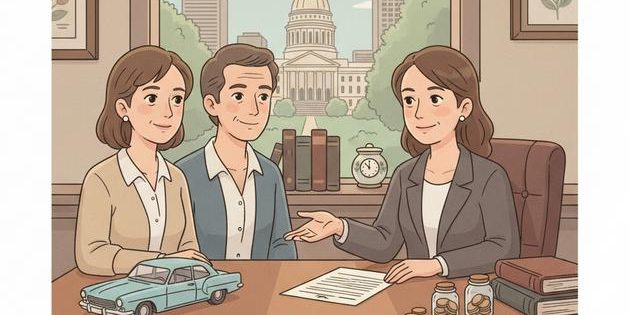
How can I probate my parent’s small estate with just a car and minimal bank balances without facing long courthouse delays? – North Carolina
Short Answer
In North Carolina, a “small estate” often can be handled through an Affidavit for Collection of Personal Property (sometimes called “collection by affidavit”) instead of full probate, as long as the estate’s personal property (minus liens) is at or below the statutory dollar limit and no personal representative has been appointed. This process is filed with the Clerk of Superior Court in the county where the parent lived, and it can reduce court appearances and shorten delays. A car title can often be transferred using the clerk-approved small-estate affidavit with the DMV requirements.
Understanding the Problem
How can an heir in North Carolina collect and wrap up a parent’s small estate when the assets are limited to a vehicle and low-balance bank accounts, and the goal is to avoid a slow, in-person courthouse process? The key decision point is whether the estate qualifies for North Carolina’s small-estate procedure that lets certain people collect personal property using a clerk-approved affidavit rather than opening a full estate administration. Timing can matter when the death occurred long ago and when other heirs must sign or step aside before the clerk will accept a filing.
Apply the Law
North Carolina law allows certain small estates to be handled through collection of personal property by affidavit after a short waiting period following death. The affidavit is filed with the Clerk of Superior Court in the county where the decedent was domiciled, and it authorizes an “affiant” (often an heir) to collect and distribute qualifying personal property. The process is generally available only if no personal representative has been appointed and if the estate’s personal property value (net of liens) falls under the statutory cap. A separate DMV step is typically needed to move the car’s title after the clerk signs the affidavit.
Key Requirements
- Small-estate value limit: The net value of the decedent’s personal property must be within the statutory small-estate dollar limit (calculated after liens; special rules can affect the calculation in some spouse-only situations).
- Proper person to file: The affiant must be an eligible person (commonly an heir, but in some cases a creditor or a will-named executor/devisee) and must not be disqualified under the rules that apply to personal representatives.
- No full estate already opened: The affidavit route generally is unavailable if a personal representative has been appointed in any jurisdiction.
What the Statutes Say
- N.C. Gen. Stat. Chapter 28A, Article 25 (Small Estates / Collection by Affidavit) – Sets out when personal property may be collected by affidavit and the clerk’s role in approving the affidavit.
- N.C. Gen. Stat. Chapter 28A, Article 4 (Qualification / disqualification concepts) – Contains provisions that can affect whether a person is eligible to act in a representative-type role for an estate matter.
- N.C. Gen. Stat. § 31B-1 (Right to renounce succession) – Allows a person who would inherit an interest to renounce that interest through a signed, acknowledged writing filed under the statute.
Analysis
Apply the Rule to the Facts: The estate described has limited assets (a vehicle and low-balance bank accounts), which commonly fits the type of personal property the small-estate affidavit targets if the total net value stays under the statutory cap. The death occurred more than two years ago, which does not by itself block the affidavit process, but it often increases practical problems (missing documents, closed accounts, creditor pressure). Because a co-heir is in another jurisdiction and must “renounce administration,” the clerk will usually need clear paperwork showing who is authorized to act (often, all heirs’ cooperation on the affidavit or a formal renunciation/waiver approach that satisfies the clerk’s intake requirements). Medical debts do not automatically prevent a small-estate filing, but they affect how collected assets should be handled and distributed.
Process & Timing
- Who files: Typically an heir (or other eligible person allowed by statute). Where: The Estates division of the Clerk of Superior Court in the North Carolina county where the parent lived at death. What: The AOC small-estate affidavit form commonly used for collection by affidavit (often an AOC-E-203 series form), plus supporting documents the clerk requires. When: The small-estate affidavit is generally available after 30 days have passed since death, if no personal representative has been appointed.
- Clerk review and signature: The clerk reviews the affidavit for completeness (including heir/beneficiary information and the value/net-lien statement). In many counties, filings can be submitted by mail or drop-off; local rules vary, and incomplete packages can lead to rejections and additional delays.
- Collect the assets: Use the clerk-signed affidavit to request release of funds from banks and to complete the vehicle title transfer process. For a vehicle, the DMV typically requires the small-estate affidavit and specific DMV documentation (and the “security title” version of certain DMV forms if a lien exists). The final output is the asset transfers (bank funds released; title moved) and distribution consistent with the affidavit’s heir/beneficiary information.
Exceptions & Pitfalls
- Value and liens miscalculated: The cap applies to personal property value minus liens and encumbrances. A car loan or other secured debt can change the net value calculation.
- Heir cooperation problems: Many clerks and third parties (banks/DMV) expect consistent heir information and signatures. If an out-of-state co-heir will not sign, a different path (including a full estate with a qualified personal representative) may be required.
- Confusing “renouncing administration” with renouncing inheritance: “Renunciation” under Chapter 31B addresses giving up a property interest. A separate waiver/consent may be needed to let another person handle the estate filing. Clerks often require specific forms or acknowledgments, and county practice varies.
- Trying to sell real estate through a small-estate affidavit: The small-estate affidavit procedure focuses on collecting and distributing personal property; it does not automatically give authority to sell real estate.
- Bank and DMV requirements differ from the clerk’s requirements: Even with a clerk-signed affidavit, institutions may require certified copies, original signatures, notarization, or additional DMV forms.
Conclusion
North Carolina often allows a parent’s small estate with only a car and small bank balances to be handled through an Affidavit for Collection of Personal Property, avoiding full probate when the estate’s net personal property falls under the statutory limit and no personal representative has been appointed. The filing is made with the Clerk of Superior Court in the county of the parent’s domicile and generally is available after 30 days from death. Next step: submit the completed small-estate affidavit package to the Clerk of Superior Court for approval and signature.
Talk to a Probate Attorney
If a small estate includes a vehicle, low bank balances, old debts, and an out-of-state co-heir who must sign or step aside, small paperwork issues can create big delays. Our firm has experienced attorneys who can help sort out the correct small-estate filing, coordinate heir signatures, and plan a process that minimizes courthouse trips. Call us today at (919) 341-7055.
Disclaimer: This article provides general information about North Carolina law based on the single question stated above. It is not legal advice for your specific situation and does not create an attorney-client relationship. Laws, procedures, and local practice can change and may vary by county. If you have a deadline, act promptly and speak with a licensed North Carolina attorney.

