
Can I avoid opening probate and still transfer my late spouse’s assets? – North Carolina
Short Answer
Often, yes. In North Carolina, many assets transfer without probate (for example, transfer-on-death accounts), and a surviving spouse may be able to use a year’s allowance through the Clerk of Superior Court to collect certain personal property without opening a full estate.
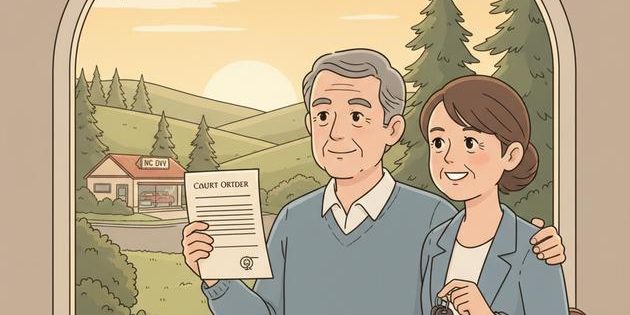
For a vehicle, the DMV typically requires a court-issued document (such as an assignment through a year’s allowance) or a clerk-certified affidavit process available in limited situations. The right option depends on how the vehicle was titled and whether a personal representative has been (or will be) appointed.
Understanding the Problem
In North Carolina probate, a common question is whether a surviving spouse can transfer a deceased spouse’s assets without opening a full estate administration. The issue often comes up when a third party, such as a dealership or the N.C. Division of Motor Vehicles, says “court papers” are required to retitle a vehicle even though a death certificate and a valid will exist. The decision point is whether a simplified clerk process (such as a year’s allowance assignment) can provide the needed authority to transfer the remaining asset without full probate.
Apply the Law
North Carolina law recognizes that not every death requires a full probate administration to move property. Some property passes outside probate by contract or title (like valid transfer-on-death designations). For other personal property, a surviving spouse can sometimes obtain an order from the Clerk of Superior Court assigning property as part of a year’s allowance. For motor vehicles, the DMV may accept either (1) clerk-issued documentation showing the vehicle was assigned as part of a year’s allowance or (2) a clerk-certified affidavit process available only in certain “no administration expected” situations.
Key Requirements
- Asset type and ownership control the path: Property that passes by beneficiary designation or survivorship usually does not require probate paperwork, but assets titled only in the decedent’s name often do.
- Clerk involvement for a year’s allowance assignment: A year’s allowance is assigned by the Clerk of Superior Court, who determines what personal property is awarded and enters an order listing the property.
- Motor vehicle transfers have special rules: The DMV may require a year’s allowance assignment document or a clerk-certified affidavit process, and availability depends on whether administration is pending or expected and, in some cases, whether a will is on file with the clerk.
What the Statutes Say
- N.C. Gen. Stat. § 30-20 (Procedure for assignment; order of clerk) – Directs the clerk to determine entitlement and enter an order awarding personal property for a year’s allowance.
- N.C. Gen. Stat. § 30-19 (Property awarded; clerk determines) – Addresses the property that may be included in the allowance.
- N.C. Gen. Stat. § 30-27 (Additional allowance; deadline) – Allows a surviving spouse (or child) to seek an additional allowance and sets a filing deadline of within one year of death (or within six months after letters issue if a personal representative is appointed).
- N.C. Gen. Stat. § 41-48 (Nontestamentary transfer on death) – Confirms that certain transfer-on-death registrations work by contract and are not testamentary, while still addressing potential creditor recovery rules.
Analysis
Apply the Rule to the Facts: The bank and investment accounts passing by transfer-on-death designations generally support avoiding probate for those assets because they transfer outside the estate process. The problem asset is the vehicle, because the dealership and DMV want “court papers,” which commonly means a clerk-issued document showing legal authority to retitle. With a valid will and a surviving spouse, a year’s allowance assignment may provide the DMV-facing paperwork needed to retitle the car without opening a full probate administration, depending on how the car is titled and local clerk requirements.
Process & Timing
- Who files: The surviving spouse (typically). Where: Office of the Clerk of Superior Court in the North Carolina county with proper estate venue. What: An application requesting a year’s allowance assignment of the vehicle (counties often use standardized AOC estate forms). When: Commonly, the year’s allowance application should be filed within one year of the date of death to preserve the allowance rights.
- Clerk review and order: The clerk reviews the filing and may issue an order assigning specific personal property. If the clerk believes a hearing is needed, the clerk can require the matter to proceed as a contested estate proceeding before awarding the allowance.
- Retitle with DMV: The surviving spouse takes the clerk-issued assignment documentation (and typically the death certificate and vehicle title documents) to the DMV to retitle the vehicle. If the vehicle cannot be assigned via year’s allowance, ask whether the DMV will accept a clerk-certified affidavit transfer option in the limited cases allowed when no administration is pending or expected.
Exceptions & Pitfalls
- How the vehicle is titled can change everything: If the title already reflects a survivorship form of co-ownership, the DMV may accept a death certificate without a probate estate. If the title does not include survivorship language, the DMV often requires clerk-issued paperwork.
- Affidavit transfers are limited: The clerk-certified affidavit method for motor vehicles is not a universal substitute for probate; it generally depends on no administration being pending or expected and, in will cases, the will being filed with the clerk and the estate being small enough that administration does not make sense.
- Creditor and lien issues: Retitling a vehicle does not automatically eliminate a recorded lien. Also, avoiding probate does not always eliminate creditor rights; some nonprobate transfers can still face creditor recovery rules if the estate cannot pay valid debts.
- Starting the wrong process first can remove options: If a personal representative qualifies and opens a full administration, some simplified transfer options may no longer fit. Coordinating the DMV demand with the clerk process before filing anything can matter.
Conclusion
In North Carolina, a surviving spouse can often avoid opening full probate and still transfer many assets, especially those that pass by beneficiary designation. When a vehicle cannot be retitled with just a death certificate, the most common probate-avoidance solution is obtaining a Clerk of Superior Court order assigning the car through a year’s allowance and then using that document with the DMV. The key next step is to file the year’s allowance application with the Clerk of Superior Court within one year of the date of death.
Talk to a Probate Attorney
If a dealership or the DMV is demanding court papers to transfer a late spouse’s vehicle, our firm has experienced attorneys who can help determine whether a year’s allowance or another simplified clerk process fits the situation and what timelines apply. Call us today at (919) 341-7055.
Disclaimer: This article provides general information about North Carolina law based on the single question stated above. It is not legal advice for your specific situation and does not create an attorney-client relationship. Laws, procedures, and local practice can change and may vary by county. If you have a deadline, act promptly and speak with a licensed North Carolina attorney.

