
How can I remove a quitclaim deed that was recorded without proper authority so we can list the house for sale? – North Carolina
Short Answer
In North Carolina, a quitclaim deed that was signed or recorded without proper authority usually gets cleared by filing a lawsuit to determine the true ownership and remove the deed as a cloud on title. The most common court path is a quiet title claim (and, when family members co-own the property, a partition case can be paired with the title claim). The case typically ends with a court order that can be recorded with the Register of Deeds so the title company can insure the sale.
Understanding the Problem
In North Carolina, can heirs or a family representative sell a home when the Register of Deeds records a quitclaim deed signed by a relative who lacked authority to convey the property? What happens when the home belonged to a decedent, probate never opened, and a later deed sits in the public records even after the signing relative has died? The practical issue is how to clear the title record so a buyer and title insurer will treat the deed as invalid and allow a closing.
Apply the Law
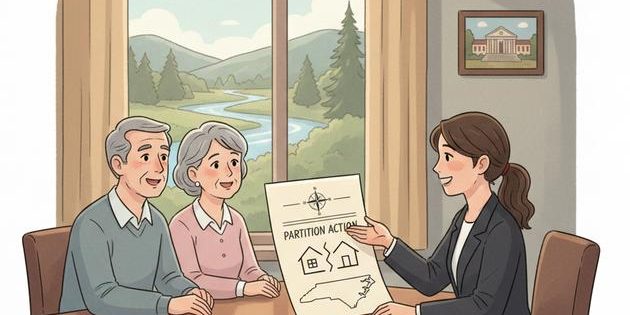
North Carolina treats a recorded deed as part of the public chain of title even if it was not authorized. When a deed creates uncertainty about who owns the property, the usual remedy is a court action to determine the parties’ interests and to remove the deed as a cloud on title. If multiple heirs or family members own the property together, a partition action (sale or division supervised by the court) often becomes the forum to resolve both ownership and marketability problems in one case, because the court can decide competing claims before ordering a sale.
Key Requirements
- Standing (right party brings the case): The plaintiff must claim an ownership interest that is being challenged or “clouded” by the recorded quitclaim deed.
- Adverse claim exists: Someone (or their estate/heirs) must be shown in the records as claiming an interest that conflicts with the plaintiff’s claim, such as a quitclaim deed into the relative’s name.
- Joinder and notice: The case must include and properly serve all people or entities who may claim an interest affected by the deed (often including heirs of the deceased relative who signed/received the deed).
What the Statutes Say
- N.C. Gen. Stat. § 41-10 (Quieting title) – Allows an action to determine adverse claims to real property and quiet title.
Analysis
Apply the Rule to the Facts: The home belonged to a decedent and did not go through probate, so the ownership record can already be incomplete or unclear. A later quitclaim deed recorded by relatives adds an adverse claim to the chain of title, and the relative connected to the deed has since died, which means that any claimed interest may now be asserted through that person’s estate or heirs. A quiet title claim (often combined with partition when co-owners exist) is designed to have the court decide whether the quitclaim deed conveyed any valid interest and to enter an order that clears the record.
Process & Timing
- Who files: A person claiming an ownership interest (often an heir or co-owner). Where: North Carolina Superior Court in the county where the property is located. What: A civil complaint that typically pleads a claim to quiet title and, if co-ownership needs to be unwound for a sale, a partition claim requesting a court-supervised sale. When: As soon as a title issue prevents listing, contracting, or closing; timing can matter because service, publication, and estate issues can slow the case.
- Serve all necessary parties: This often includes the deed’s grantor/grantee (if living), and if one has died, the proper estate representative or heirs who may claim through that person. If a party cannot be located, service by publication may be required, which adds weeks and can trigger extra proof requirements.
- Order and record the result: If the court rules the deed did not validly convey the property interest (or determines what interest, if any, exists), it will enter a judgment. The judgment (and, in partition cases, the final report/order confirming sale) is recorded with the Register of Deeds to clear the title record for a sale.
Exceptions & Pitfalls
- Probate and authority gaps: If no estate was opened for the original owner, a buyer’s title insurer may still require an estate administration or a separate heirship/ownership determination to establish who had power to sign any deed.
- Missing necessary parties: Quiet title and partition cases can fail or produce an unmarketable result if a potential claimant (for example, an heir of the deceased relative named in the quitclaim deed) is not joined and served.
- Assuming the Register of Deeds can “remove” a deed: Registers typically record documents; they generally do not adjudicate validity. Clearing a cloud usually requires a court judgment that is then recorded.
- Wrong remedy for the goal: If the main goal is a clean sale and there are multiple co-owners, pursuing a partition sale alongside title-clearing claims can be more efficient than litigating title in one case and later filing partition.
Conclusion
In North Carolina, clearing an unauthorized quitclaim deed usually requires a Superior Court case to determine ownership and remove the deed as a cloud on title. A quiet title claim under N.C. Gen. Stat. § 41-10 is the core tool, and when multiple heirs or co-owners exist, a partition case can be combined so the court can resolve competing claims before a sale. The next step is to file the complaint in the county where the property sits and serve all parties tied to the recorded deed so a recordable judgment can clear title.
Talk to a Partition Action Attorney
If a recorded quitclaim deed is blocking a North Carolina home sale, our firm has experienced attorneys who can help identify the right court process, the necessary parties, and the timelines to get a recordable order. Call us today at (919) 341-7055.
Disclaimer: This article provides general information about North Carolina law based on the single question stated above. It is not legal advice for your specific situation and does not create an attorney-client relationship. Laws, procedures, and local practice can change and may vary by county. If you have a deadline, act promptly and speak with a licensed North Carolina attorney.

