
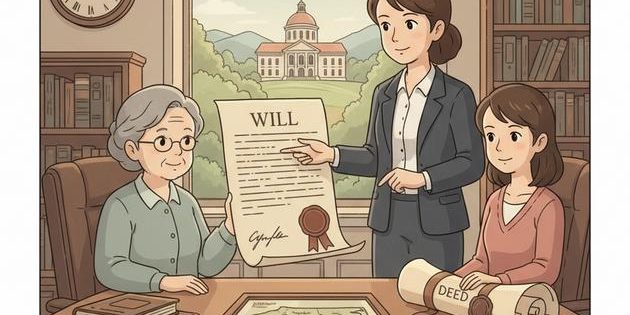
Do we need to challenge the deed separately, or does resolving the will first determine who owns the house and land? – North Carolina
Short Answer
In North Carolina, a will controls only what the person owned at death. If the house or land was transferred by a deed before death (or passes by another non-probate method), a will contest alone usually does not undo that transfer. Many cases require two tracks: a will challenge (a “caveat”) to determine whether the will is valid, and a separate court action to challenge the deed or to clear title.
Understanding the Problem
In North Carolina probate, the key decision point is whether the house and land were still in the decedent’s name at death, or whether title had already moved by deed. If the question is “does fixing the will decide who owns the real estate,” the answer turns on what document actually controls title: a will that takes effect at death, or a deed that may have changed ownership during life. The related question is “must a deed be challenged in a separate case,” because probate focuses on the will’s validity and estate administration, while deed disputes often require a different type of lawsuit to determine real property ownership.
Apply the Law
North Carolina law generally treats a will and a deed as doing different jobs. A will (once properly probated) can pass title to the decedent’s property at death. A deed, if valid and delivered during the decedent’s lifetime, can transfer the property out of the decedent’s ownership before death—meaning the will may no longer control that asset. If there is a dispute about whether the will is valid, the procedural tool is a caveat filed with the Clerk of Superior Court, which is then transferred for trial in Superior Court. If the dispute is about whether a deed is valid (for example, capacity, undue influence, fraud, or lack of delivery), that issue is typically handled in a separate civil action aimed at determining title.
Key Requirements
- Identify what controls title: Determine whether the real estate was owned by the decedent at death (will/estate issue) or was transferred before death (deed/title issue).
- Use the right procedure for the right document: Challenge a will’s validity through a caveat; challenge a deed’s validity through an appropriate civil action affecting title.
- Watch the probate clock: If a will was probated in common form, the time to file a caveat is limited and should be treated as a firm deadline.
What the Statutes Say
- N.C. Gen. Stat. § 31-32 (Filing of caveat) – Allows an interested person to file a caveat to challenge a will, generally within three years after probate in common form.
- N.C. Gen. Stat. § 31-33 (Cause transferred to trial docket) – Requires the clerk to transfer a filed caveat to Superior Court for trial, with service and alignment procedures.
- N.C. Gen. Stat. § 31-39 (Probate necessary to pass title; recordation) – Explains that a duly probated will can pass title, and sets time limits and recording rules that affect real estate and third parties.
- N.C. Gen. Stat. § 31-36 (Effect of caveat on estate administration) – Limits distributions and directs how the personal representative preserves and manages estate assets while a caveat is pending.
Analysis
Apply the Rule to the Facts: No specific facts were provided, so two common North Carolina scenarios illustrate why the deed issue often must be handled separately. If the decedent signed and recorded a deed during life that put the house into another person’s name, the house may not be an estate asset, so “winning” a will dispute may not change who holds title. If, instead, no deed transferred the property before death and the deed records still show the decedent as owner, then resolving the will (or the intestacy rules if there is no valid will) typically determines who inherits the real estate.
Process & Timing
- Who files: An “interested party” files the will challenge. Where: The caveat is filed with the Clerk of Superior Court in the county where the estate is administered. What: A caveat pleading (local forms and requirements vary by county). When: Generally within three years after a will is probated in common form (with limited extensions for certain disabilities under the statute).
- Next step: After filing, the clerk transfers the caveat to Superior Court for trial, and the caveat must be served on interested parties under the civil rules referenced in the statute. While the caveat is pending, estate administration often continues in a limited way, with restrictions on distributions and close oversight of preserving estate assets.
- Separate deed/title case (if needed): If the real dispute is whether a deed should be set aside or whether title should be declared in someone else, that is usually brought as a separate civil action in Superior Court in the county where the land is located, because that court has authority to decide title and order corrective relief affecting the public land records.
Exceptions & Pitfalls
- Mixing up “will validity” with “deed validity”: A caveat decides whether the will is valid; it does not automatically cancel a deed that transferred property during life.
- Probate in solemn form can bar later caveats: If the will was probated in solemn form and an interested party was properly served, that party may be barred from filing a caveat later.
- Real estate recording and third-party issues: Even when a will controls title, recording rules and timing issues can affect enforceability against certain creditors or purchasers, especially when property lies in a different county.
- Litigation posture while a caveat is pending: A pending caveat can restrict distributions and change how the personal representative handles assets, but it may not stop all time-sensitive title issues unless separate relief is sought in the proper forum.
Conclusion
In North Carolina, resolving the will determines who receives assets that were still owned by the decedent at death, but it usually does not undo a lifetime transfer made by deed. A will’s validity is challenged by a caveat filed with the Clerk of Superior Court and then tried in Superior Court. If ownership depends on whether a deed is valid, a separate Superior Court title-related action is often required. The key next step is to file a caveat within three years after probate in common form if the will is being contested.
Talk to a Probate Attorney
If a will dispute and a deed dispute are both in play, timing and procedure matter, and the wrong filing can leave title problems unresolved. Our firm has experienced attorneys who can help sort out whether a caveat, a separate deed challenge, or both are needed and what deadlines apply. Call us today at (919) 341-7055.
Disclaimer: This article provides general information about North Carolina law based on the single question stated above. It is not legal advice for your specific situation and does not create an attorney-client relationship. Laws, procedures, and local practice can change and may vary by county. If you have a deadline, act promptly and speak with a licensed North Carolina attorney.

