
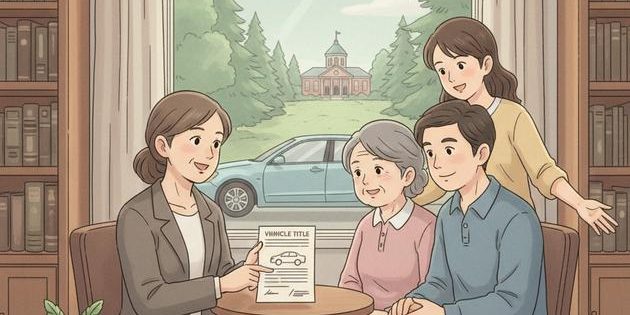
If no estate has been opened, can the named executor sign the vehicle title, or do we need a different process? – North Carolina
Short Answer
In North Carolina, a person named as executor in a will has no legal authority to sign a vehicle title until the clerk of superior court actually issues letters testamentary. If no estate has been opened and no personal representative has qualified, title is usually transferred either through (1) a year’s allowance to the surviving spouse, or (2) a special DMV affidavit process for small estates under N.C. Gen. Stat. § 20-77(b). The right process depends on the size of the estate, who inherits under the will, and whether anyone is going to open probate.
Understanding the Problem
The narrow question is whether, under North Carolina probate law, a person named as executor in a will can sign off on the title of a vehicle when no estate has been opened, or whether a different non-probate process must be used. The factual pattern is that a parent died owning a vehicle titled in the parent’s name alone; the will leaves everything to the surviving spouse and names an adult child or sibling as executor. There are no known debts or other assets, and no one has opened an estate with the clerk of superior court. The surviving spouse may have Medicaid issues, and there is concern about using any spousal claim procedure that could affect eligibility. The vehicle is in regular use by a family member who wants clear title so the vehicle can be insured and registered properly without going through full probate.
Apply the Law
Under North Carolina law, a named executor has no power to act until formally appointed and issued letters by the clerk of superior court. When no personal representative has qualified, motor vehicles can sometimes be transferred using either the surviving spouse’s year’s allowance or a DMV affidavit procedure for small or debt-free estates. The main forum for these steps is the clerk of superior court in the county of the decedent’s residence and the North Carolina Division of Motor Vehicles (DMV).
Key Requirements
- Authority to sign: Only a duly appointed personal representative (or a person acting under a DMV-approved affidavit or clerk’s year’s allowance order) may legally assign a deceased owner’s vehicle title; being named as executor in a will, by itself, is not enough.
- Use of year’s allowance: A surviving spouse may claim a statutory year’s allowance in personal property (which can include a vehicle), and the clerk can issue an order assigning the vehicle that DMV will honor in place of letters when no personal representative has qualified.
- Small-estate DMV affidavit: If the estate is small and no administration is pending or expected, and the will is filed with the clerk, heirs or devisees may use a DMV affidavit (Form MVR-317) under N.C. Gen. Stat. § 20-77(b) to transfer title without opening a full estate.
What the Statutes Say
- N.C. Gen. Stat. § 20-77(b) (Motor vehicle transfer at death) – Allows DMV to transfer a deceased owner’s vehicle title based on a will, letters, a year’s allowance certificate, or an affidavit from all heirs/devisees when no administration is pending or expected and the estate is small.
- N.C. Gen. Stat. § 30-15 (Spousal year’s allowance) – Gives a surviving spouse a right to a statutory allowance from the decedent’s personal property, which can include assigning a vehicle.
- N.C. Gen. Stat. § 30-20 (Procedure for assignment of allowance) – Directs the clerk of court to determine the spouse’s entitlement and enter an order describing the personal property awarded.
Analysis
Apply the Rule to the Facts: In the fact pattern given, the sibling named as executor has no letters from the clerk, so that person cannot lawfully sign the back of the title as “executor” to transfer the vehicle. Because the will leaves everything to the surviving spouse and there are no other assets or creditors, the clerk could either (a) assign the vehicle to the spouse as part of the year’s allowance, or (b) accept the will for filing and, if the estate is small enough and no one intends to open probate, allow the family to use DMV Form MVR-317 so all heirs/devisees can authorize a transfer to the intended new owner. Either path avoids a full estate, but each has different implications for how the spouse is treated for benefits planning, which should be reviewed with a Medicaid or elder-law advisor.
Process & Timing
- Who files: Typically the surviving spouse or an heir/devisee. Where: Clerk of Superior Court, Estates Division, in the county where the decedent last resided, and the North Carolina DMV or a local license plate agency. What: (a) To use a year’s allowance, a verified petition for spousal allowance (AOC Form E-100 and related forms); or (b) to use the DMV small-estate process, DMV Form MVR-317 (Affidavit of Authority to Assign Title), with the will filed at the clerk’s office. When: A spouse can claim the allowance at any time during life, but must do so within six months after letters are issued if a personal representative is appointed; the DMV affidavit is used when no administration is pending or expected.
- The clerk reviews the petition and supporting documents. For a year’s allowance, the clerk decides whether the spouse qualifies and may specifically assign the vehicle as part of the allowance order. For the DMV affidavit route, the clerk’s role is to have the will on file and, in practice, to confirm that no estate is pending and the estate is small enough that administration is not justified.
- Once the proper authority document is in hand (year’s allowance order listing the vehicle, or fully executed MVR-317), the transferee submits it to DMV with the original title (if available), proof of insurance, any required title application (such as DMV Form MVR-1), the death certificate, and the applicable fees. DMV issues a new title in the name of the transferee, completing the process.
Exceptions & Pitfalls
- If any interested party demands a formal administration or if the clerk believes the estate is not “small,” the DMV affidavit procedure under § 20-77(b) may not be available, and someone may have to qualify as personal representative.
- If the motor vehicle has been or will be included in a year’s allowance order to the spouse, the DMV small-estate affidavit route cannot be used to move that same vehicle outside the allowance; DMV expects to see either letters or the clerk’s allowance order.
- All heirs/devisees must sign the MVR-317 affidavit before a notary, and the clerk must sign as well; leaving out a minor heir, a distant heir, or a devisee named in the will can cause title problems later.
- Using a spousal year’s allowance or transferring assets could affect public benefits eligibility. Medicaid and similar rules are complex, and coordination with a Medicaid-focused attorney or benefits planner is important before choosing a path.
- Attempting to have a named executor sign the title without letters, or using an old power of attorney after death, can result in a void transfer and complicate later probate.
Conclusion
When no North Carolina estate has been opened, a person merely named as executor in a will cannot sign a deceased owner’s vehicle title; legal authority comes only from the clerk’s letters or from specific non-probate tools. For a simple situation with no debts and a single vehicle, the usual options are a spousal year’s allowance that assigns the vehicle or a DMV small-estate affidavit under § 20-77(b) once the will is filed and no administration is expected. The next step is to consult the clerk of superior court and a probate or elder-law attorney to determine which process best fits the facts and any Medicaid-planning concerns, then file the appropriate petition or affidavit before attempting to retitle the car.
Talk to a Probate Attorney
If a loved one has died owning a vehicle in North Carolina and no estate has been opened, and the family needs to retitle the car while navigating spousal rights and possible Medicaid issues, our firm has experienced probate attorneys who can help explain the options and paperwork. Call us today at (919) 341-7055.
Disclaimer: This article provides general information about North Carolina law based on the single question stated above. It is not legal advice for your specific situation and does not create an attorney-client relationship. Laws, procedures, and local practice can change and may vary by county. If you have a deadline, act promptly and speak with a licensed North Carolina attorney.

